
Coastwork

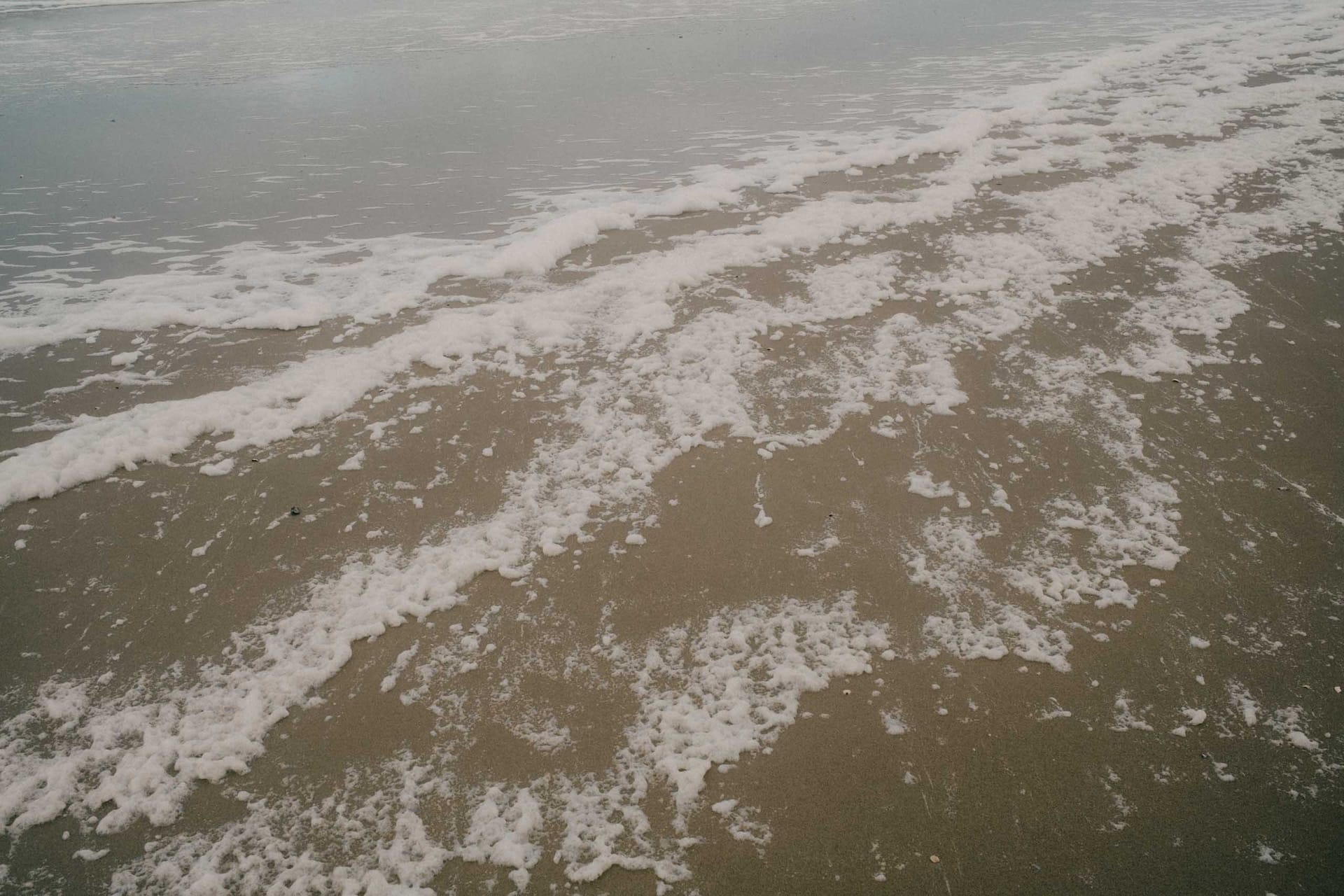
Hi there fellow land animals,
Those that know me a little better know I am not much of a swimmer. I even had to learn how to swim twice. I don't know what happened. I got my swim diploma A with a little bit of trouble but I managed fine overall. By the time I reached 4th grade in primary school, school-swimming was still a thing so I went for my diploma B there. The moment I hopped back into the water, I sank. The instructor had to give me a floaty and keep me up with one of those long hooks they hold from the shore to keep you at the surface. If that's oddly specific it's because the memory is so vivid. Thankfully, I recovered quite quickly after that. But I never got that diploma B.
A few years later, I found out I had pretty bad eyesight. My vision had been getting worse so slowly over time that I never really noticed the decline. Though denial played a role too. Myopia would become my first official 'flaw' and an early sign of my mortality. A truth I found difficult to reconcile myself with, at first. I preferred squinting my eyes each night to read the subtitles on the TV, and staring at the ground when out in public because I was too afraid to run into somebody I knew and then accidentally not greeting because I didn't see them. Figured I was better off making clear I was explicitly not looking around me.
The first time I tried on glasses in the optician downtown, I could not believe the level of detail we are able to see as humans. Was in awe by it. Perhaps even saddened by the things I probably failed to see up to then. I was still insecure about this clear fault in my physiology so instead of glasses, I opted to wear contacts. At age 15, a little too worried about what glasses would mean for me as a person, how others would see me, what that would change about my life. I'm not that self-conscious anymore, but it defined me back then.
As a result, swimming became even more difficult because keeping my eyes open underwater was now fully out of the question. Up to that point, I could do a dive quite nicely. You know, the way you're supposed to do dives. But having to do them with my eyes closed if I didn't want to lose my contacts, was a little too much for me. I've kept my head above the surface ever since. Whatever remaining confidence I had in the water was slowly flowing out of me. I still swim to this day, and it's not an obstacle in my life, but I no longer enjoy it.
Despite the rough start to my relationship with water, I am also fascinated by it. We live on a planet that's mostly made of it. And I live in a country that's mostly situated below that water. Part of that is our fault though. If you aim to reclaim land in places where it previously didn't belong to you, you might end up having to constantly fight for it. But the Dutch have become very good at it. Arguably the best, in the eyes of the general public. Although we're not really 'fighting the ocean' as opposed to 'working with it' these days.
The significance of this has only recently reached my understanding. Up to that point I was mostly concerned with the vast unknowns that are our planet's oceans. Could look at documentaries about them for hours. Most recently this excellent YouTube video by Cleo Abram (Cleo generally makes excellent videos on whatever topic she attacks.) For example, did you know approximately 90% of the ocean's fauna is completely unknown to us? Did you also know that most of our discoveries up to now have been by stumbling upon them? Some took a lot of targeted work by a lot of very smart people, sure, but the actual findings apparently have been mostly luck-based, rather than calculated results. Stats like these blow my mind. We have no clue what might be lurking in the dark and deep.
What's on the one hand a beautifully diverse and rich ecosystem, is also a terrifying monster that will swallow up any human without effort or concern. This duality is what continues to draw me to the coastlines of our planet. The edge of where us oxygen-breathers can safely go without support. The place that makes me uncomfortable, but is soothing at the same time. Where it's most easy to feel connected to this ball that floats in space.
I've done my share of walking and exploring the past few years. And it got me wondering what it would be like to walk the entirety of the Dutch coastline. It's a thought that crept up on me a few years ago already, but never really acted on. Only during this recent trip to Texel was my curiosity reignited. The journey to the biggest Dutch island was impromptu and largely unplanned. But after some extensive reading in the days prior, I wondered if I'd be able to see the things I read about with my own eyes. For some reason, I always imagined you'd need satellite images and geological studies to truly understand landscapes at this scale. That presumption turns out to be completely invalid.
You can, in fact, simply use your own feet and walk through the dunes, to look at the sand, the grass, the clouds, the water, and the animals to see why this country is shaped the way it is. Do some reading on why the beaches are so wide, straight and clean and you can, in fact, see the things you read about existing right there in real life. The elements are not some abstract concepts that relate to each other in ways unimaginable for normal people, only visible to those that initiated themselves, but instead just the ecosystem you, in fact, already are a part of.
Realizations that are not quite revelations, I know that, but it's so easy to forget when you're glued to a screen all day, disconnected from what happens outside. To this day, I'm still not much of a swimmer and my eyesight is still reliant on contacts and glasses (I'm no longer self-conscious about wearing them.) What has changed is that I am explicitly making it clear I am looking around me. There's nothing that brings more joy than seeing the world we live on for what it is. To understand how it's affecting us as a person and how we as people are affecting it. True harmony with our globe is not hidden at all, but clearly visible right there on the coasts of the Netherlands. Maybe it is time to start planning that coastal walk.
M
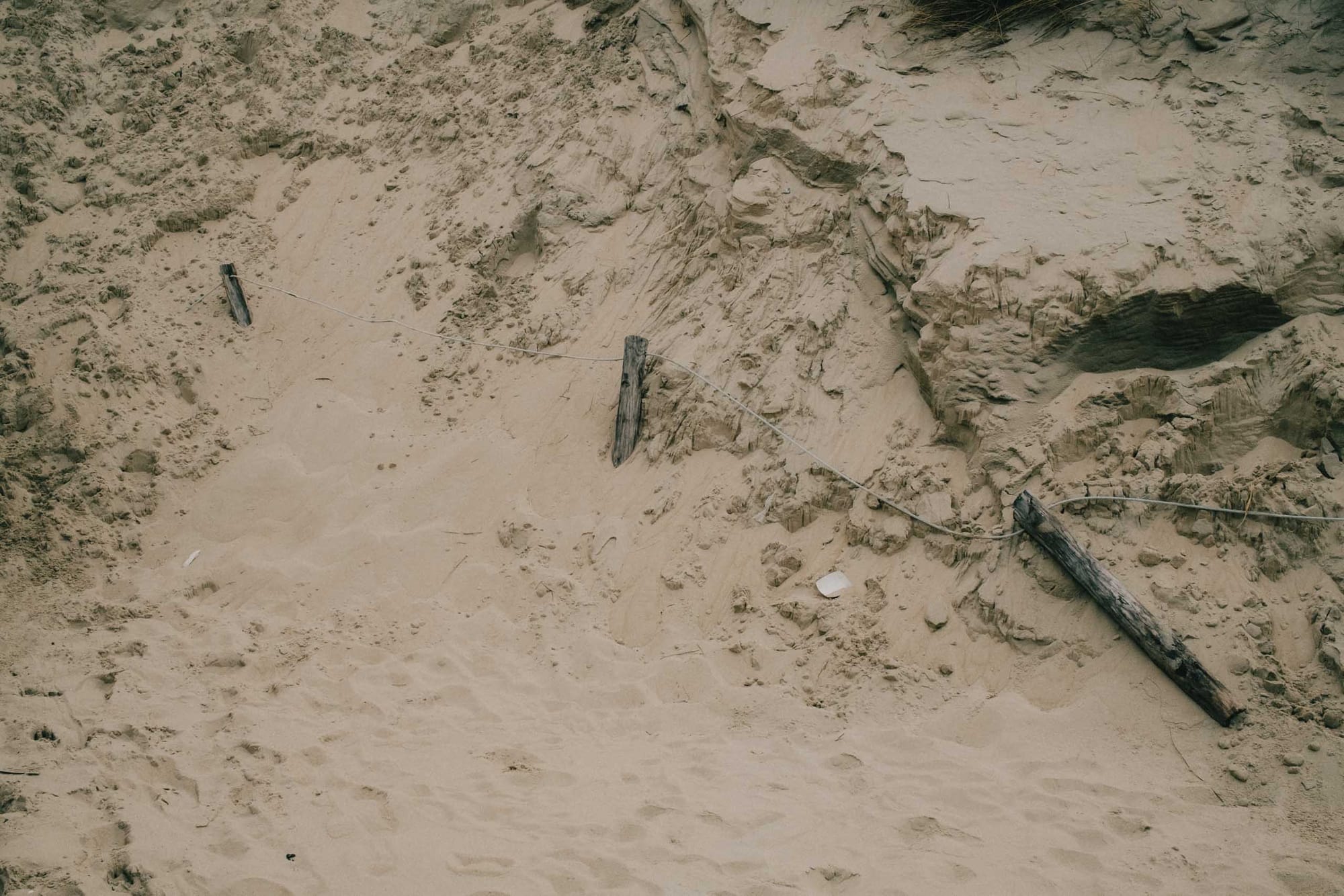
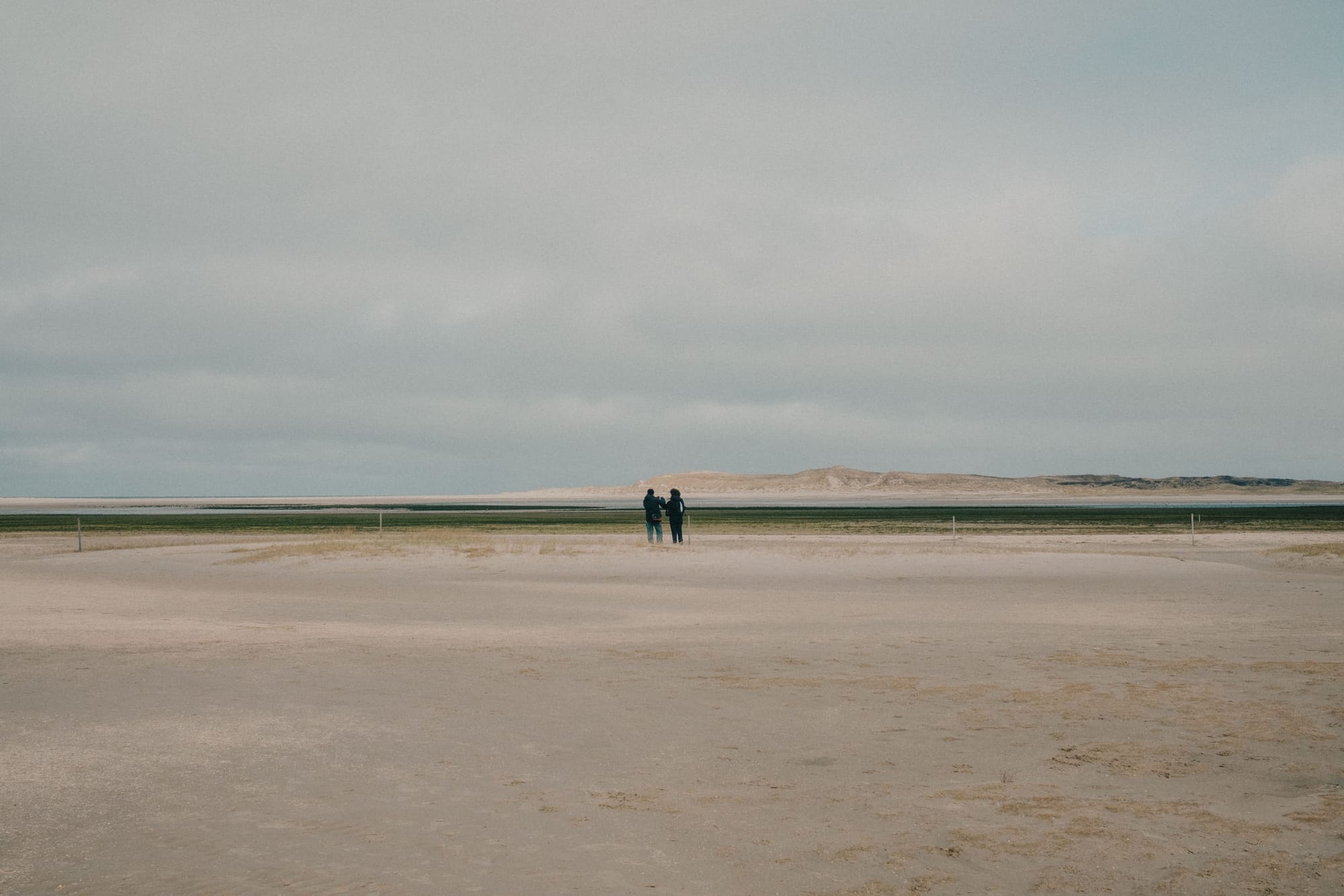
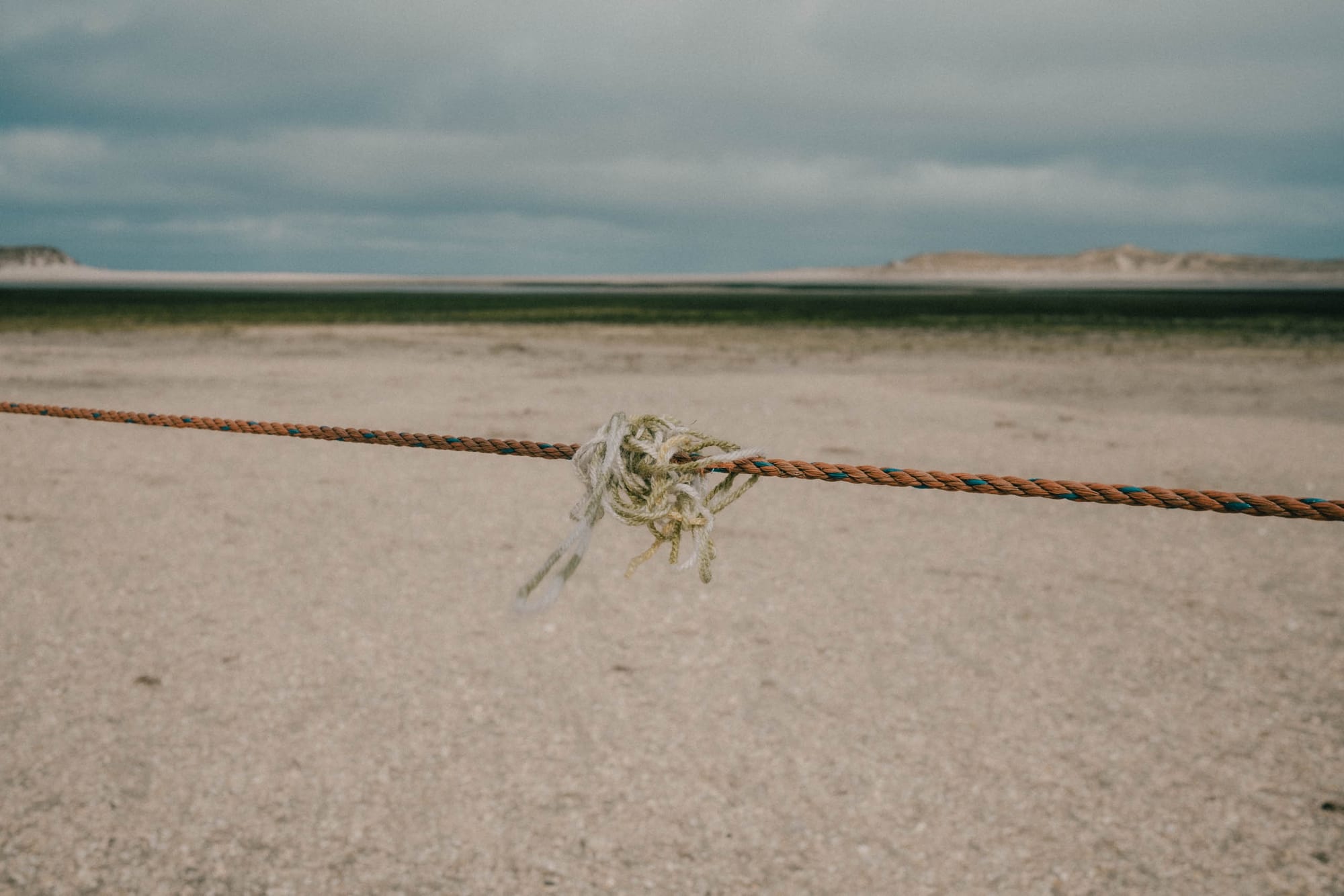
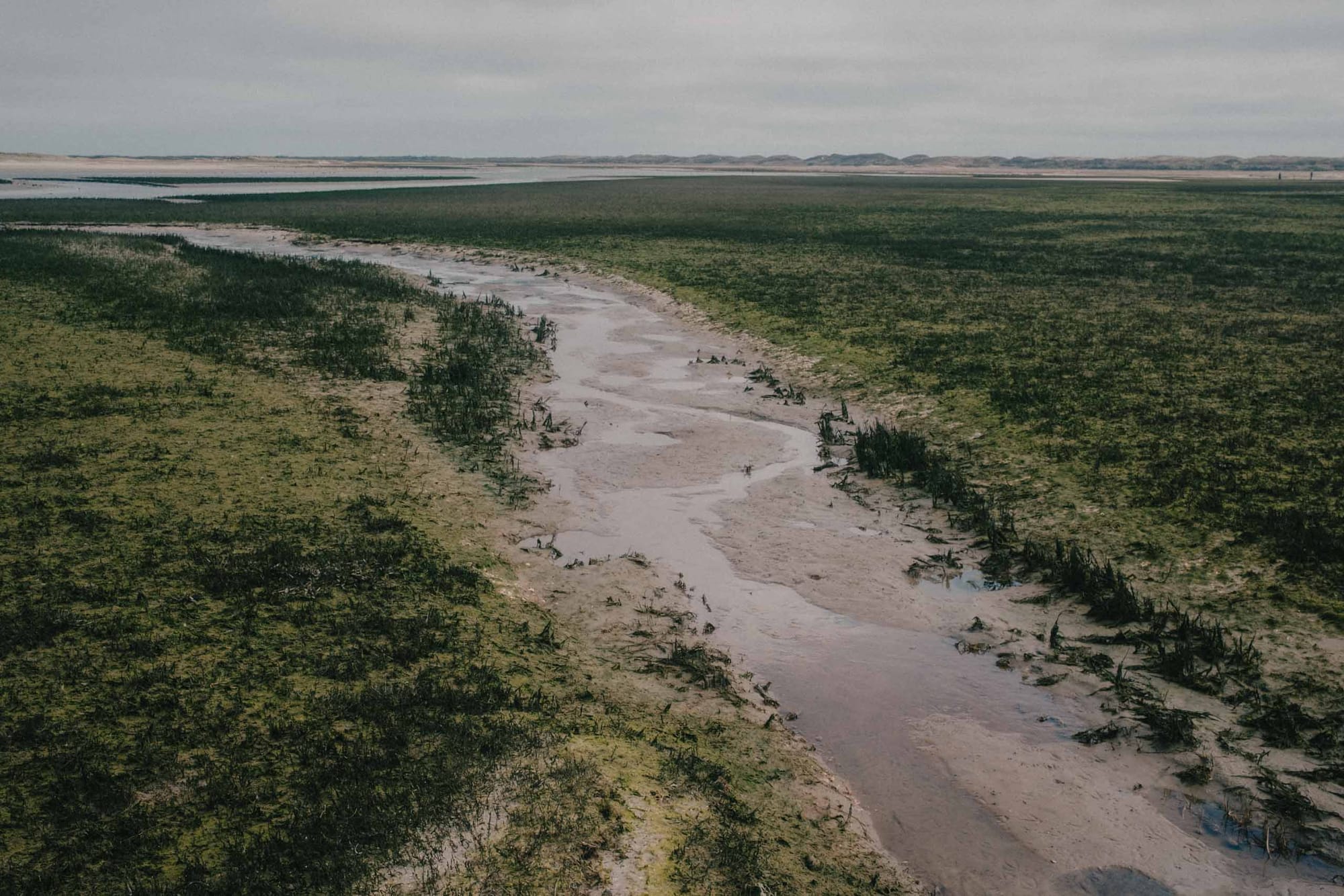
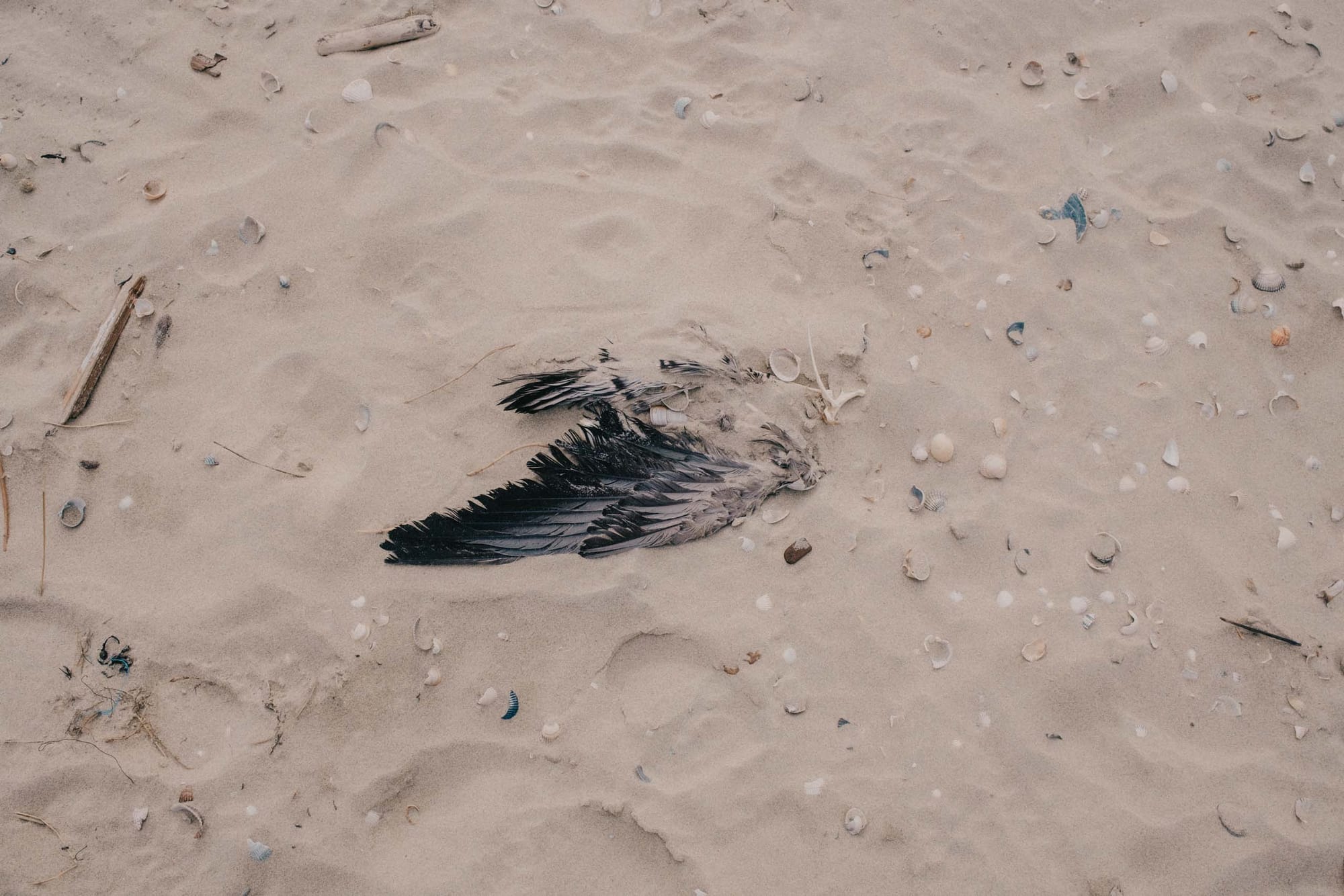
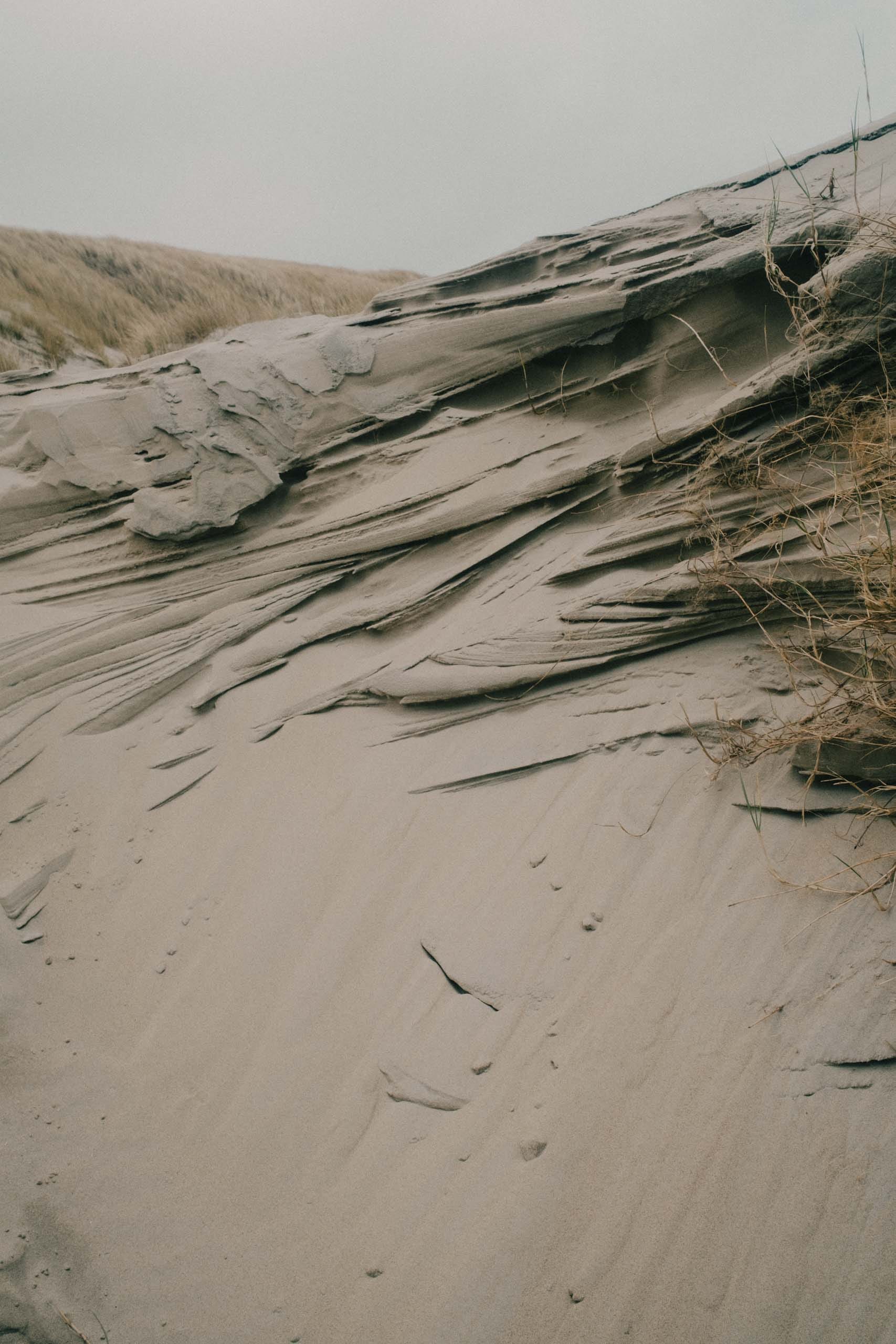
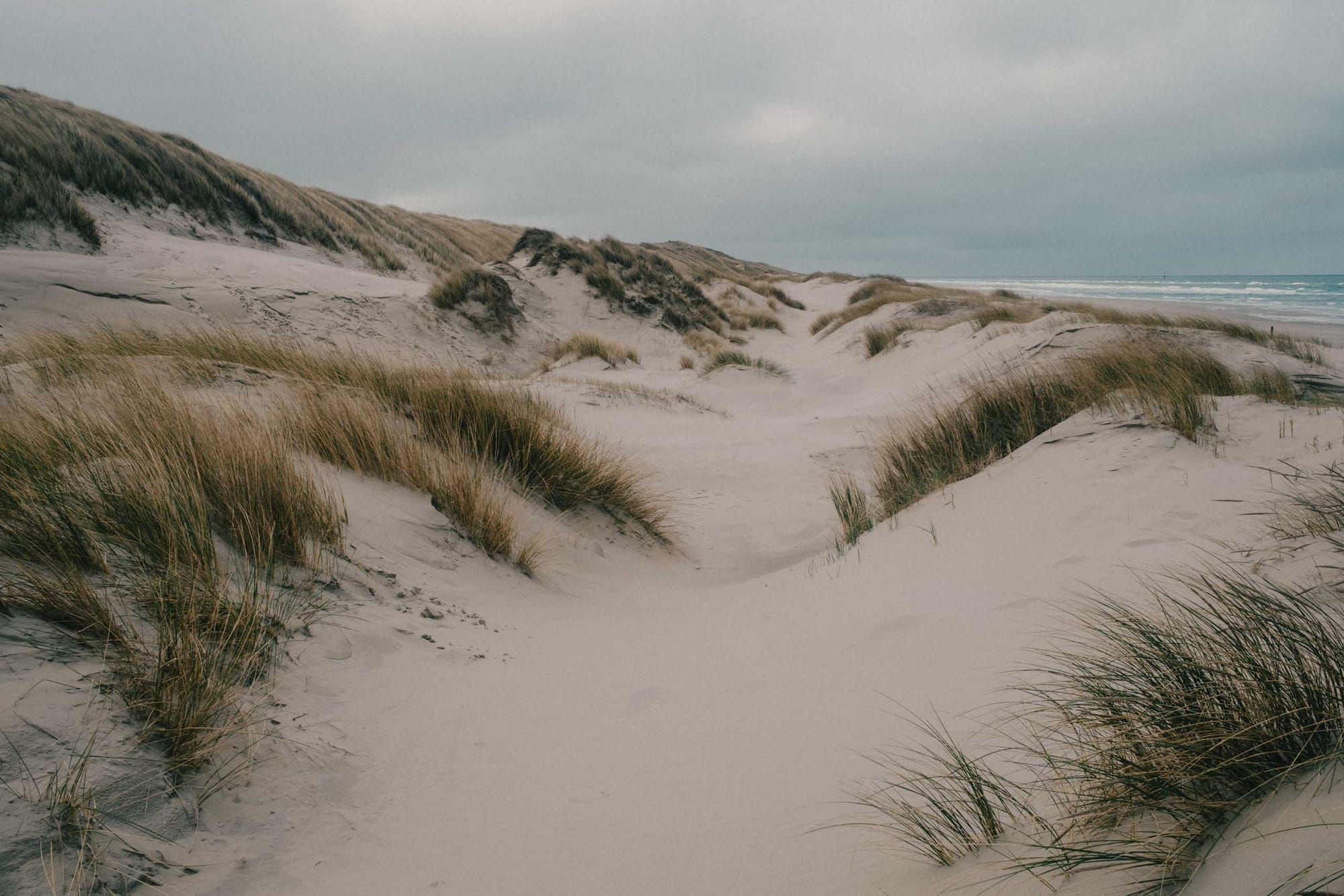
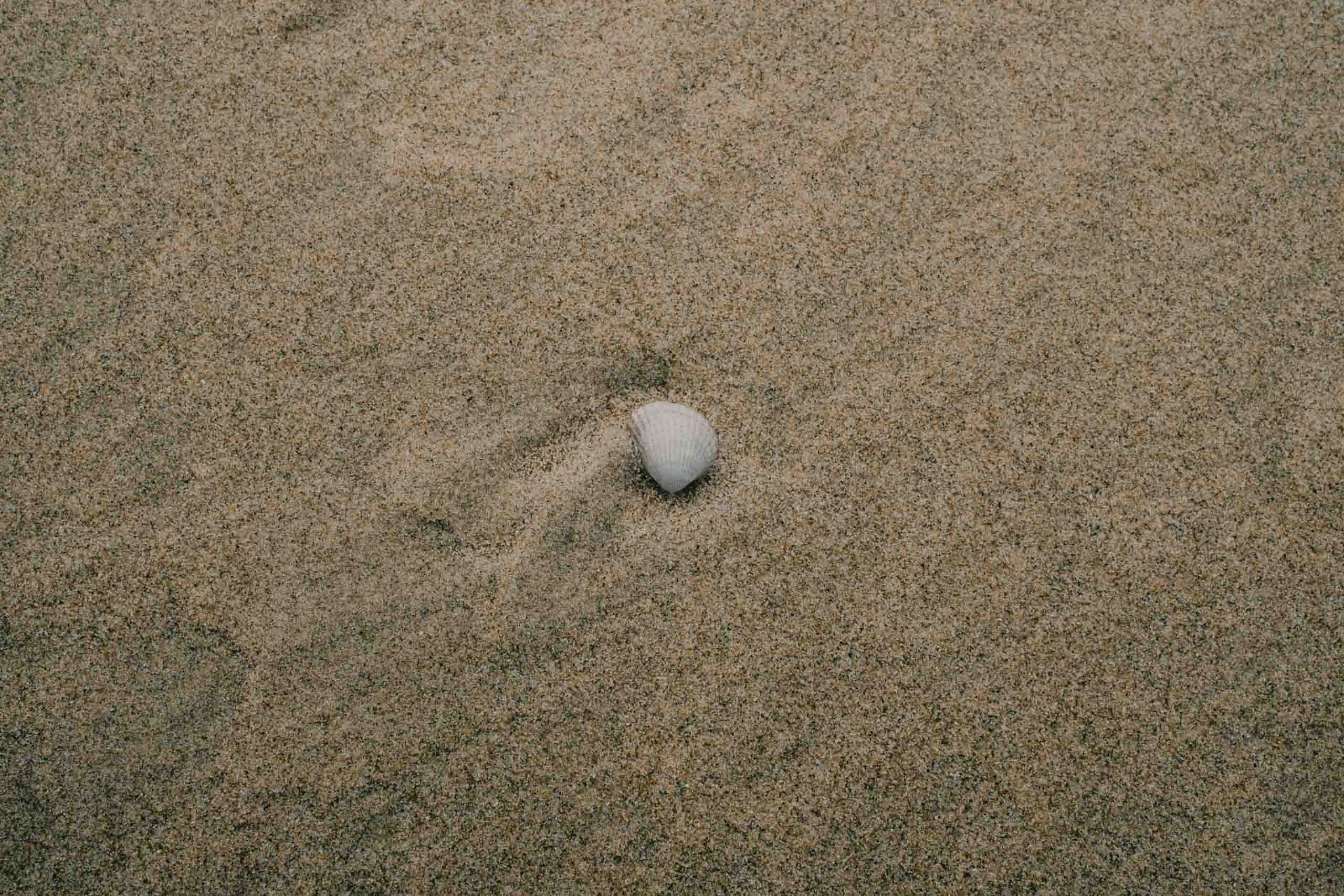
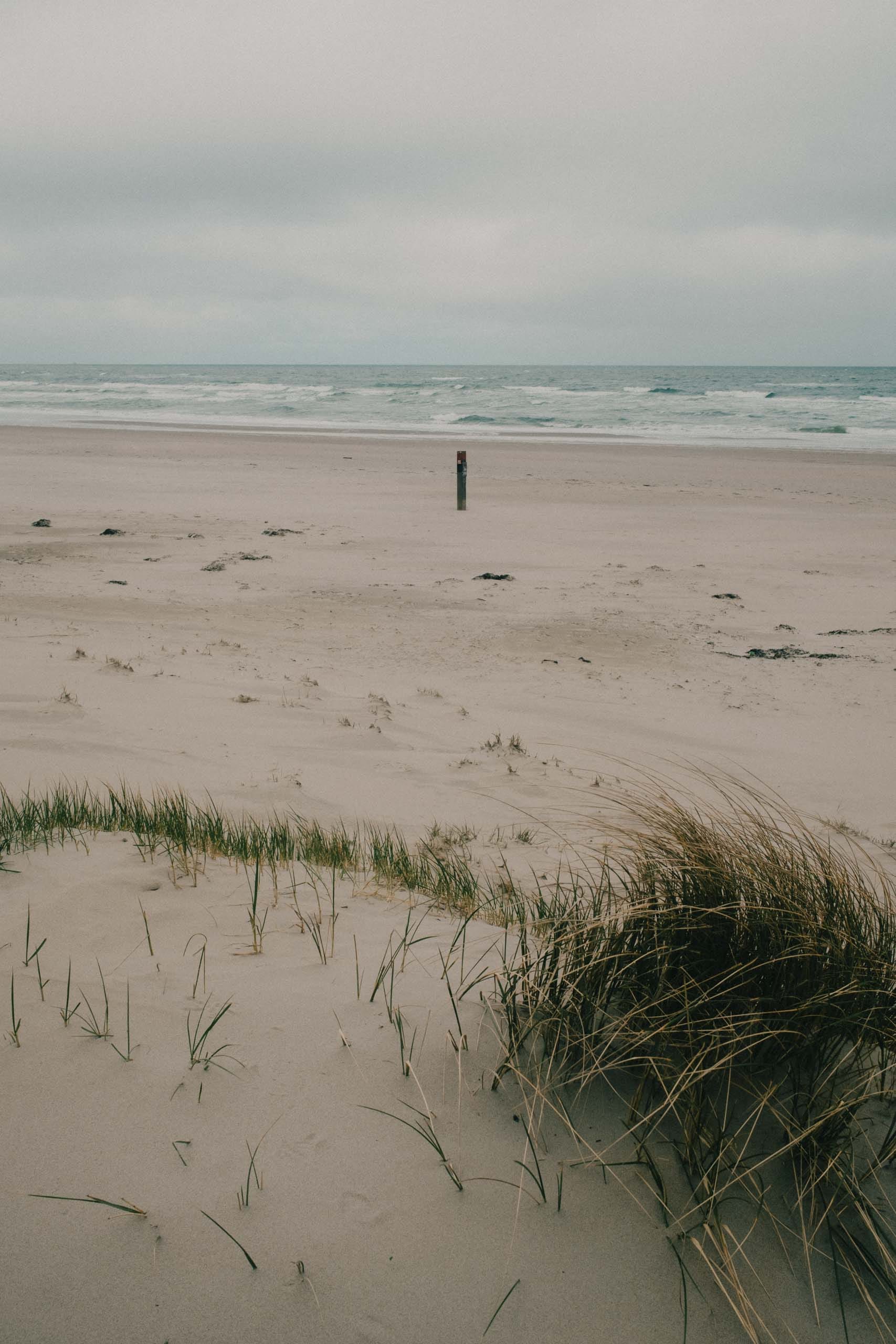
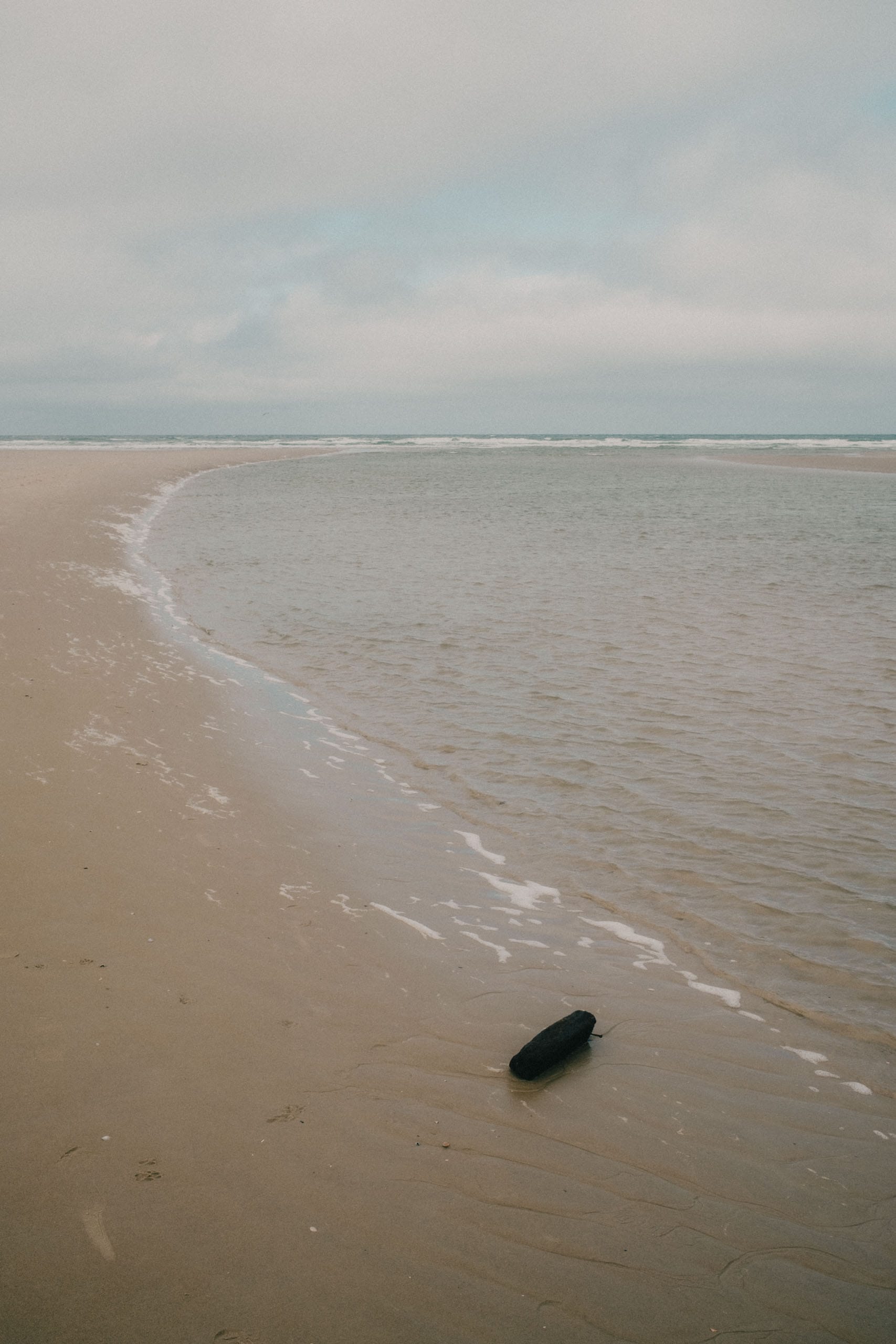
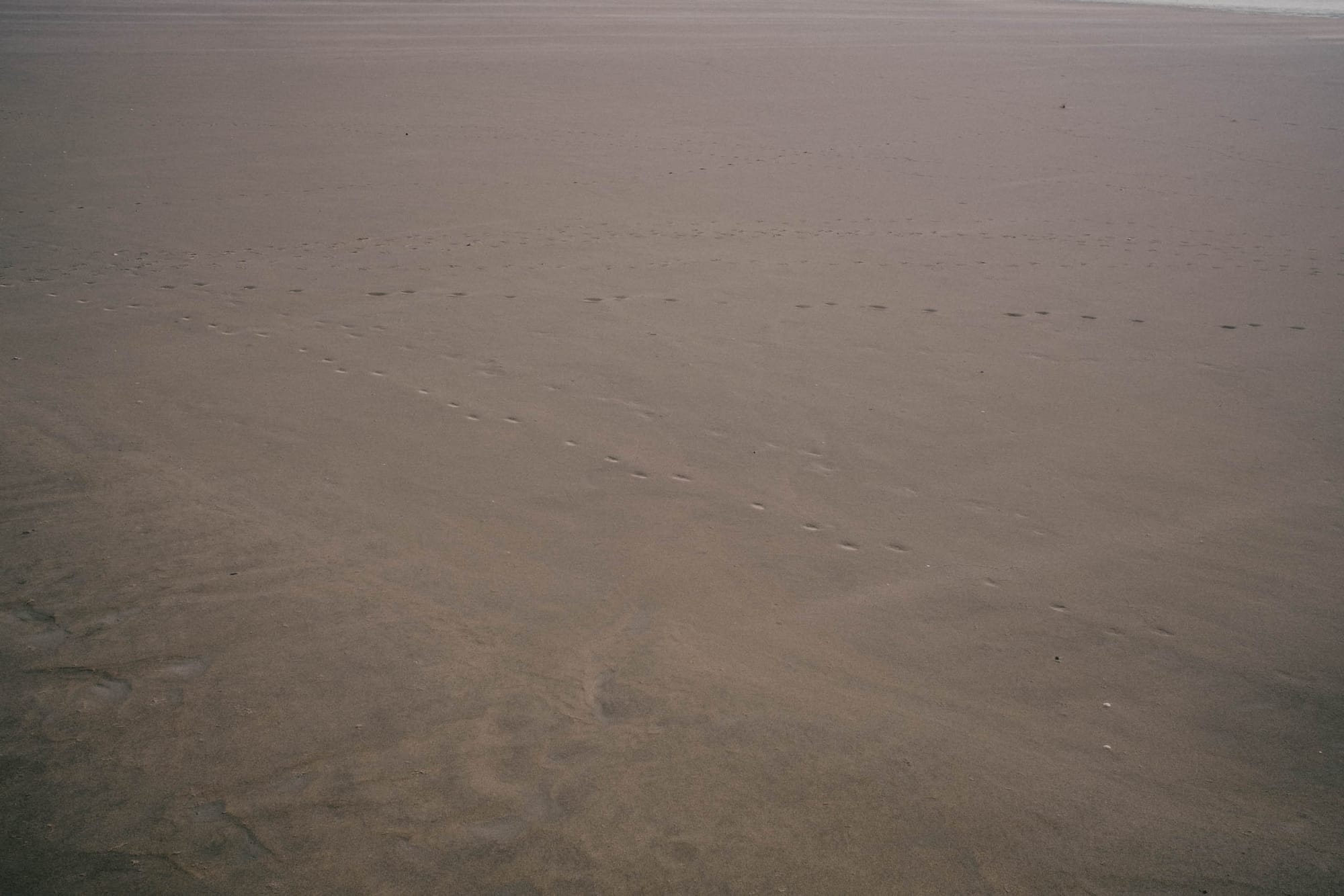
The Slufter and its surrounding landscapes. Rather than being enclosed by dikes, it remains open to the sea, allowing tides to deposit nutrient-rich sediment that supports specialized salt-tolerant vegetation and attracts a wide range of bird species throughout the year. Most of it is a nature reserve to give the birds their peace.
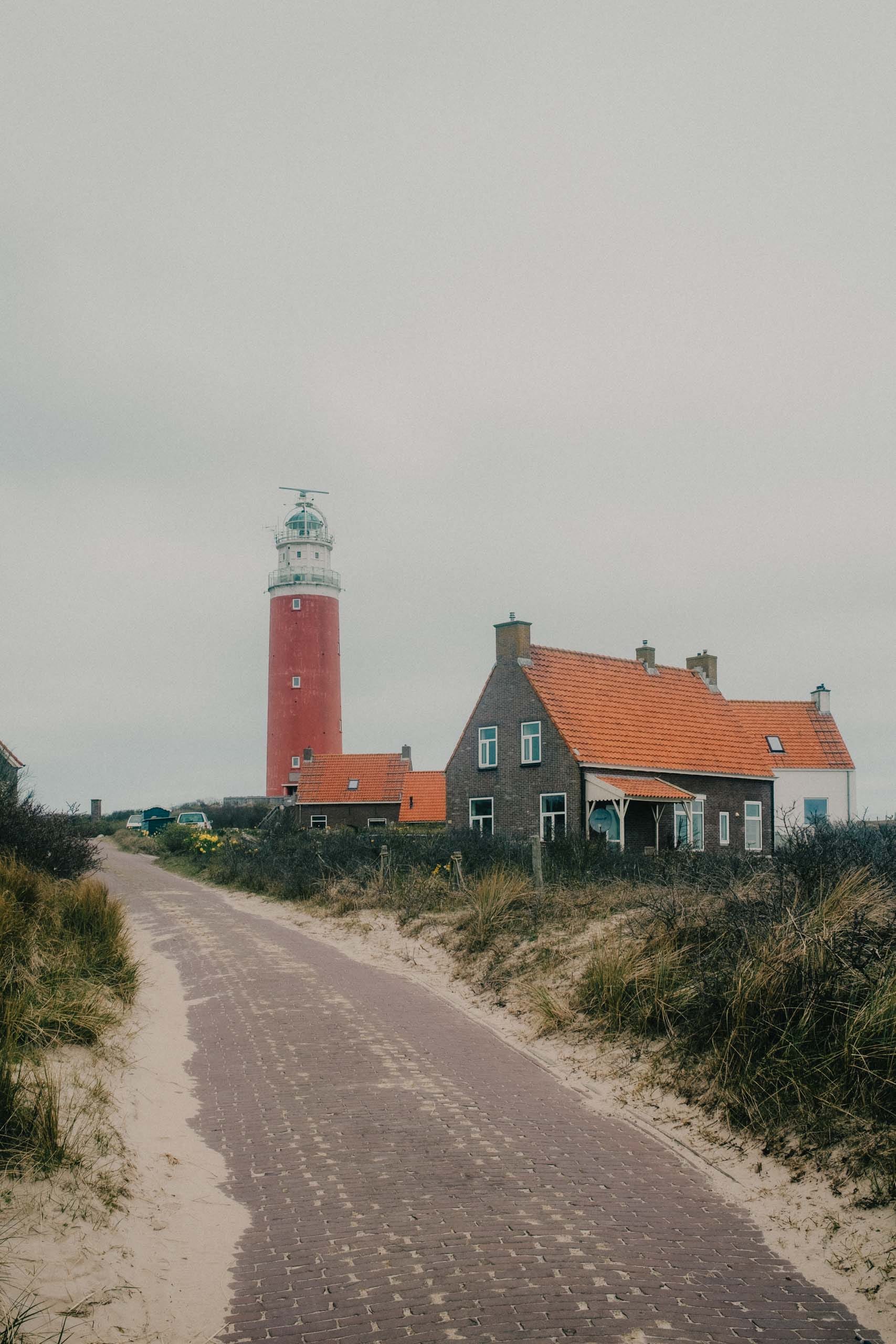
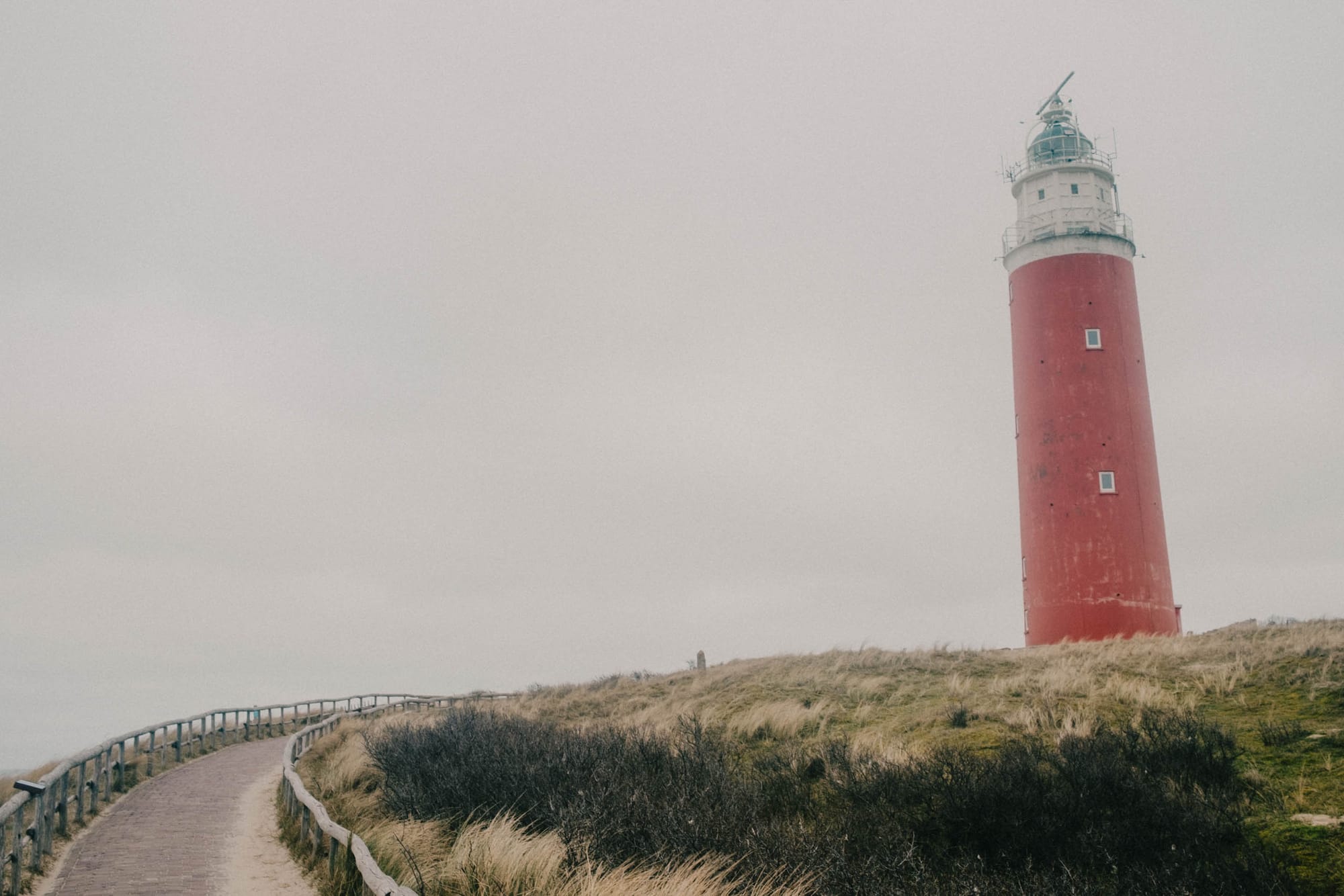
The famous lighthouse at the northern tip of the island. Known as Eierland Lighthouse, it was built in 1864 to guide ships through the shifting sands of the North Sea and the Wadden Sea, and remains an active navigation point today.
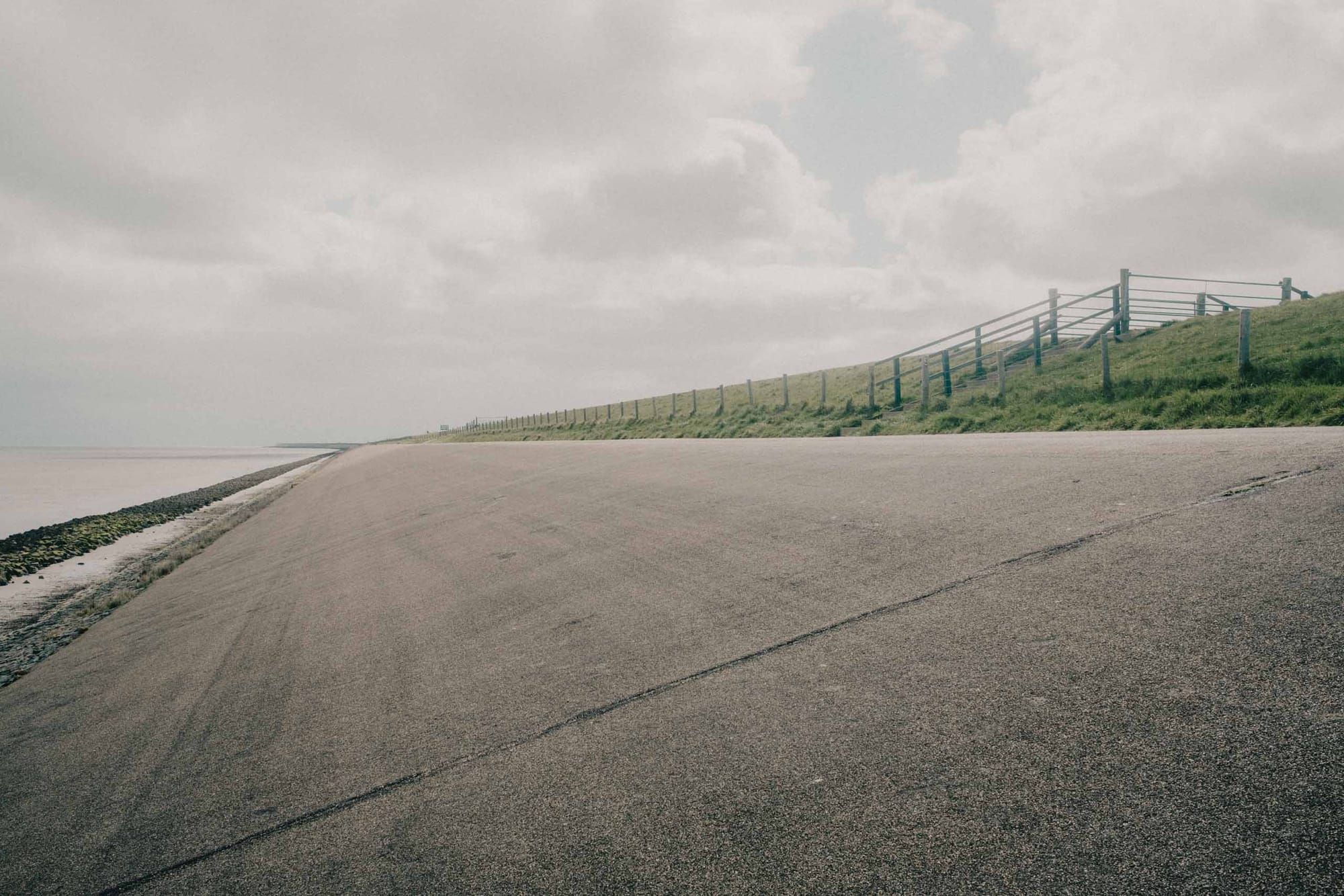
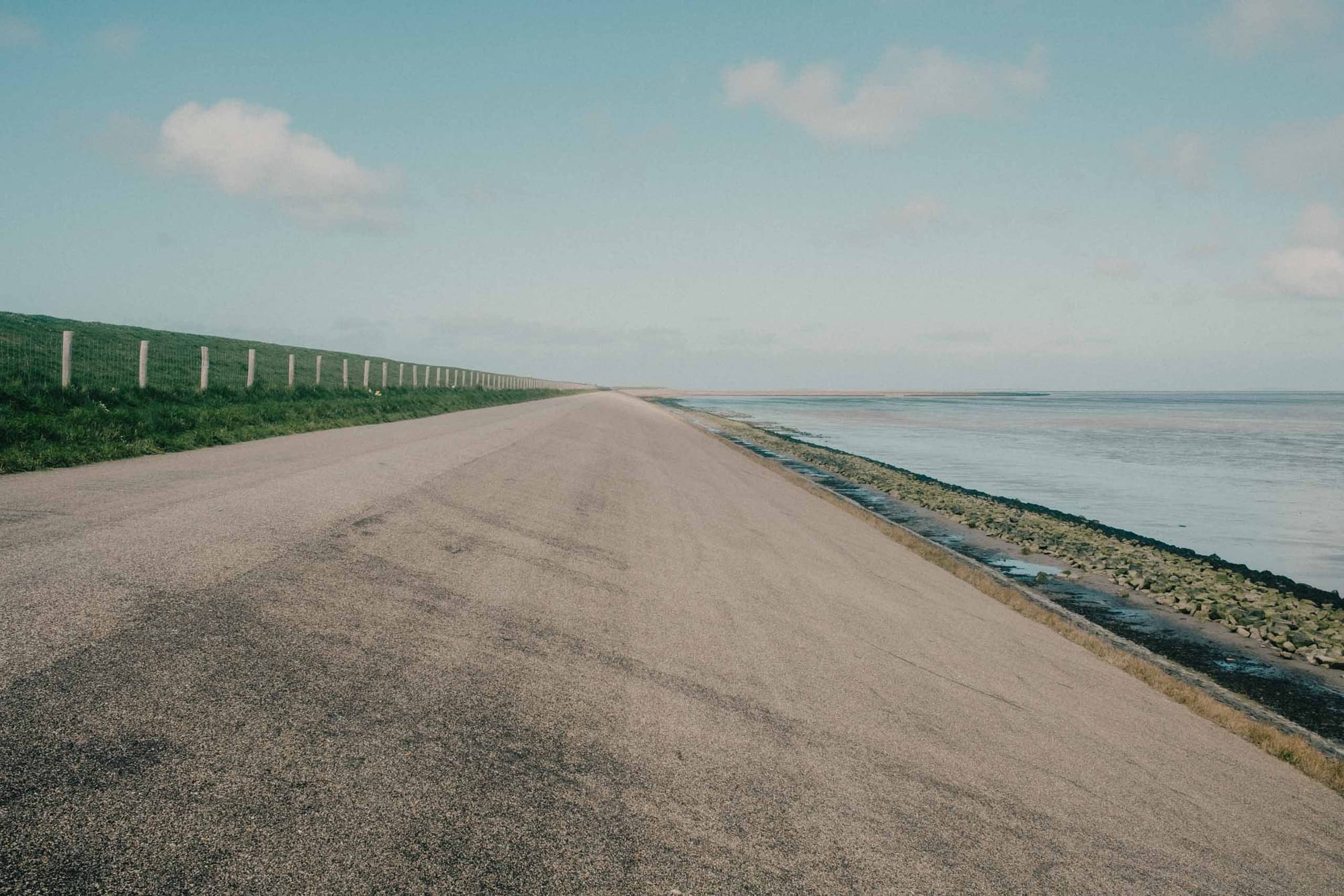
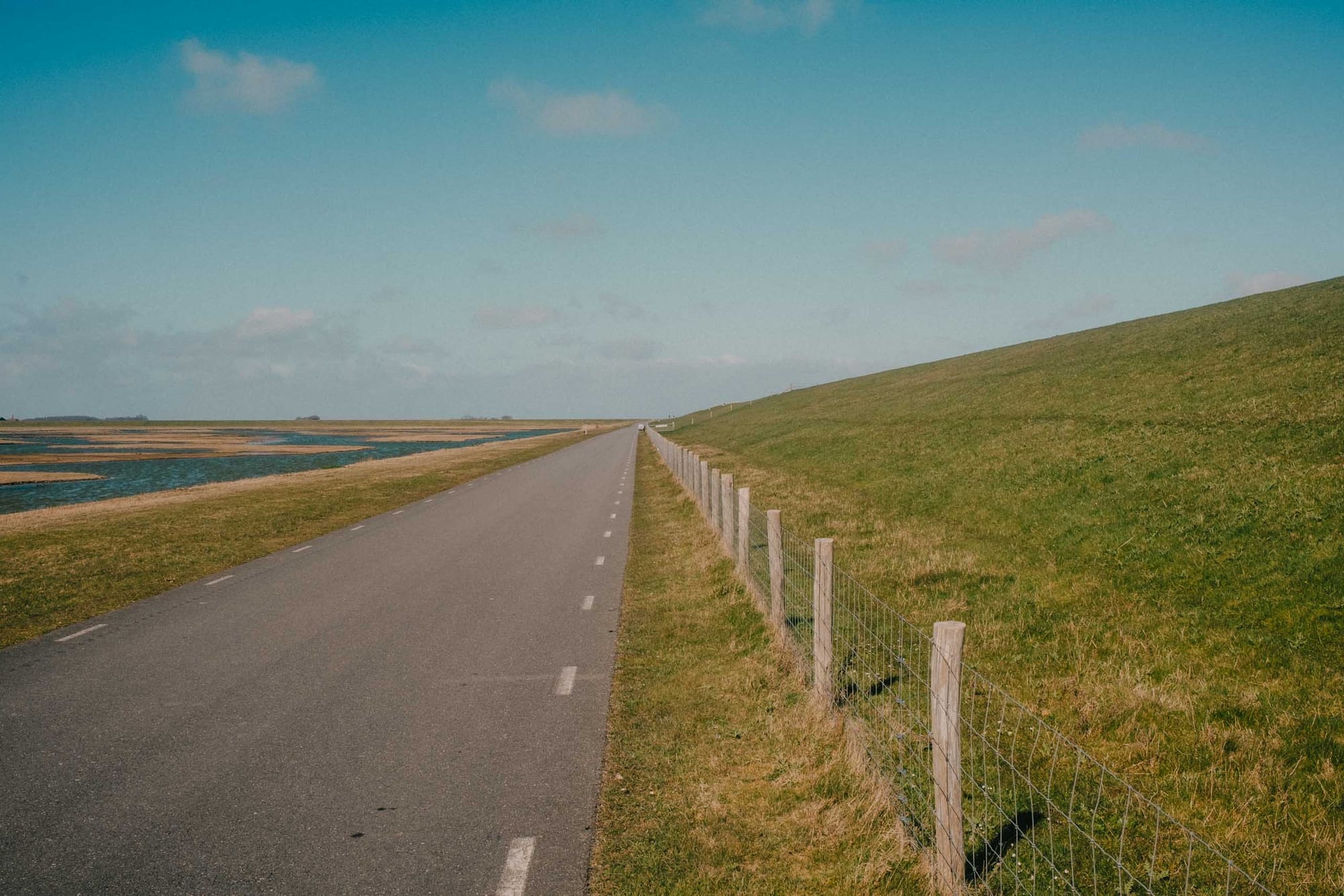
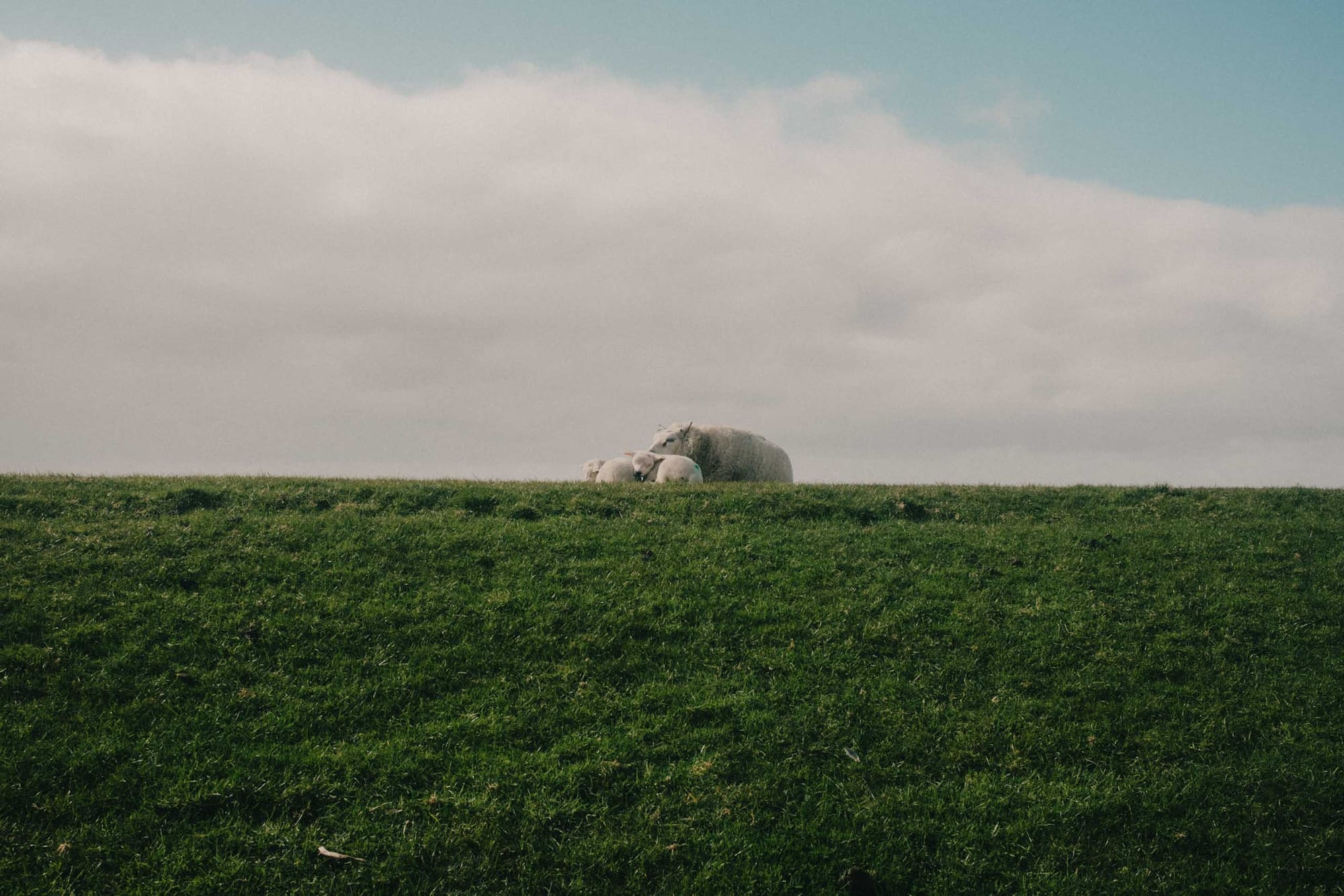
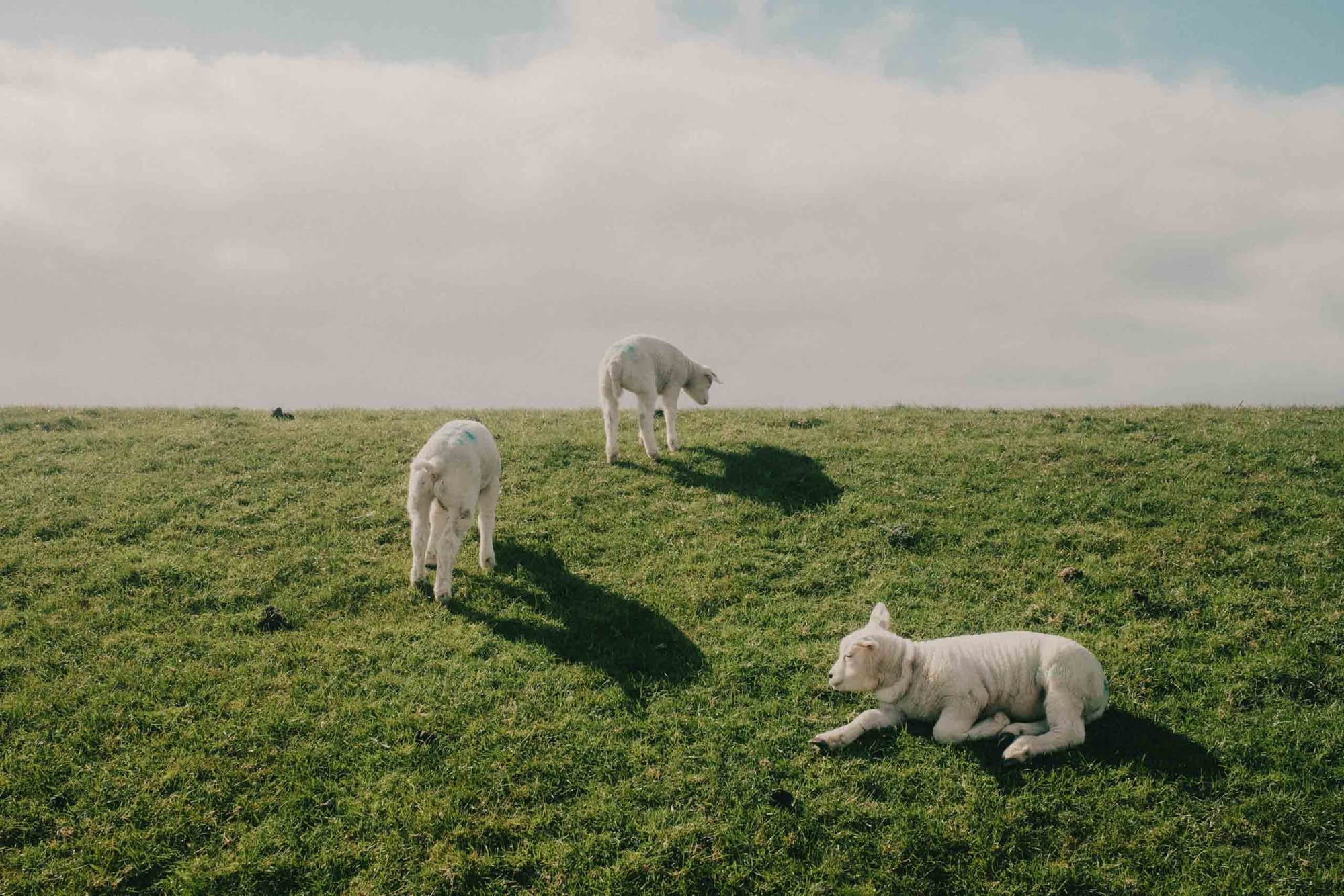
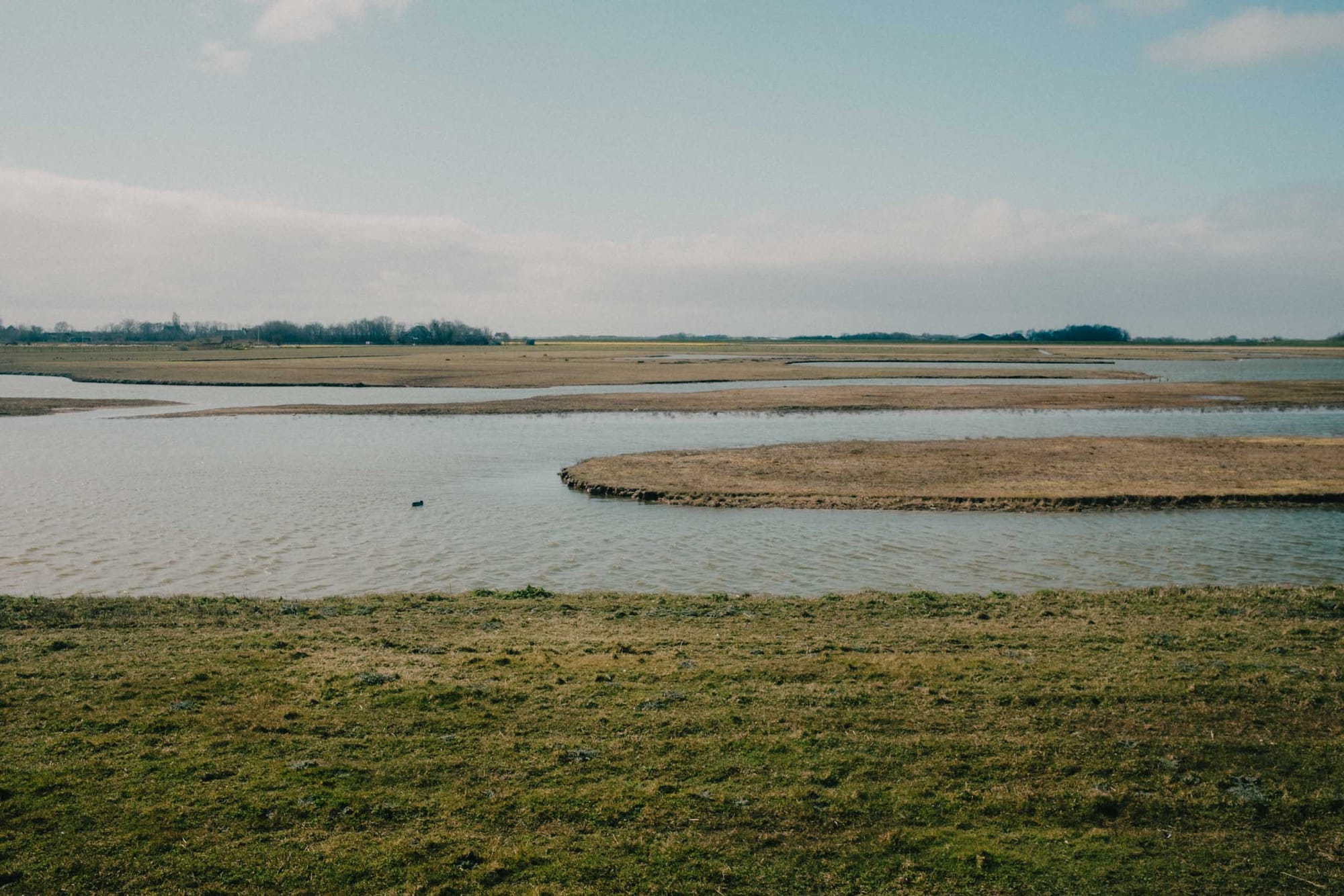
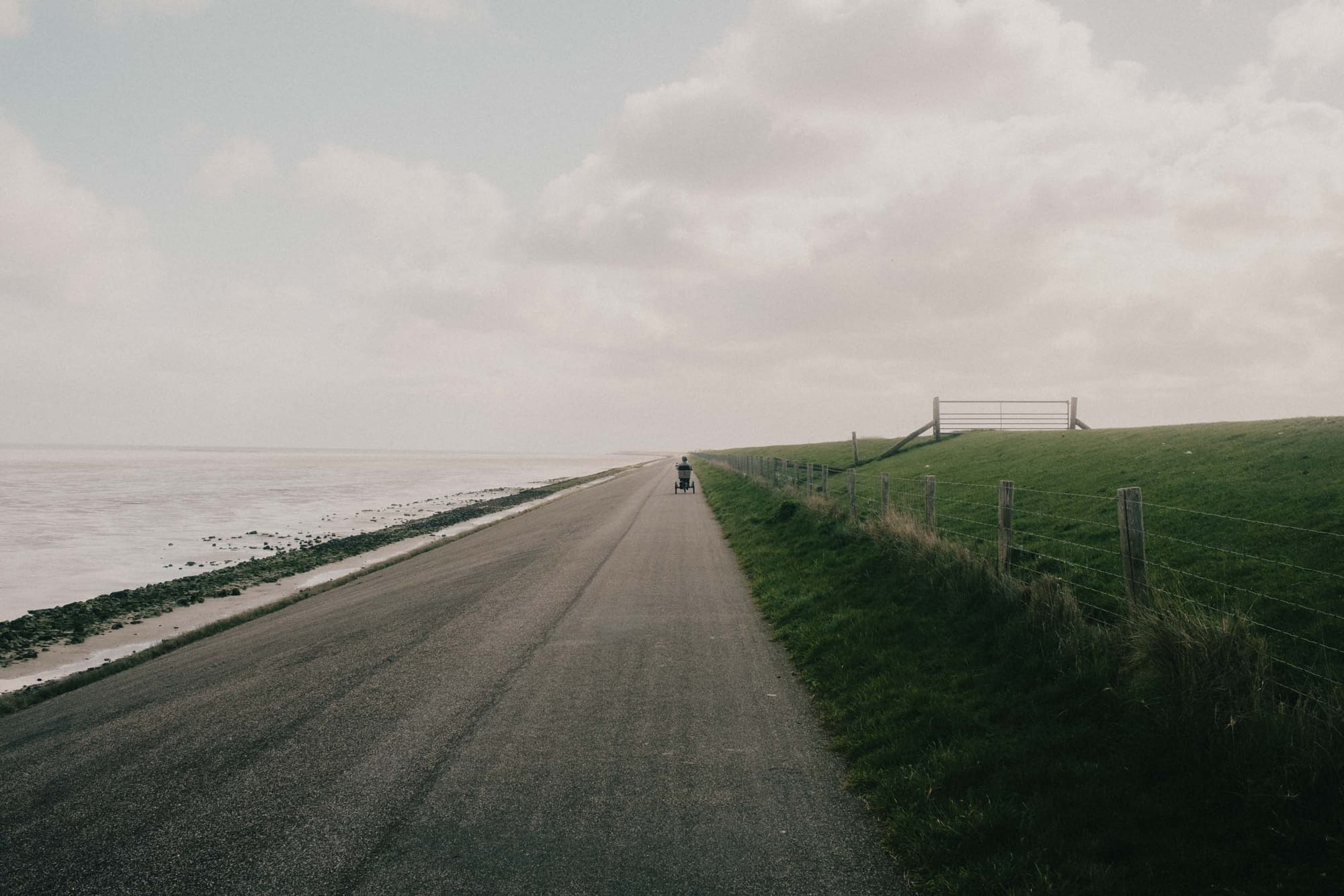
The dikes, its inhabitants, and the landscapes surrounding it from both sides. Texel’s engineered dike system, with straight, tarmac-covered structures, protect the island from the sea while organizing the land behind them. Their slopes are maintained by grazing Texelaar sheep, an integral part of local land management. On one side lies Utopia, an artificially constructed nature reserve designed to attract and support birdlife; on the other, De Schorren stretches out as mudflats and salt marshes. It's continuously shaped by tidal flows and sediment deposition. Together, these images show how coastal infrastructure, agriculture, and evolving ecosystems intersect along the dike.
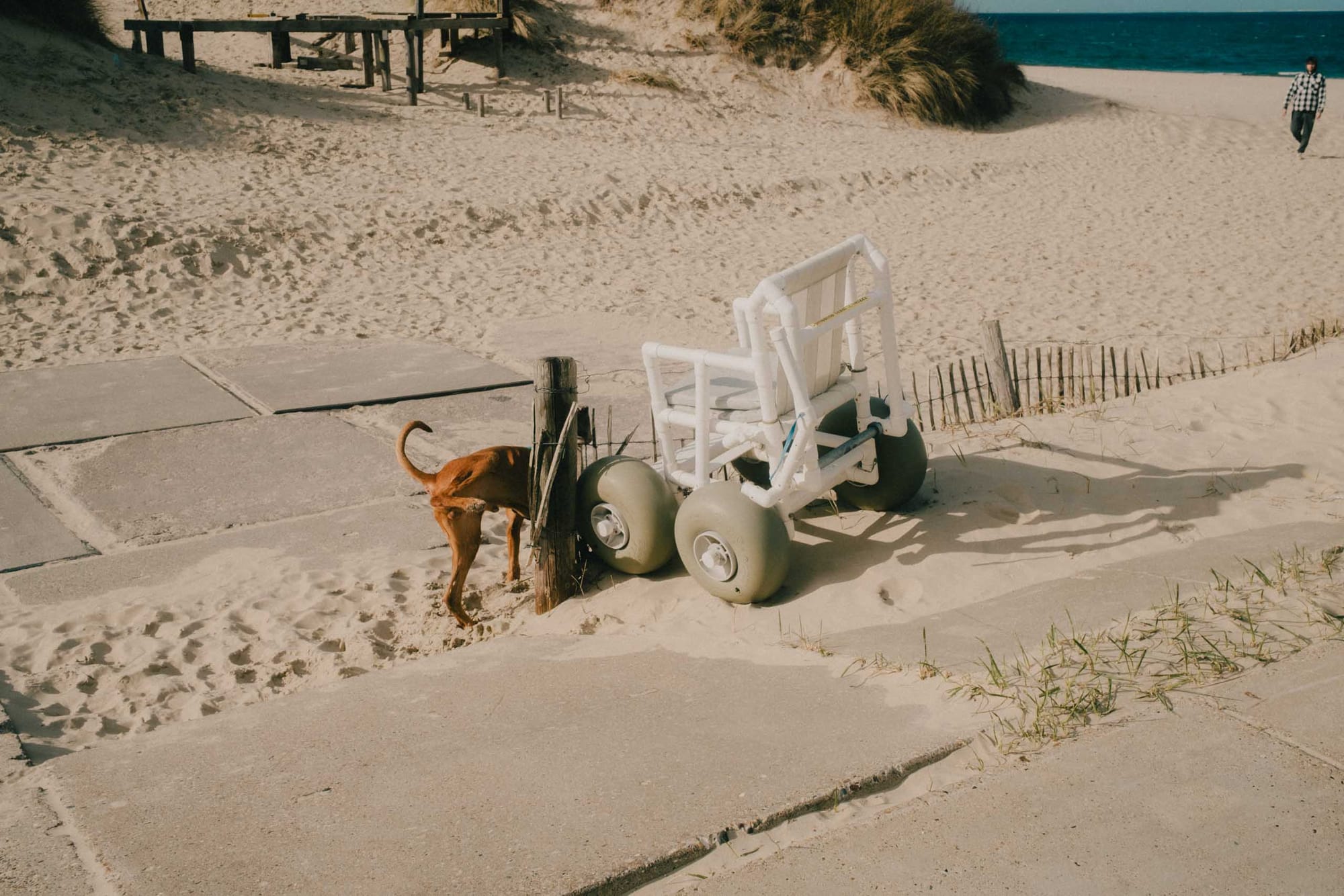
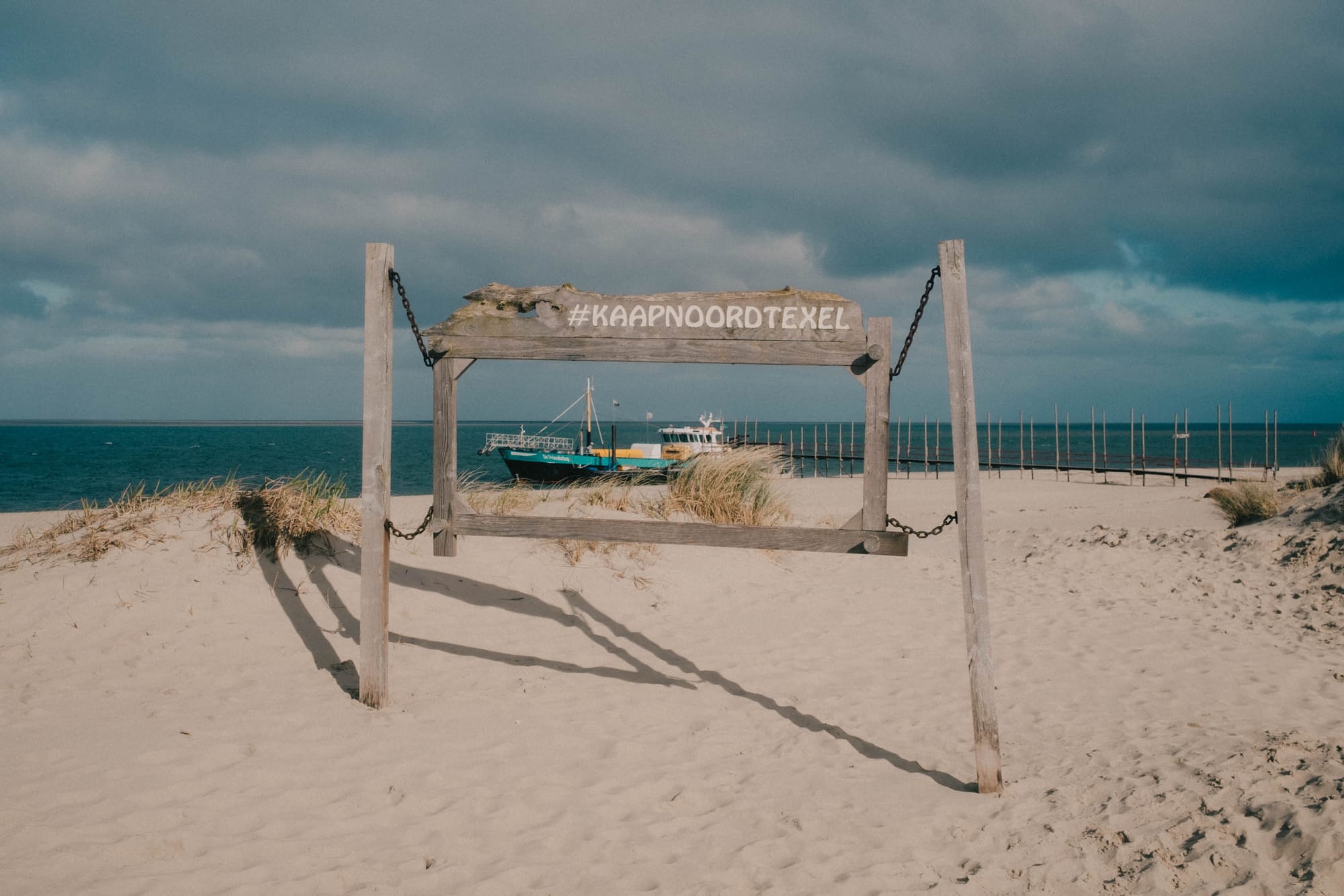
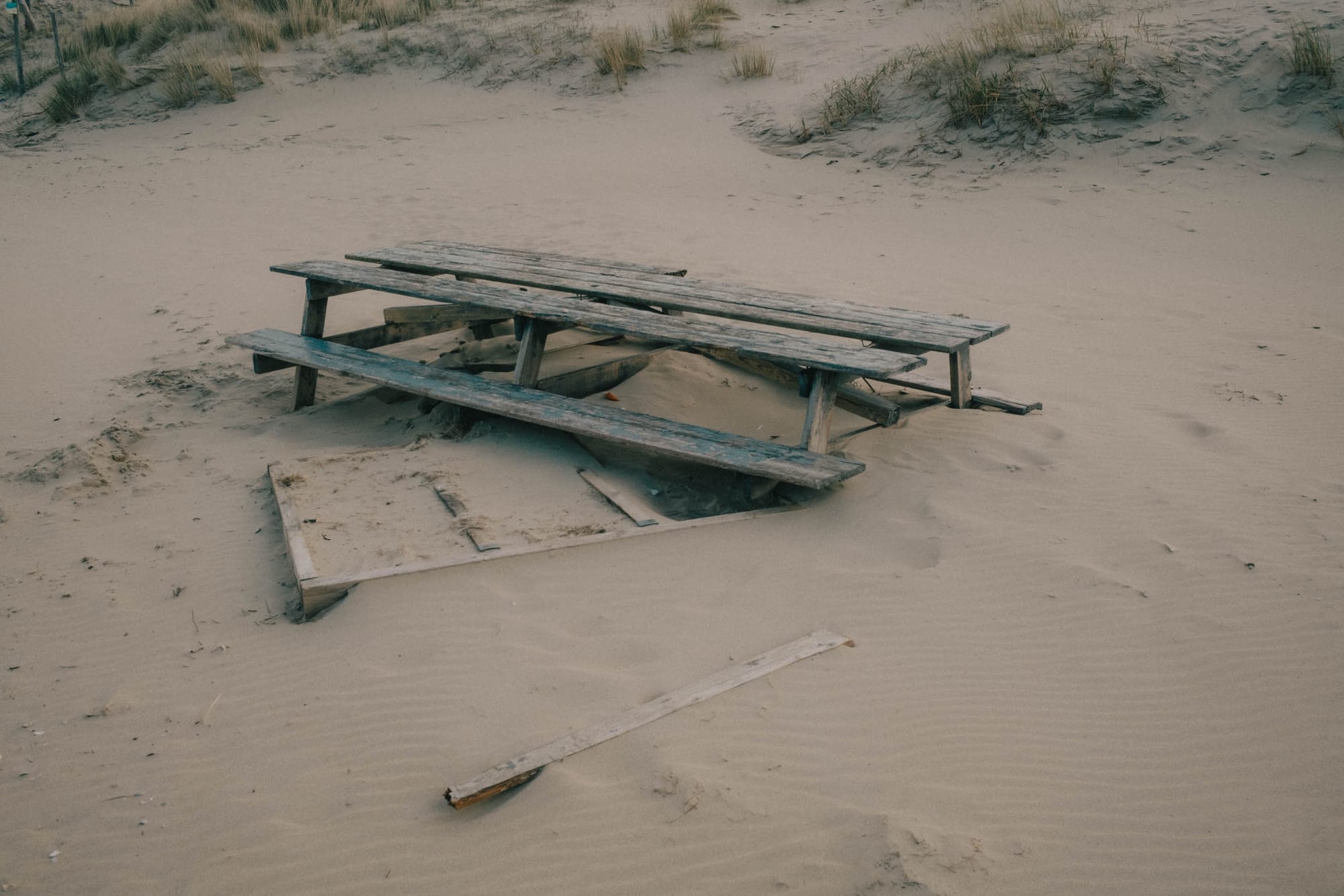
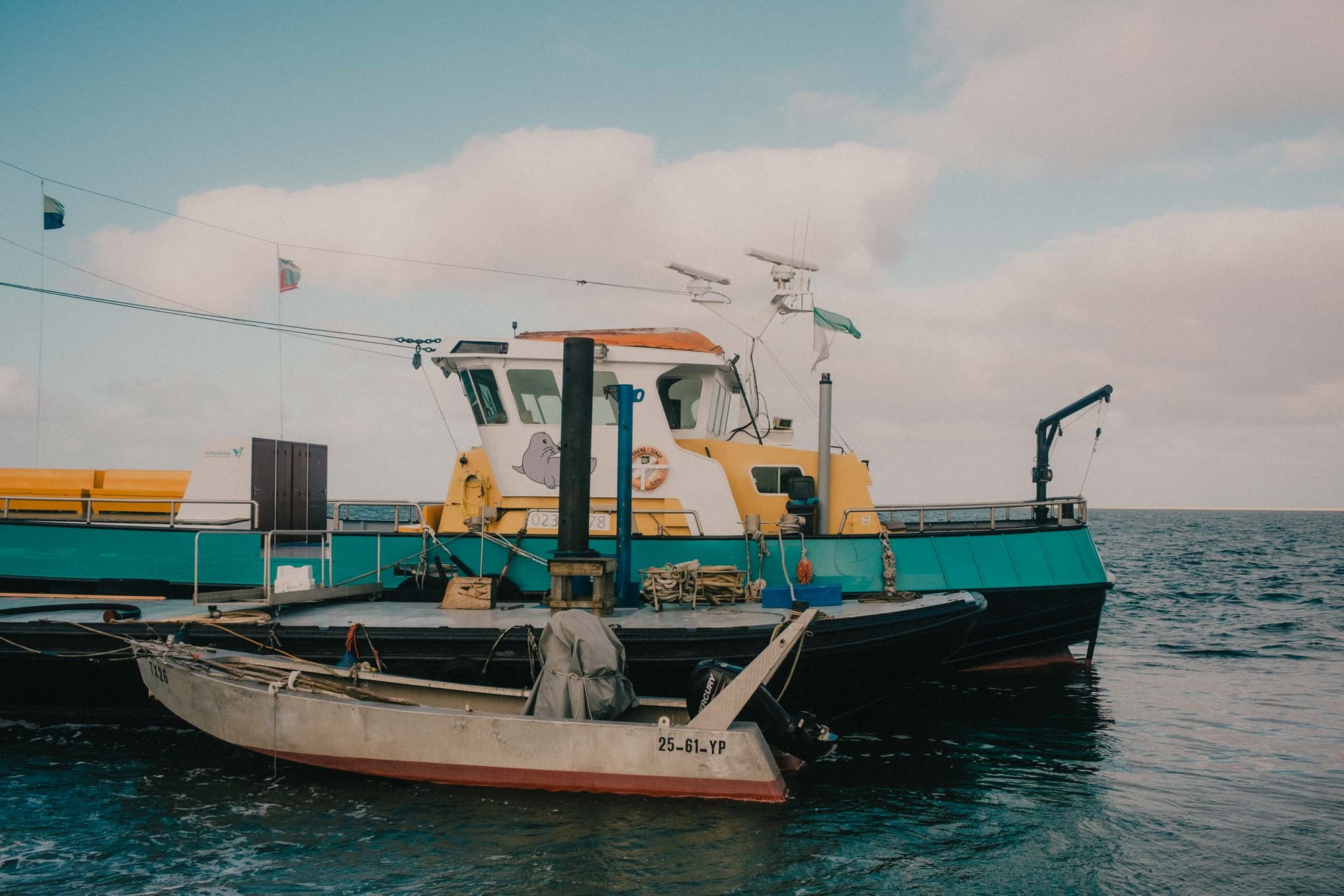
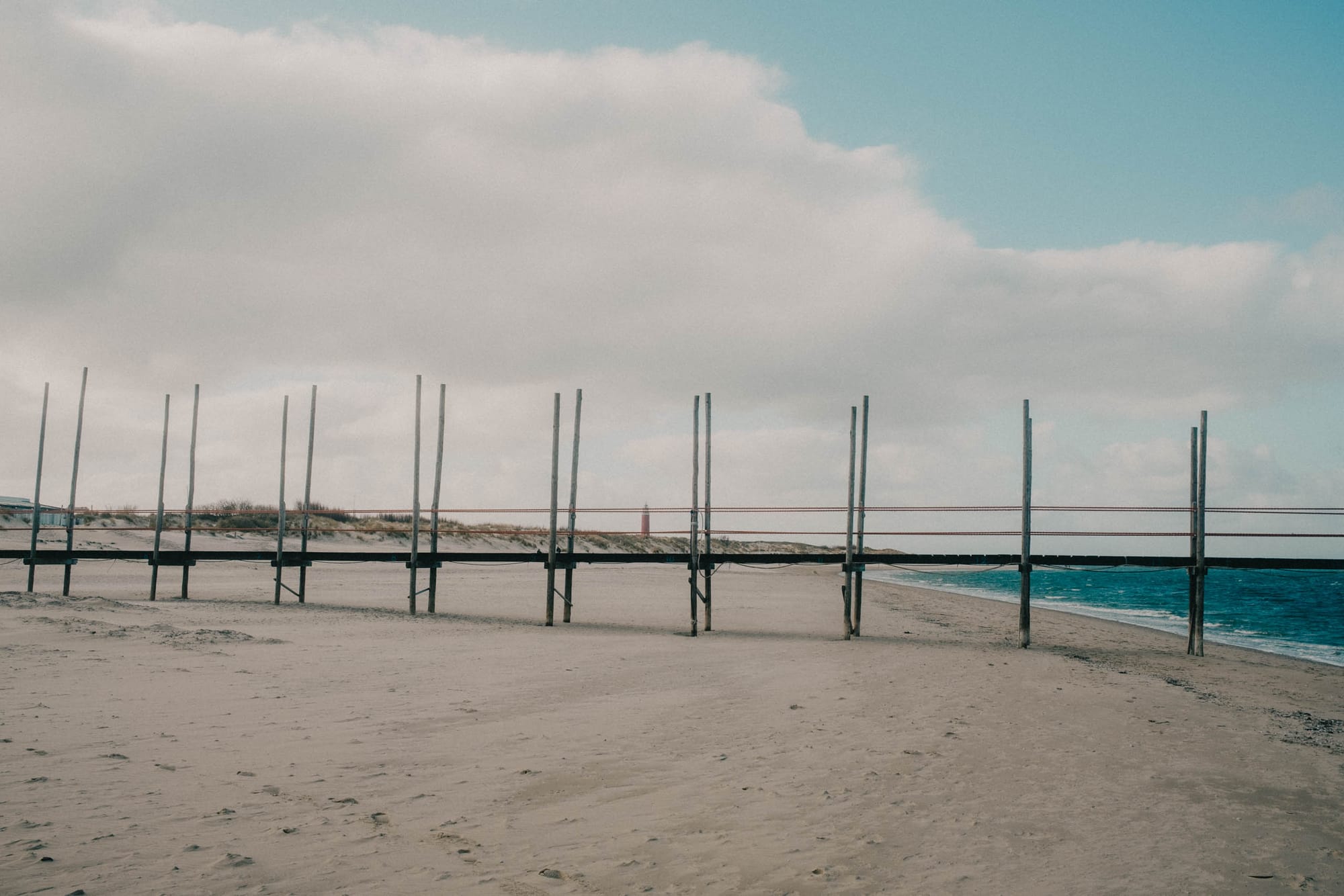
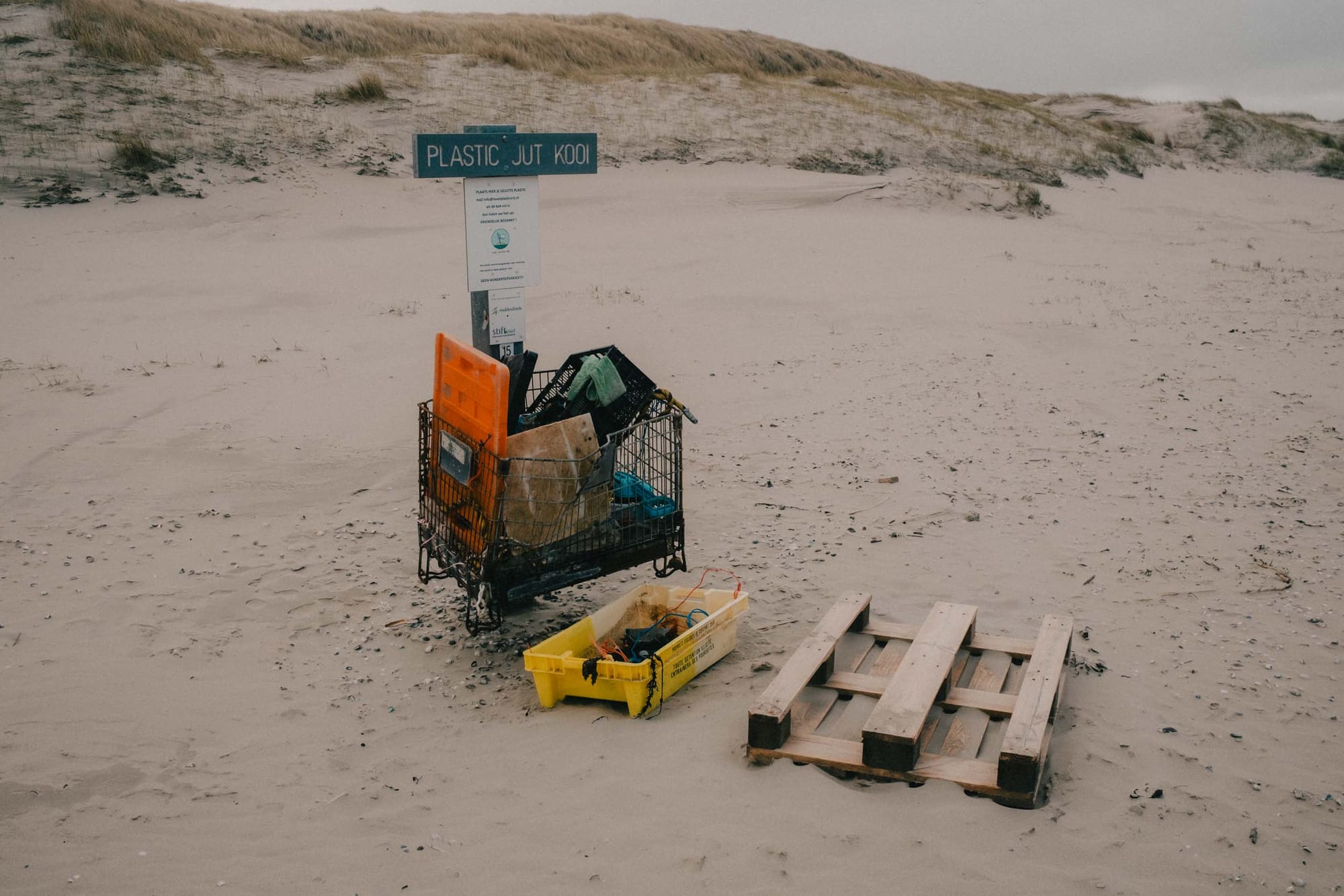
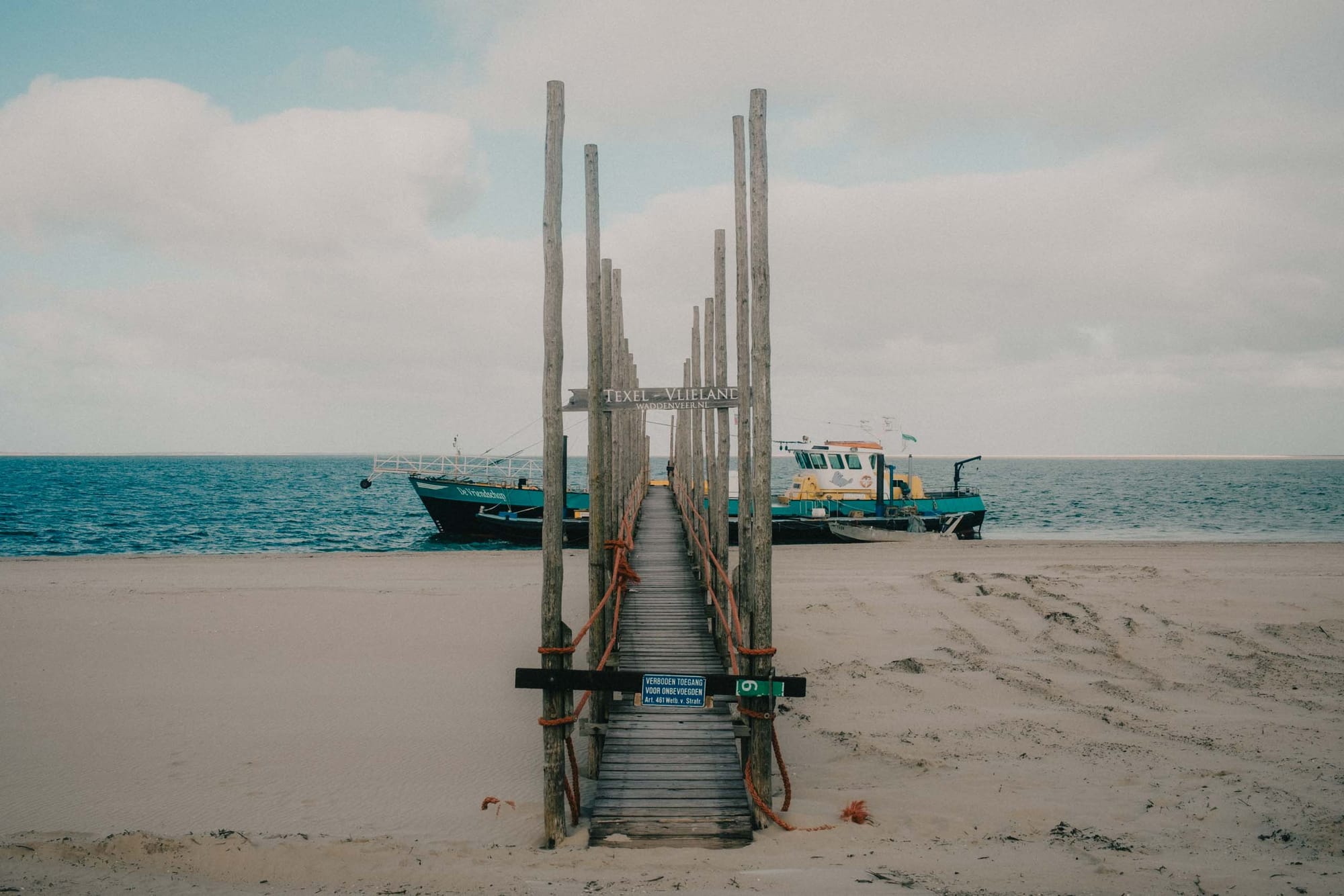
The Waddenveer at Kaap Noord, operated by De Vriendschap, a small, independently run passenger ferry connecting Texel and Vlieland during the sailing season. Departing directly from the beach via temporary wooden jetties, the crossing depends on tides, weather, and shifting sandbanks in the Eierlandse Gat. These images show the ferry infrastructure in place. Functional, seasonal structures designed for a coastline that cannot be fixed. As well as signs of access and use, from a beach wheelchair to simple service installations supporting the route.
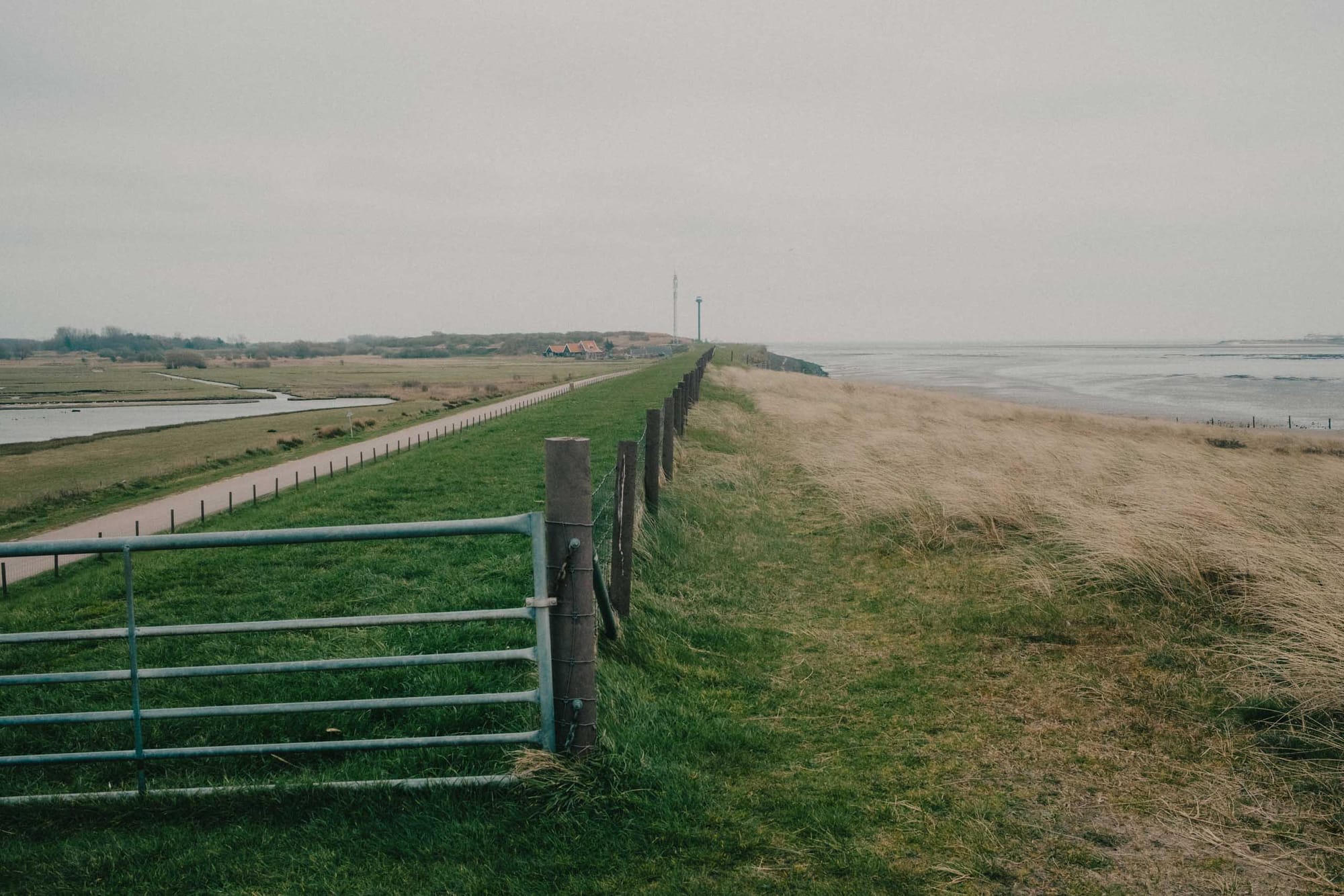
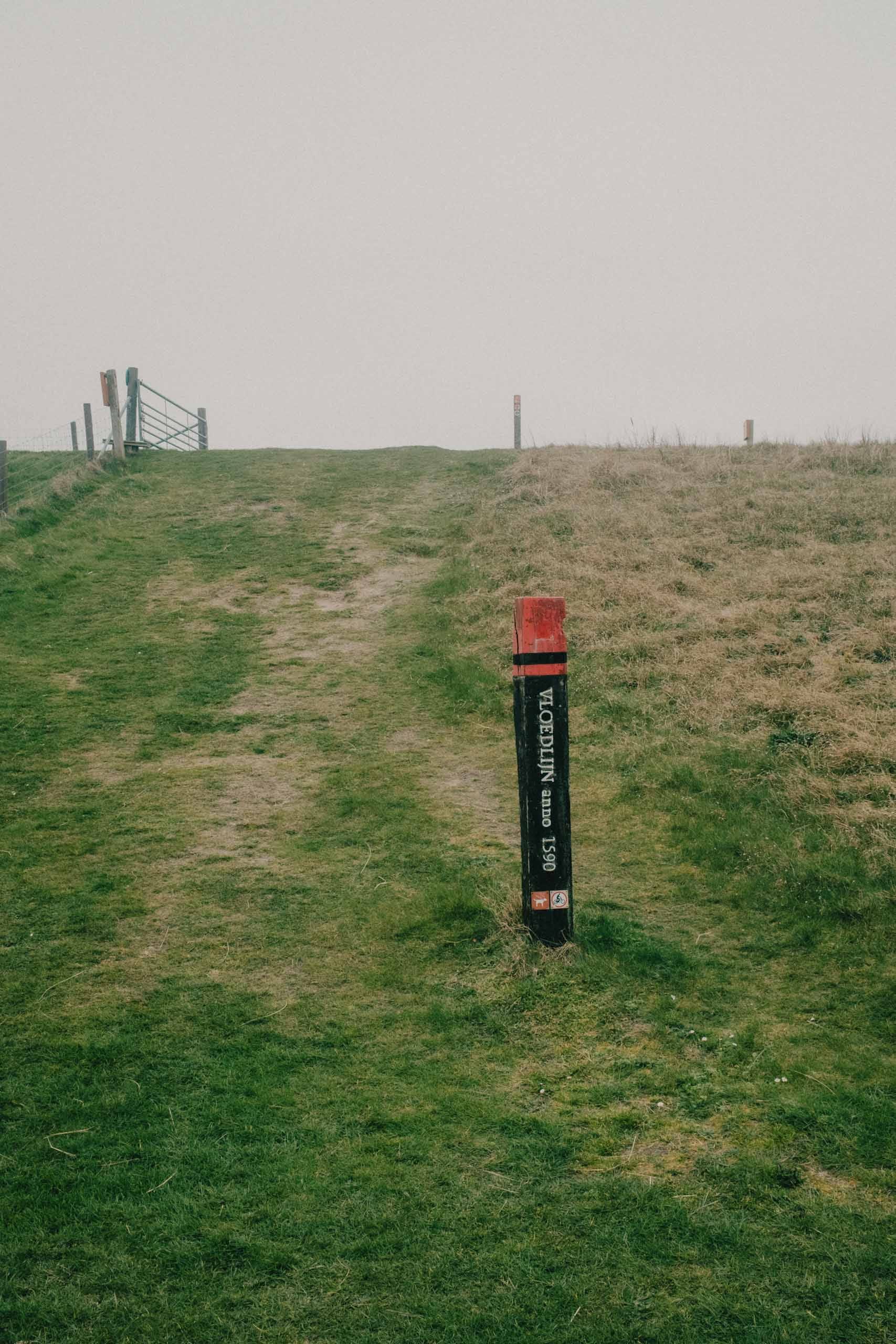
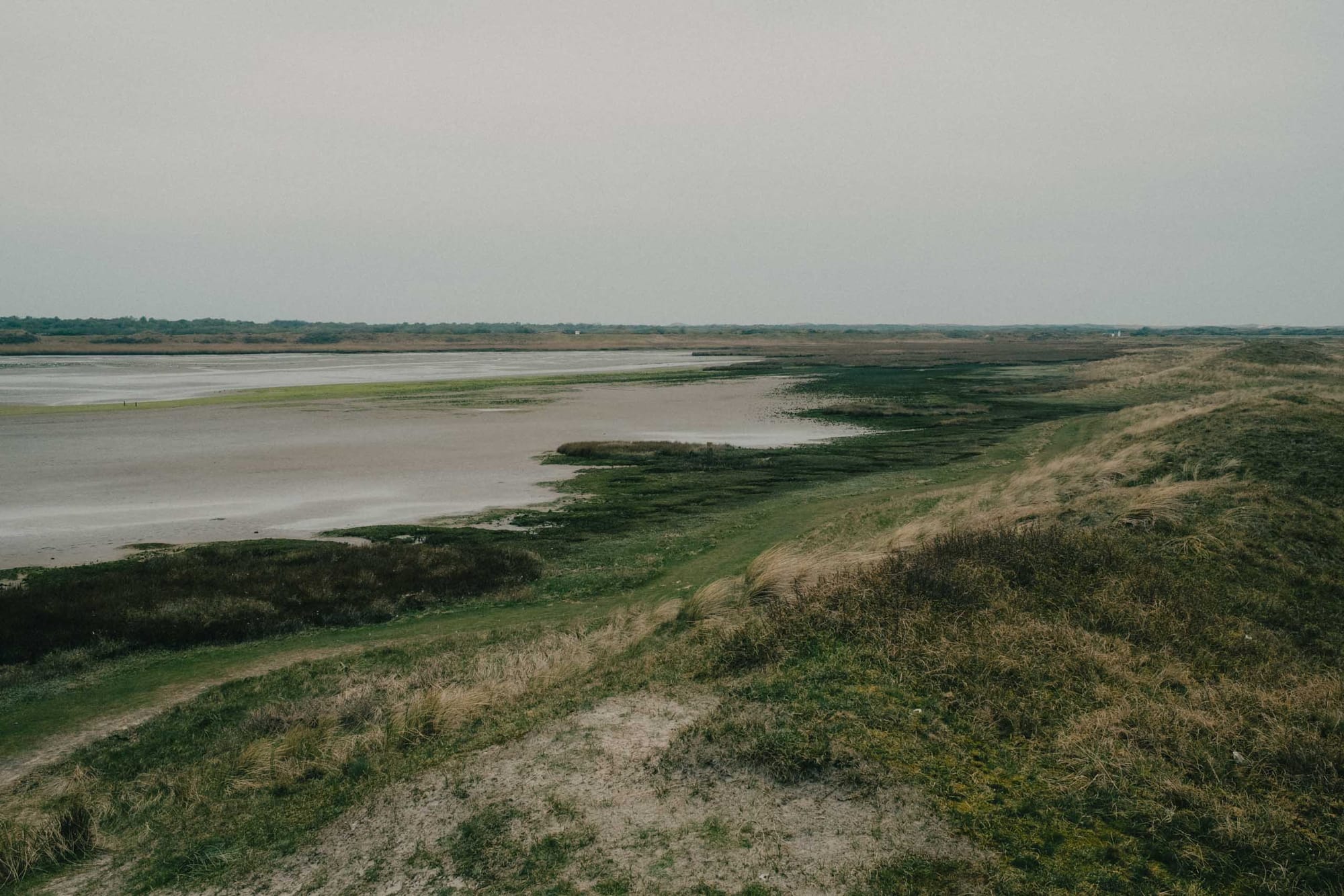
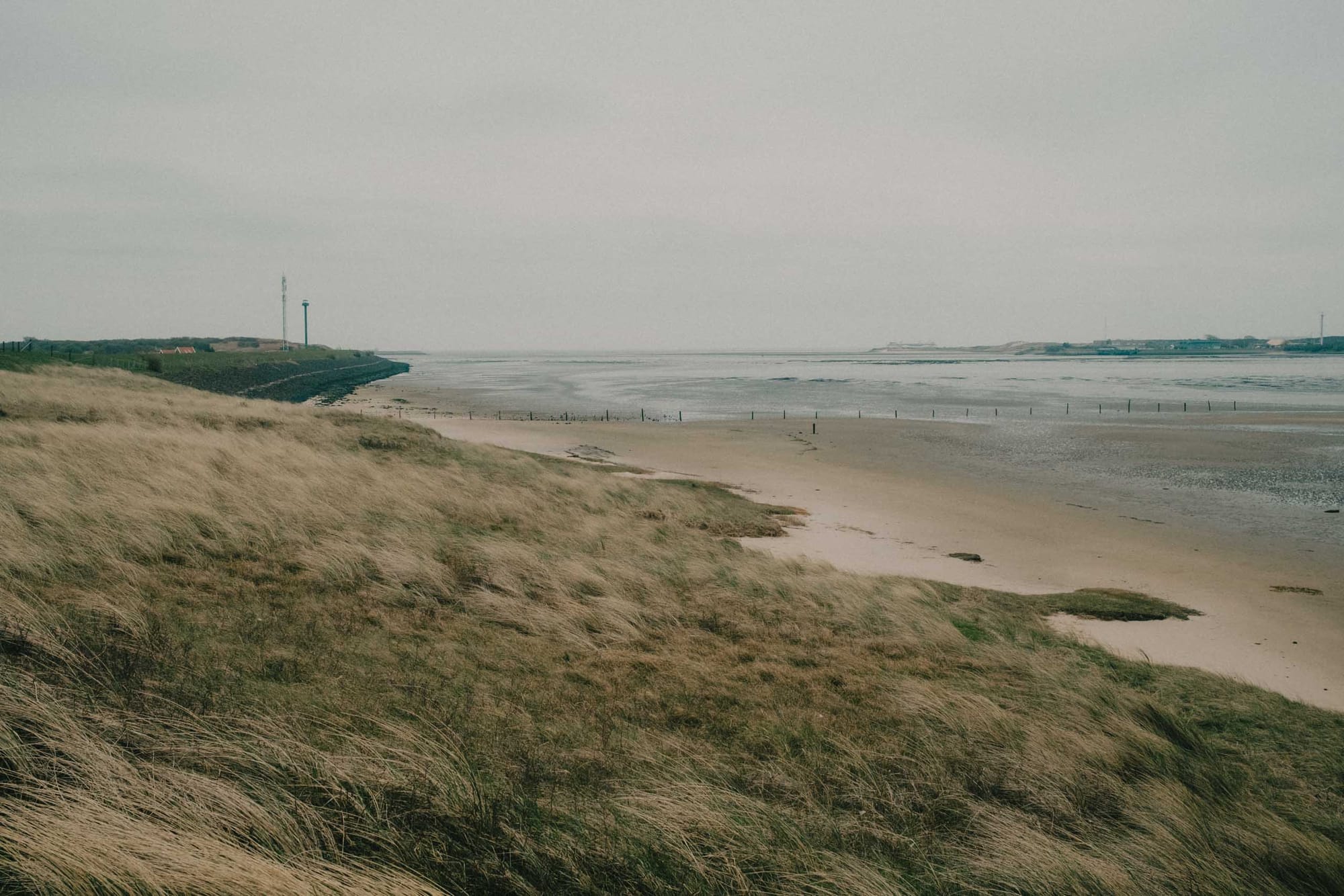
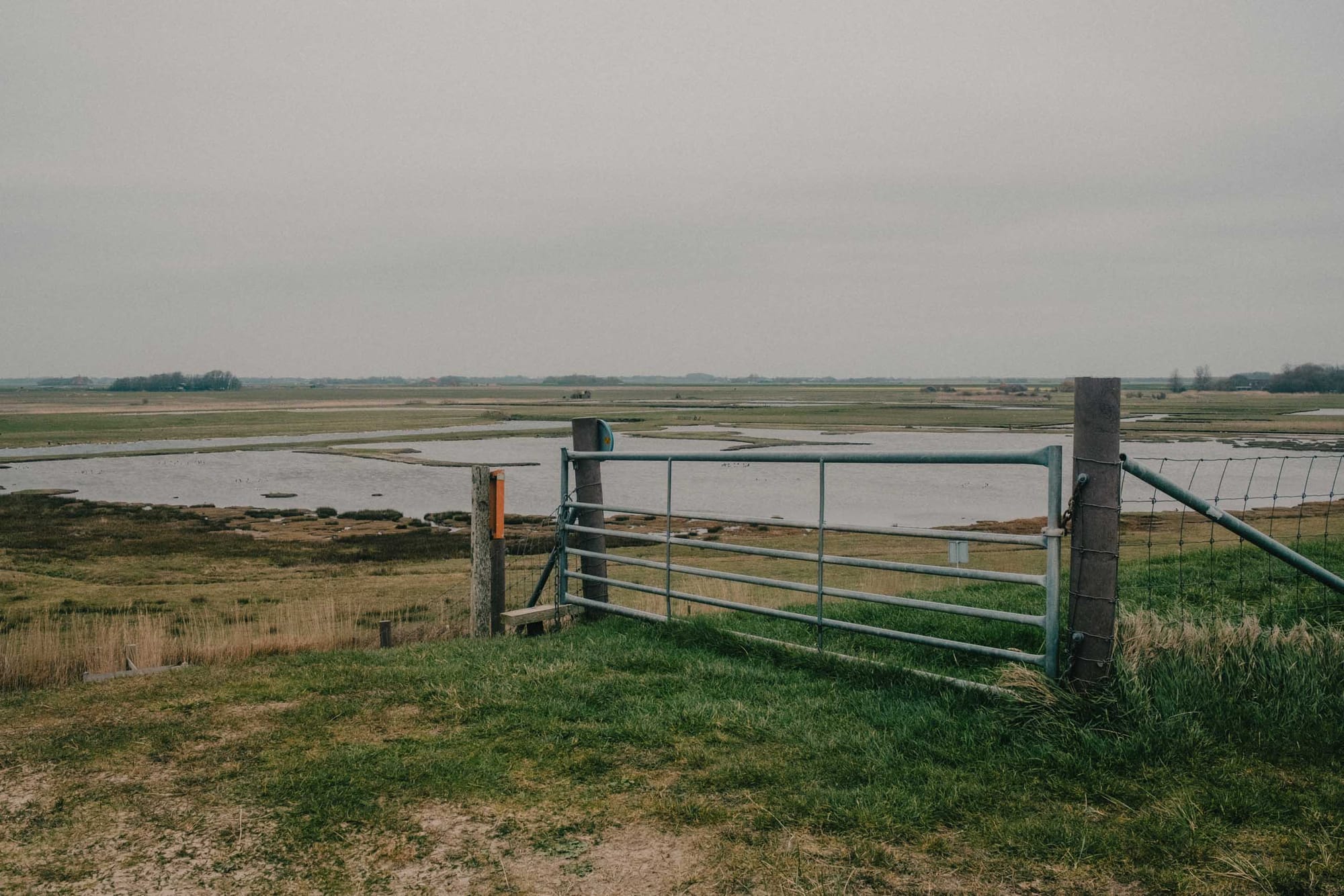
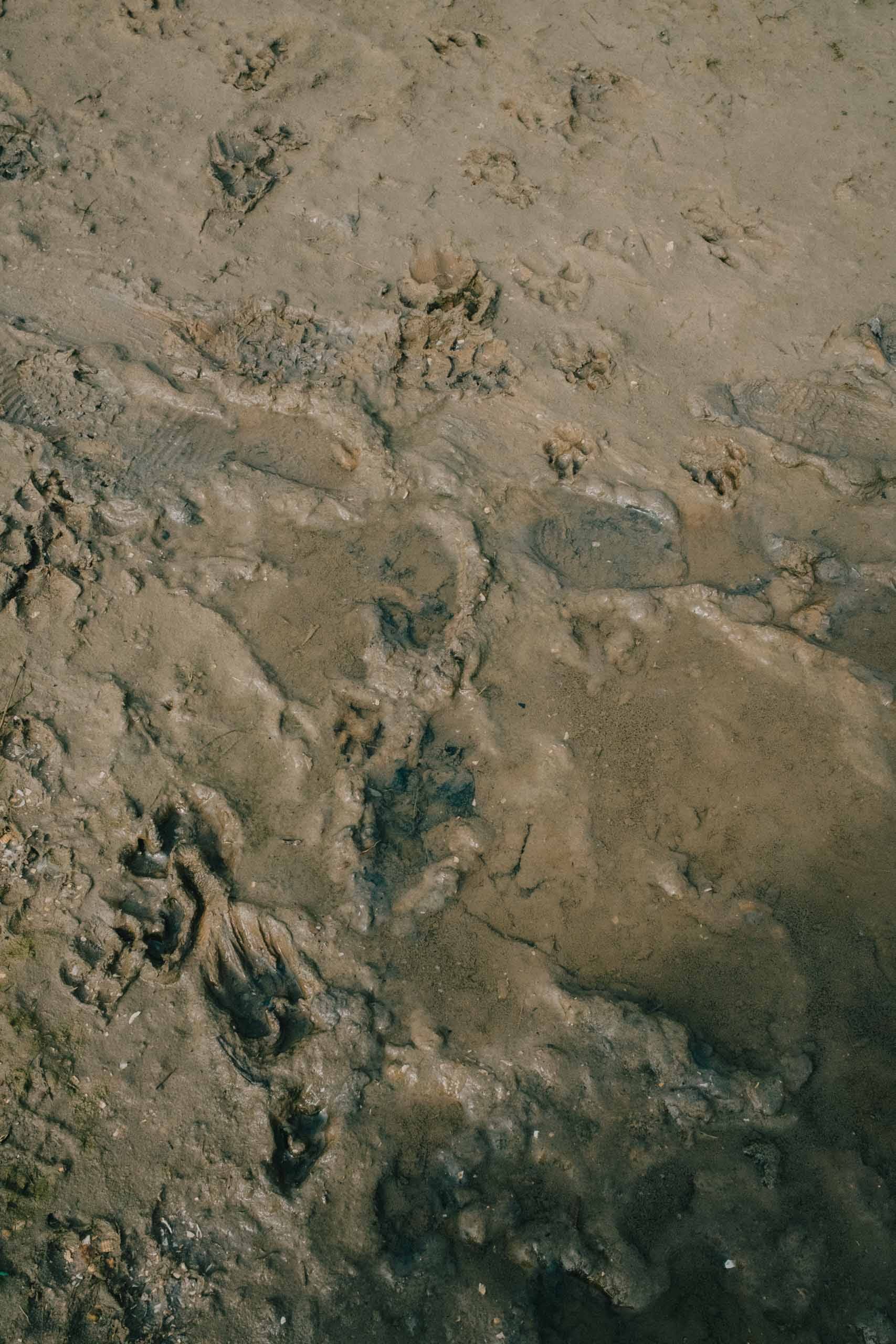
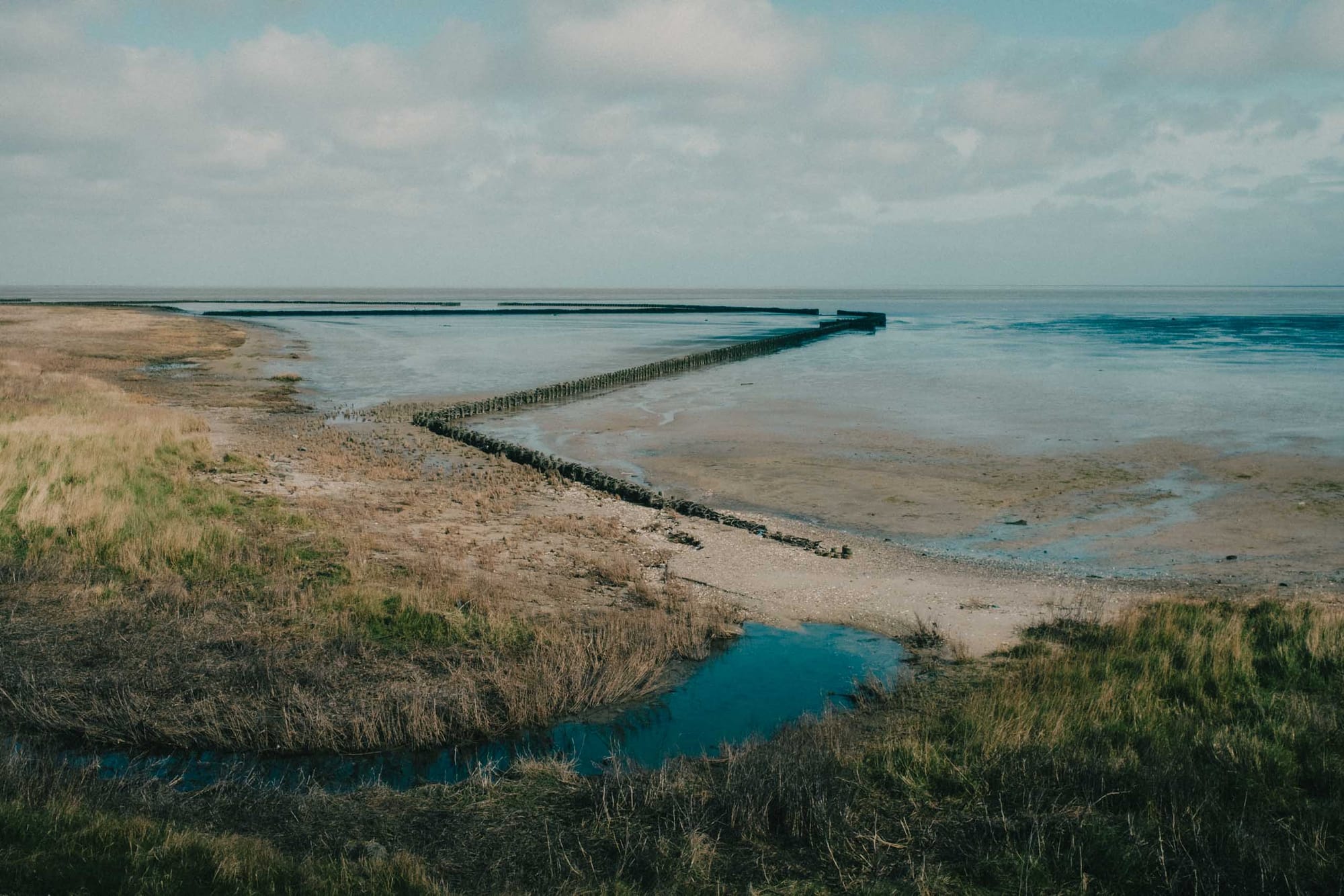
The Mokbaai is a tidal bay on the southern edge of Texel and often described as “the Wadden Sea in miniature.” Much of the bay falls dry at low tide, revealing mudflats, salt marshes, and shallow channels that serve as feeding grounds for birds. These images trace the dike that borders it, separating managed grassland from tidal nature, while showing the gradual transition from solid land to exposed seabed shaped by the rhythm of the tides.
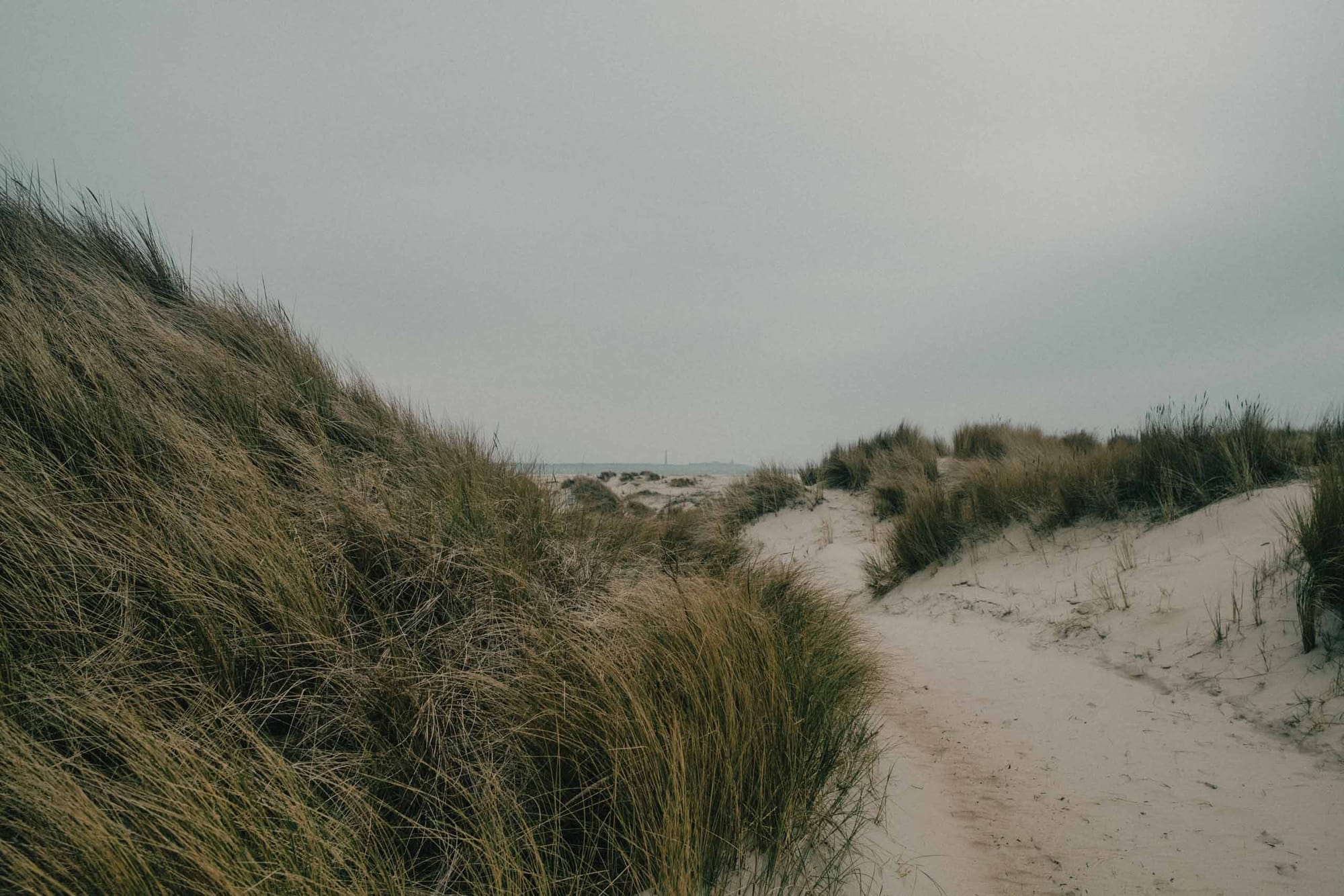
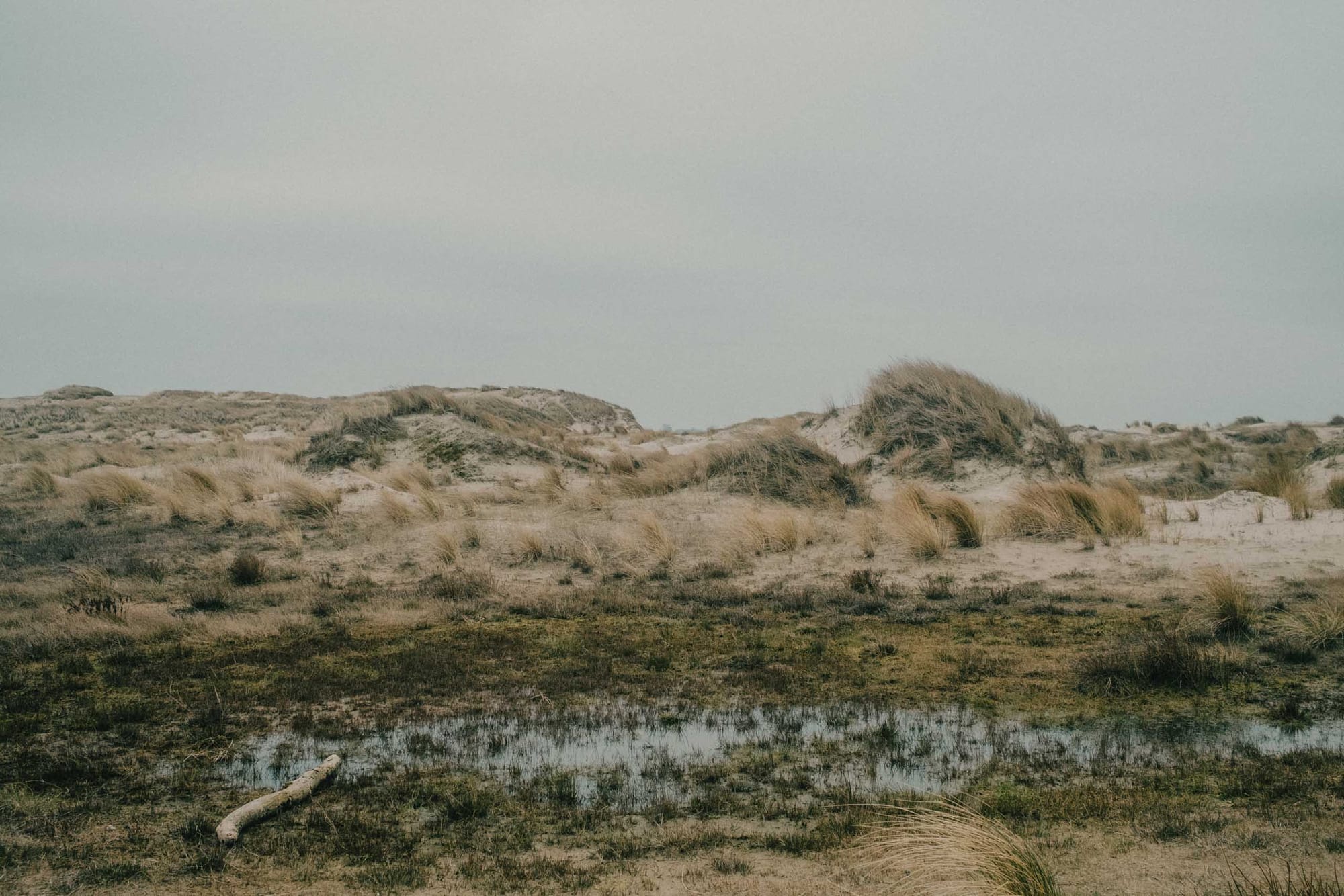
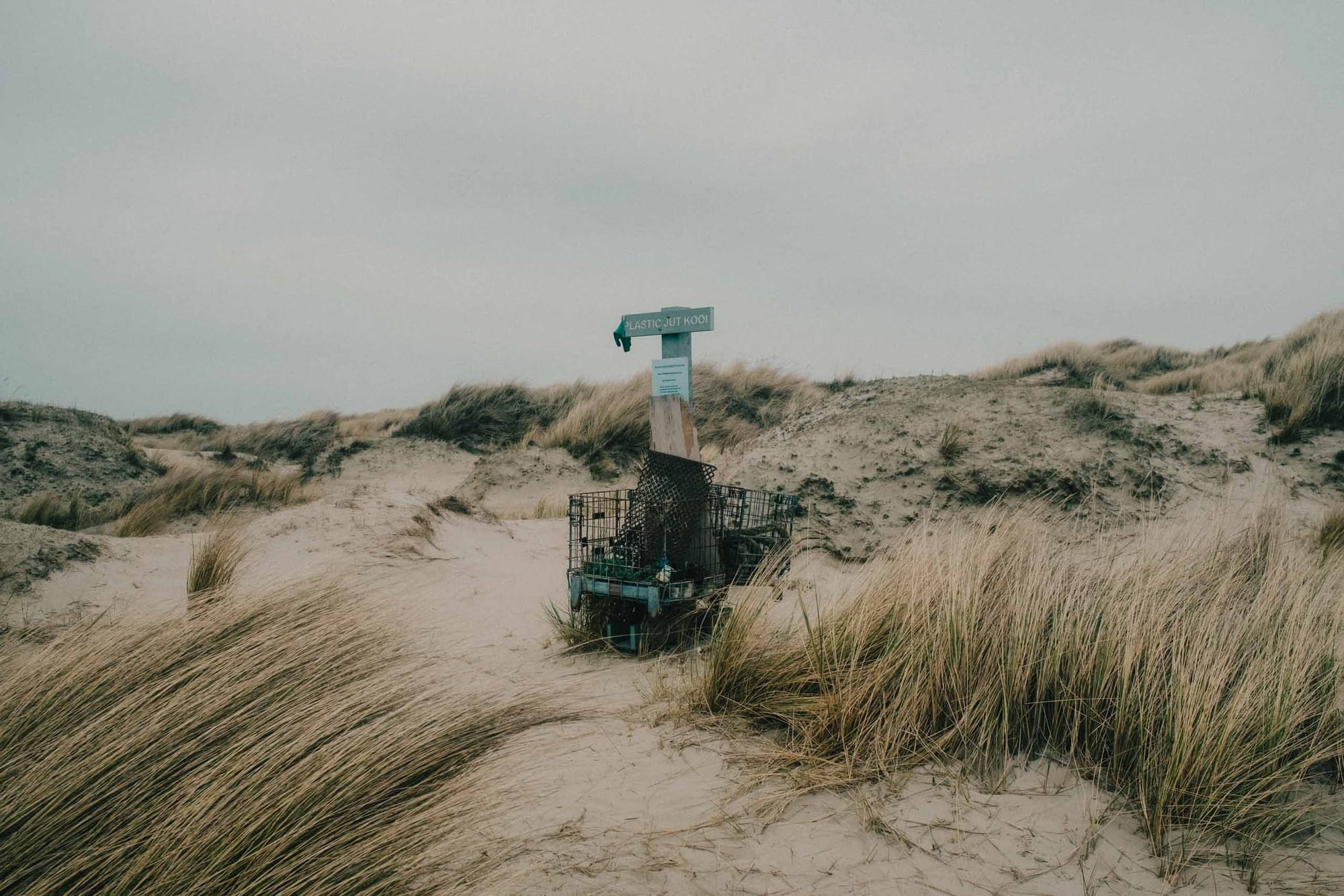
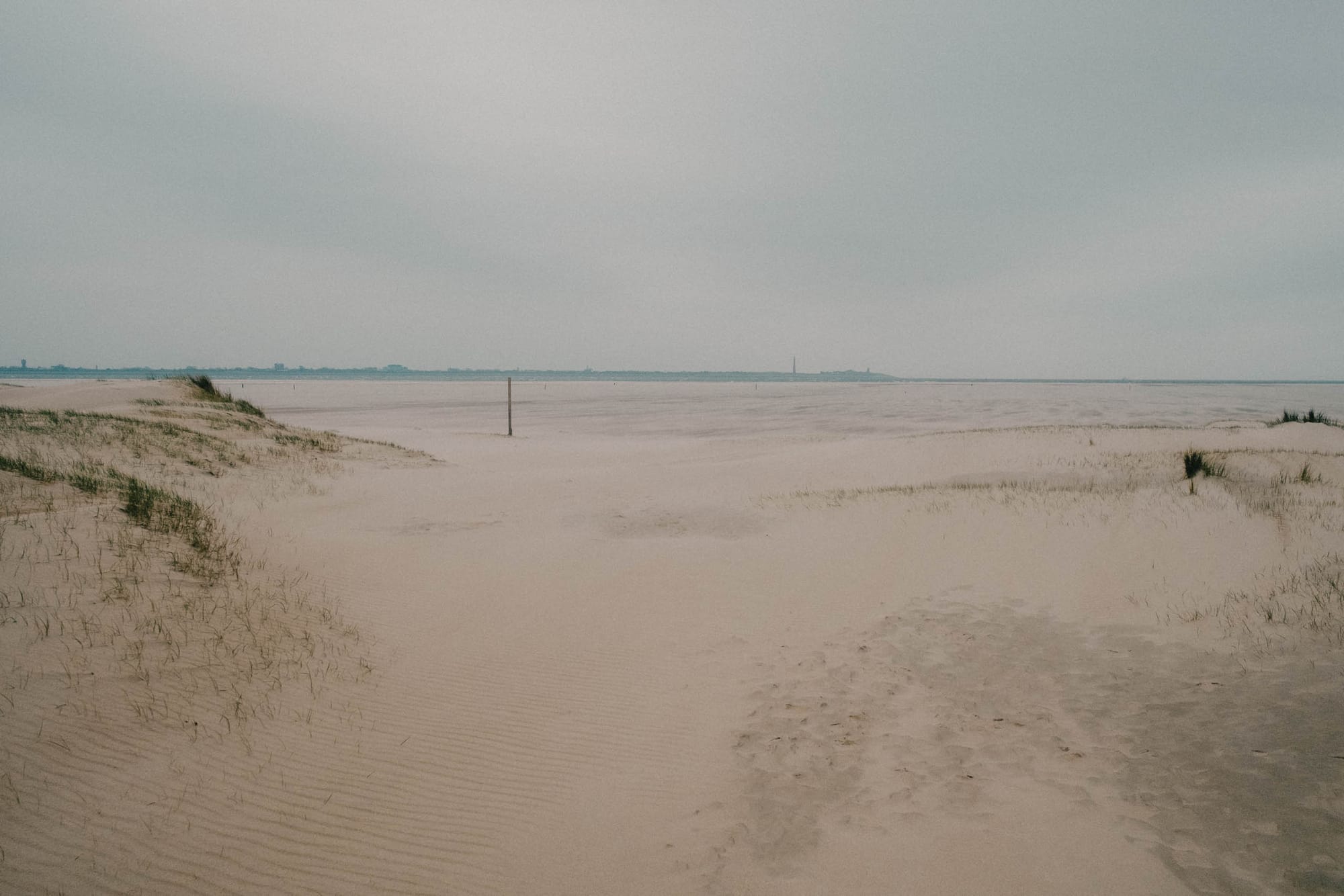
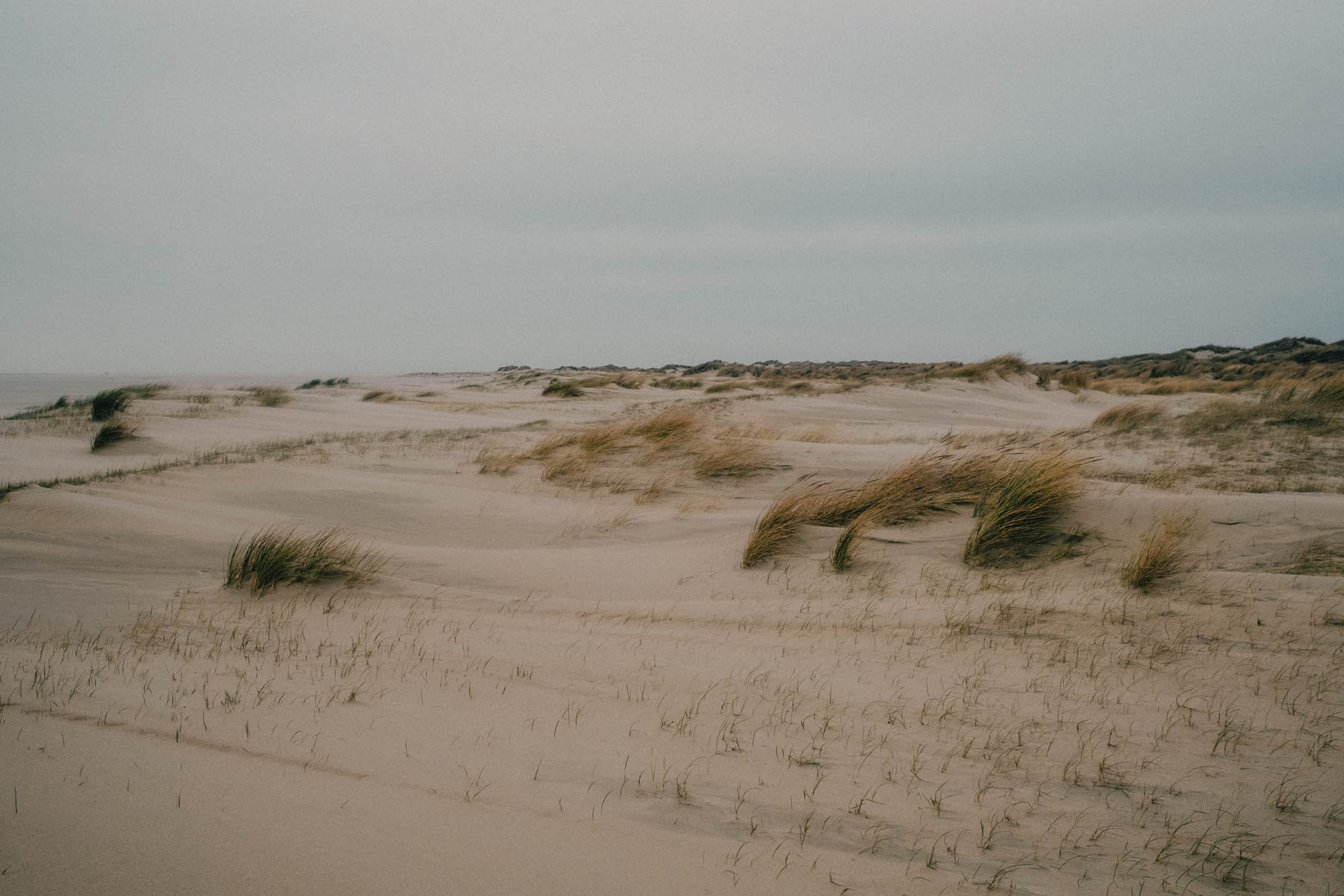
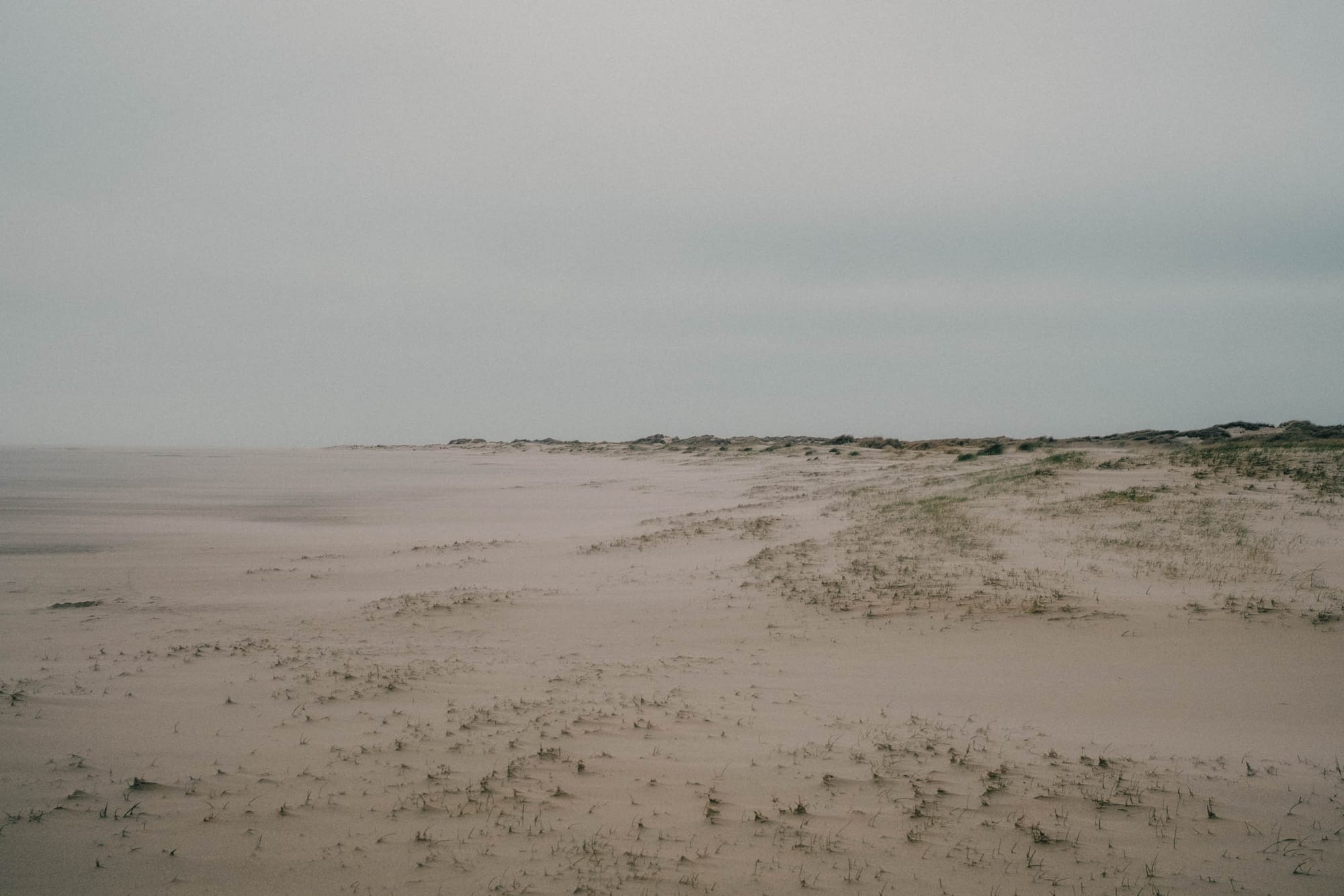
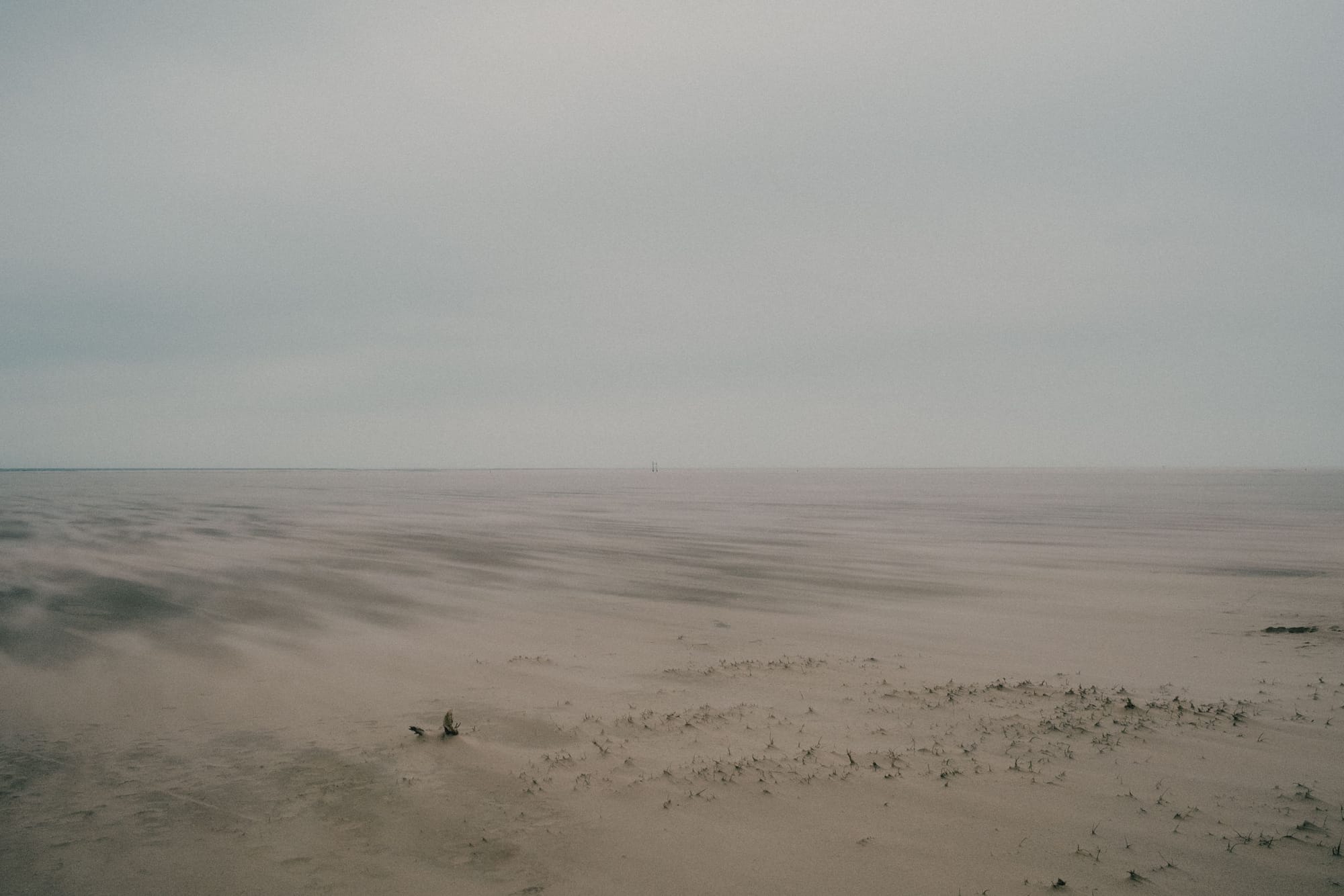
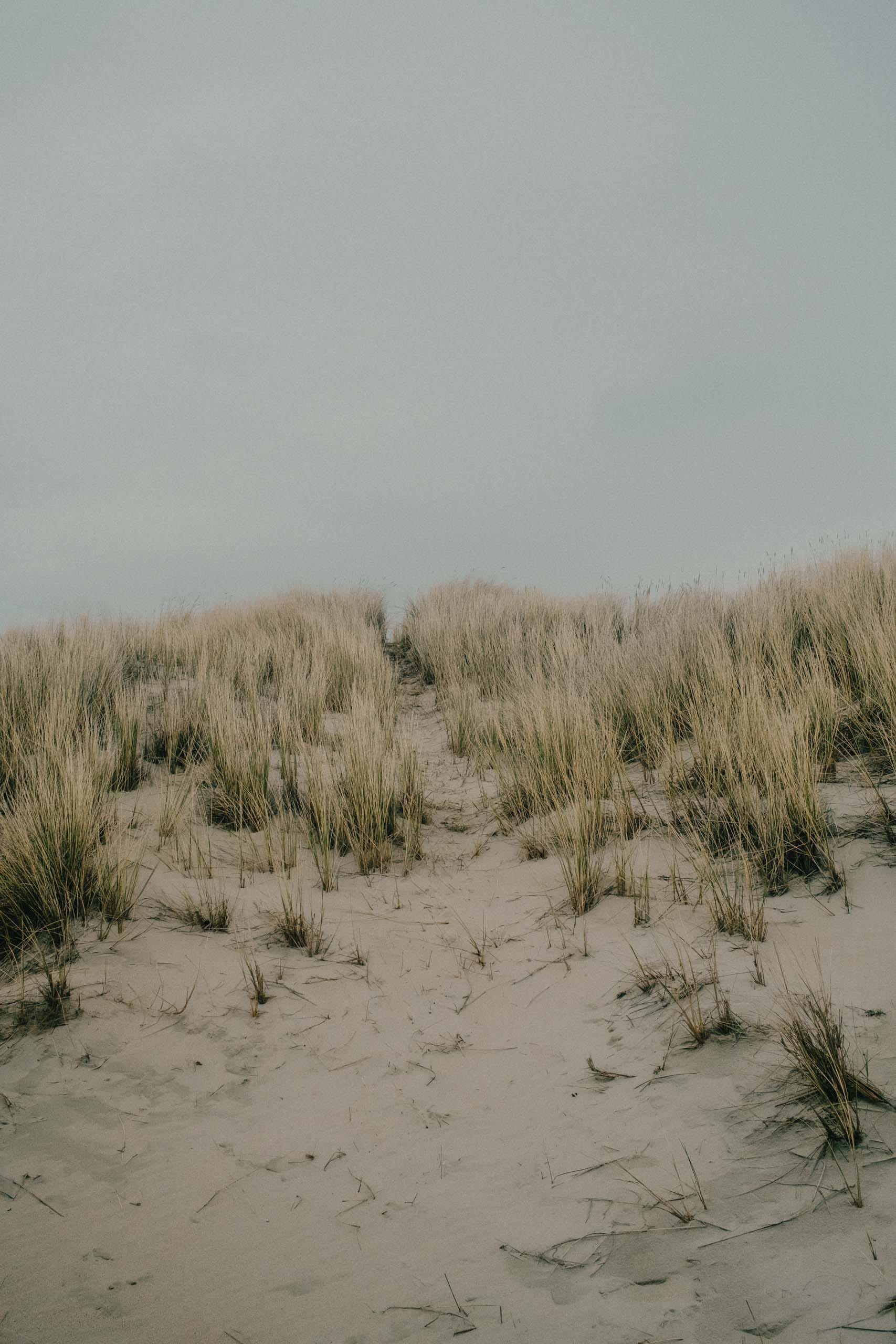
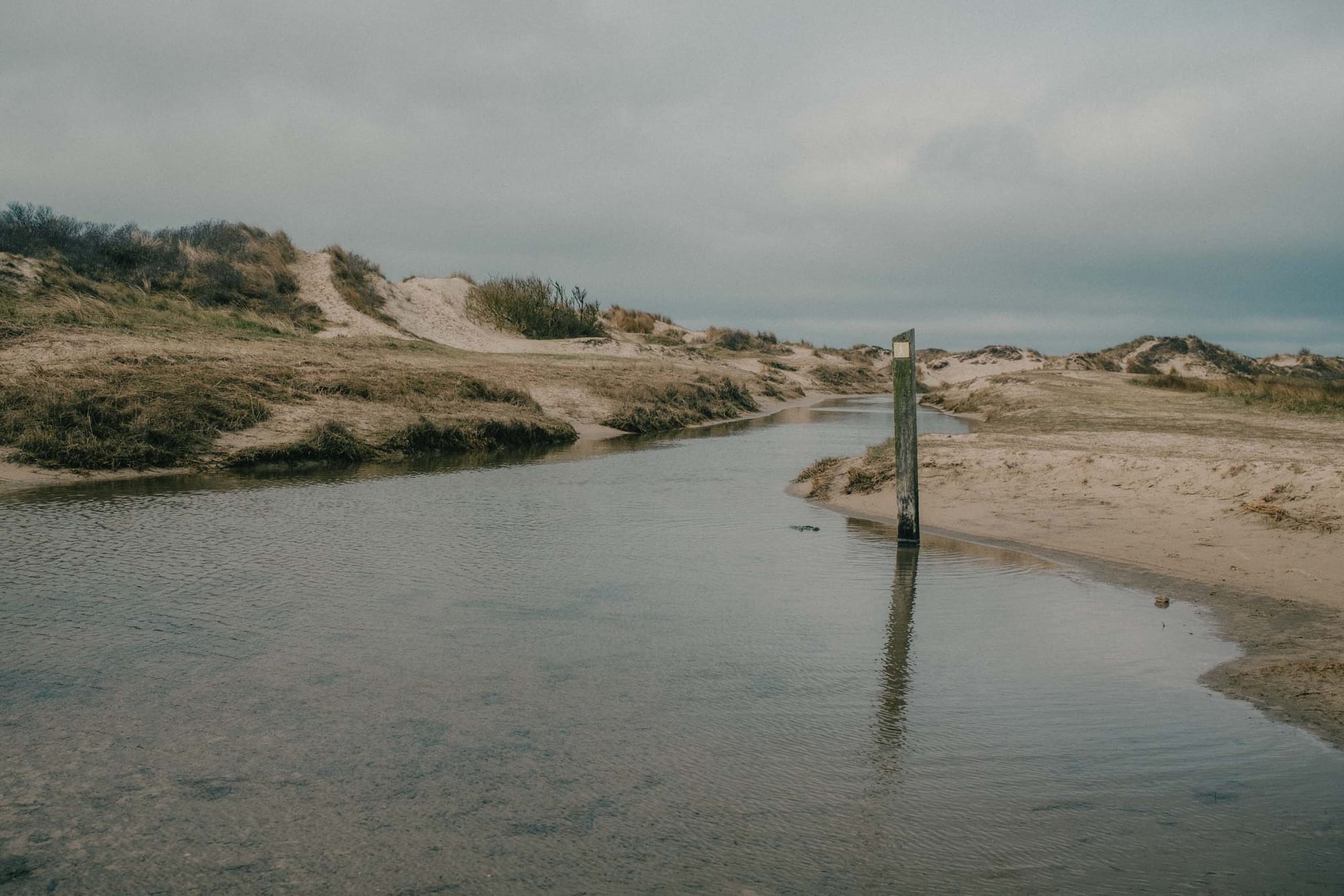
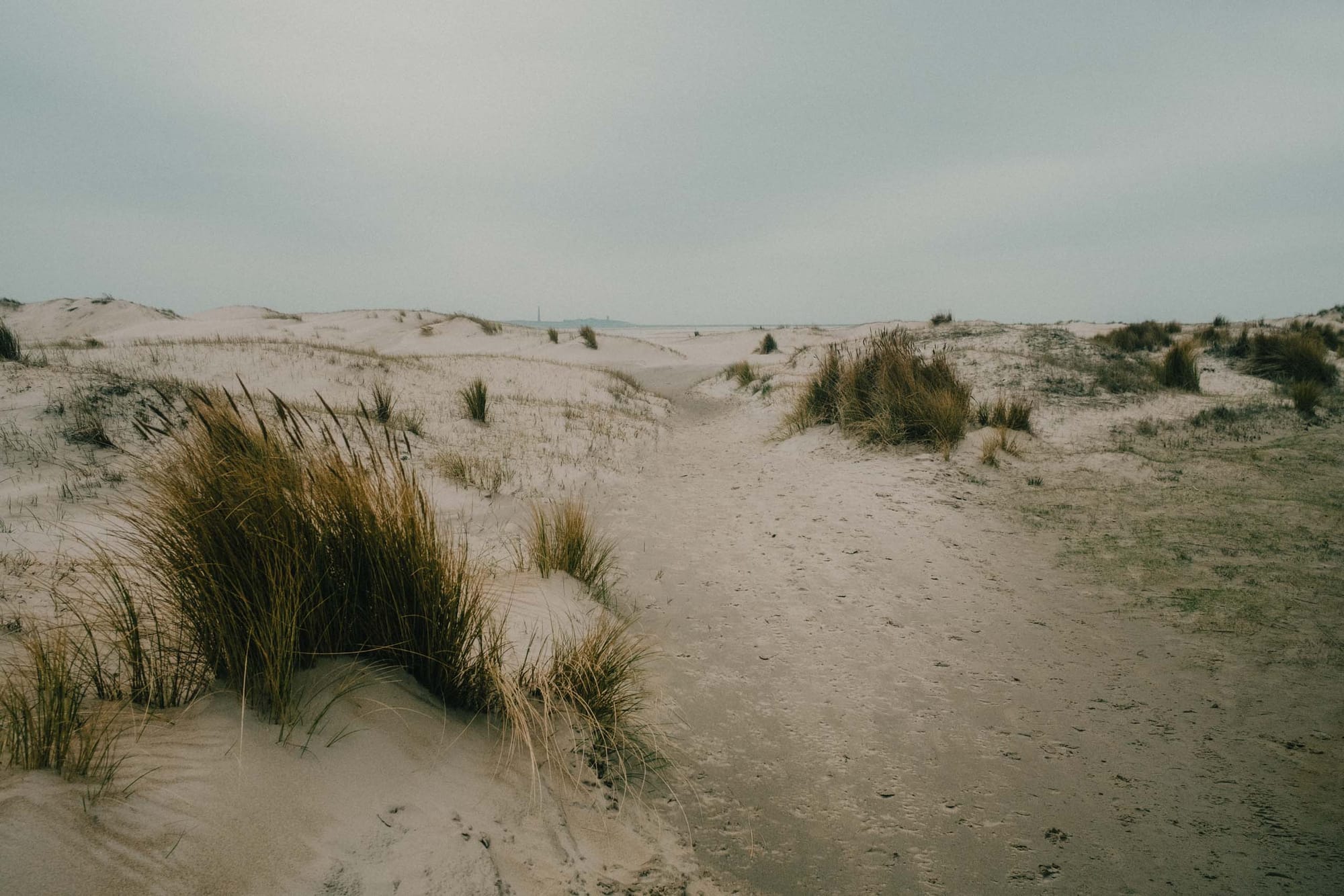
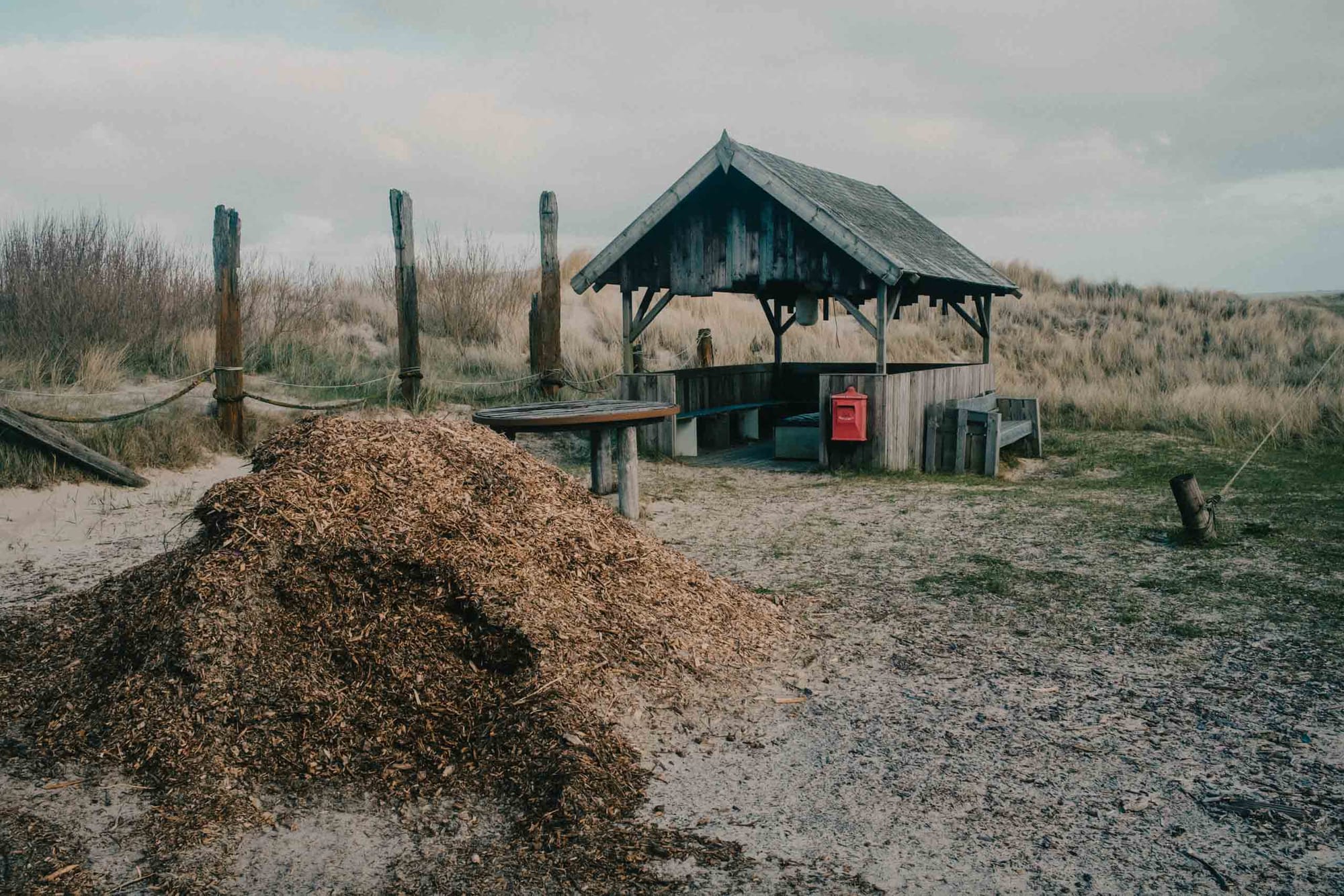
De Hors, the southern tip of Texel. This is one of the few places in the Netherlands where we’ve stepped back and let the landscape figure itself out. Rainwater collects in low dune valleys, forming temporary pools, and the first plants slowly take hold in the sand. What you see here isn’t designed but instead a landscape in the early stages of becoming something that's shaped over time rather than built all at once.
Just you, me, and some occasional notes from the field. No spam.
Member discussion