
Do not 'keep your options open'

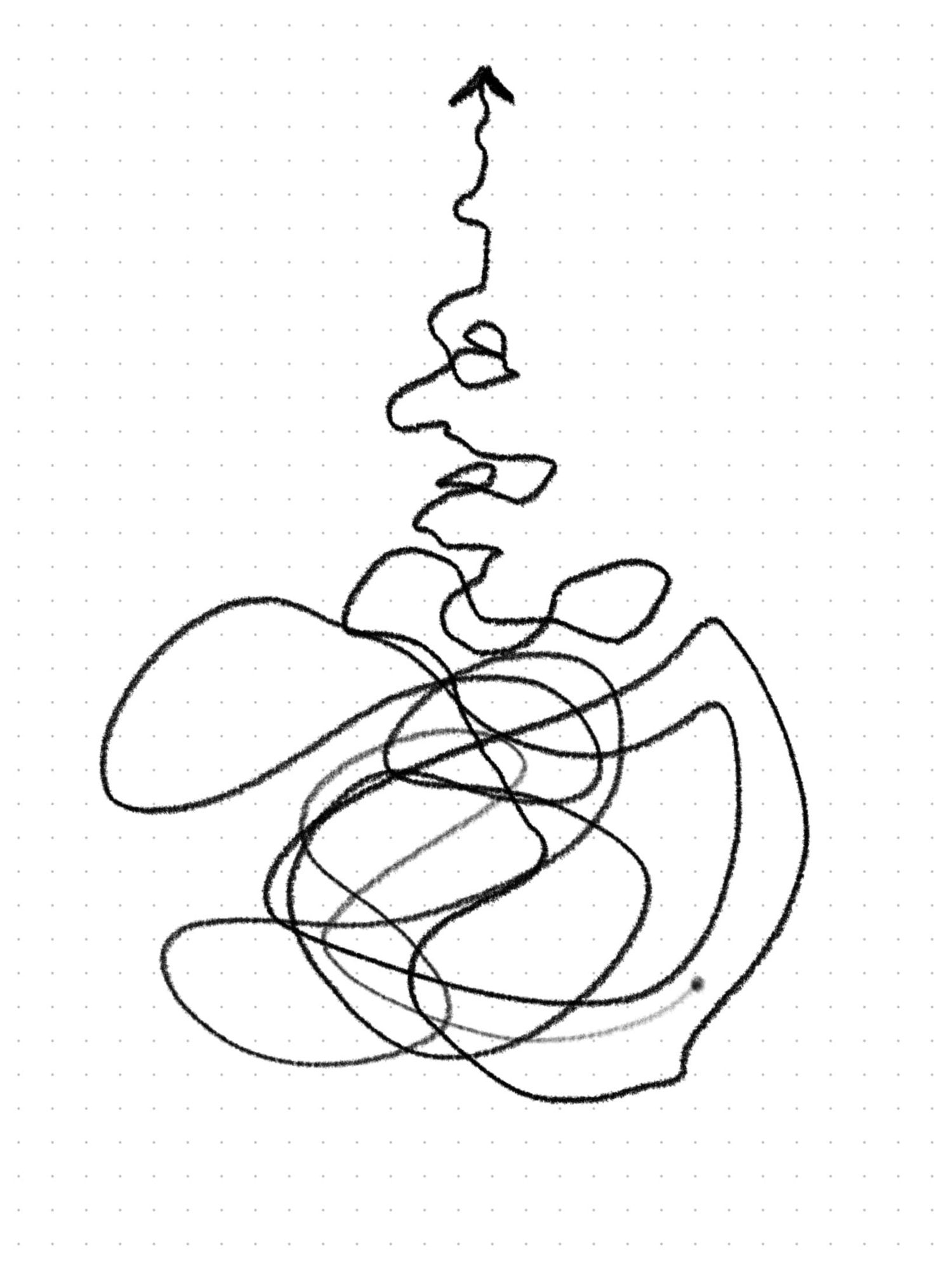
For a long time, I genuinely believed that keeping my options open was a sign of intelligence and capability. That it meant I was careful, reflective, and mature enough not to rush into things I might regret later. And, to be fair, there is a version of that story that’s true. The problem is that it’s incomplete.
What I struggled to see previously, is that optionality doesn’t just keep doors open. It also postpones the moment where something becomes real enough to share it with the world, see what other people think, and, yes, perhaps get some pushback too. But let's be honest, without that pushback, nothing really teaches you anything.
This chapter isn’t about telling you to commit harder or move faster. It’s about understanding what keeping options open actually does to your ability to learn, decide, and move forward.
Optionality doesn’t just keep doors open. It also postpones the moment where something becomes real enough to share it with the world, see what other people think, and, yes, perhaps get some pushback too.
In control of your options, you think
Keeping your options open often feels like the opposite of avoidance. You’re not saying no to anything yet, you’re not burning bridges. You’re allowing things to develop, to mature, to reveal themselves over time to you. And on the surface, that might look like care. Like 'the smart thing to do.'
I used to frame it to myself as leaving room for better information. For better timing. For a version of myself that might see things more clearly later. Sometimes that’s reasonable. But what’s easy to miss, is that this attitude also delays any consequences. And that applies to negative, but also positive ones. As long as nothing is final, no responsibility has to be carried. You don’t have to deal with success or failure yet, because there isn't anything to succeed or fail at.
This is the turning point where optionality quietly turns from flexibility into deferral. And that's not because you're indecision, but because you've postponed the feedback moment for so long that it might never happen at all. That's a shame, and a waste, because the world around you has a lot to teach you but only if you take responsibility for your actions, finish something and say "look, I made this. What do you think?"
What is an open loop, and why does it block learning?
An open loop is anything that hasn’t reached a point where it can be evaluated. That can range from a project that is 'almost there,' a decision that is 'still under consideration,' or just an idea that is 'not quite ready to share yet.' Heck, even simple stuff like doing the dishes or taking out the trash are tiny loops that'll idle in the back of your mind if you don't deal with them. To be fair, those don't impact your ability to learn new things as much thought (they just need to be done) so we're focusing on the processes that have some sort of feedback attached to them that you can then take with you in your life.
An open loop is anything that hasn’t reached a point where it can be evaluated.
What's generally true for all variants though, is that as long as a loop stays open, you remain in theory. You can think about what might happen, refine what could be improved, and imagine how it would feel if it worked. Those are not factors when taking out the trash but they definitely are when you want to start a new project, launch a new product, or are figuring out what to do next in life. You don't want to continue directionless without completing anything.
What you're aiming for here, is some sort of evidence. Evidence that you either are or are not doing the right things. You are trying to figure out if your direction makes sense for you, or if it has any value for other people. You need to close a loop to open up yourself for feedback, which will then tell you exactly that.
When we talk about learning, it's not about being smart enough to understand what should work. True learning happens because you did something that provided you with some feedback. You can be surprised, receive confirmation, or you stumble onto something completely new. In each case, if the outcome differs, even slightly, from what you expected, that difference is where learning happens. Open loops never reach that point. They feel active, but they’re inert when it comes to learning new things.
Optionality vs. ownership
Ownership sounds abstract, but in practice it’s very concrete. It means three things: you choose, you stand by the choice long enough for it to play out, and you accept what follows. Keeping your options open allows you to appear responsible without fully stepping into responsibility. You can talk about the decision, explain the trade-offs, show that you’ve thought things through. But because nothing has been finalized, nothing has to be owned yet.
I recognize this pattern very clearly in my own work. Especially in projects where my personal identity is involved or can be impacted. Those are always scary times. "Do this wrong, and I will look like a fool," I can hear myself thinking. If you keep things pending, forever as a 'work in progress,' you never have to be responsible for the outcome. Nobody to judge you.
The moment you finish something, shared and shipped, you open up the possibility for judgement. That moment creates vulnerability, not because the work is necessarily bad, but because it’s finally visible. Plus who the heck knows if your work is bad or not, you'll only find out when you share it.
That’s the cost of keeping options open: you delay exposure, and with it, the chance to actually learn from what happens next.
Subscribe to continue reading
Advance