
Knowing what to stop

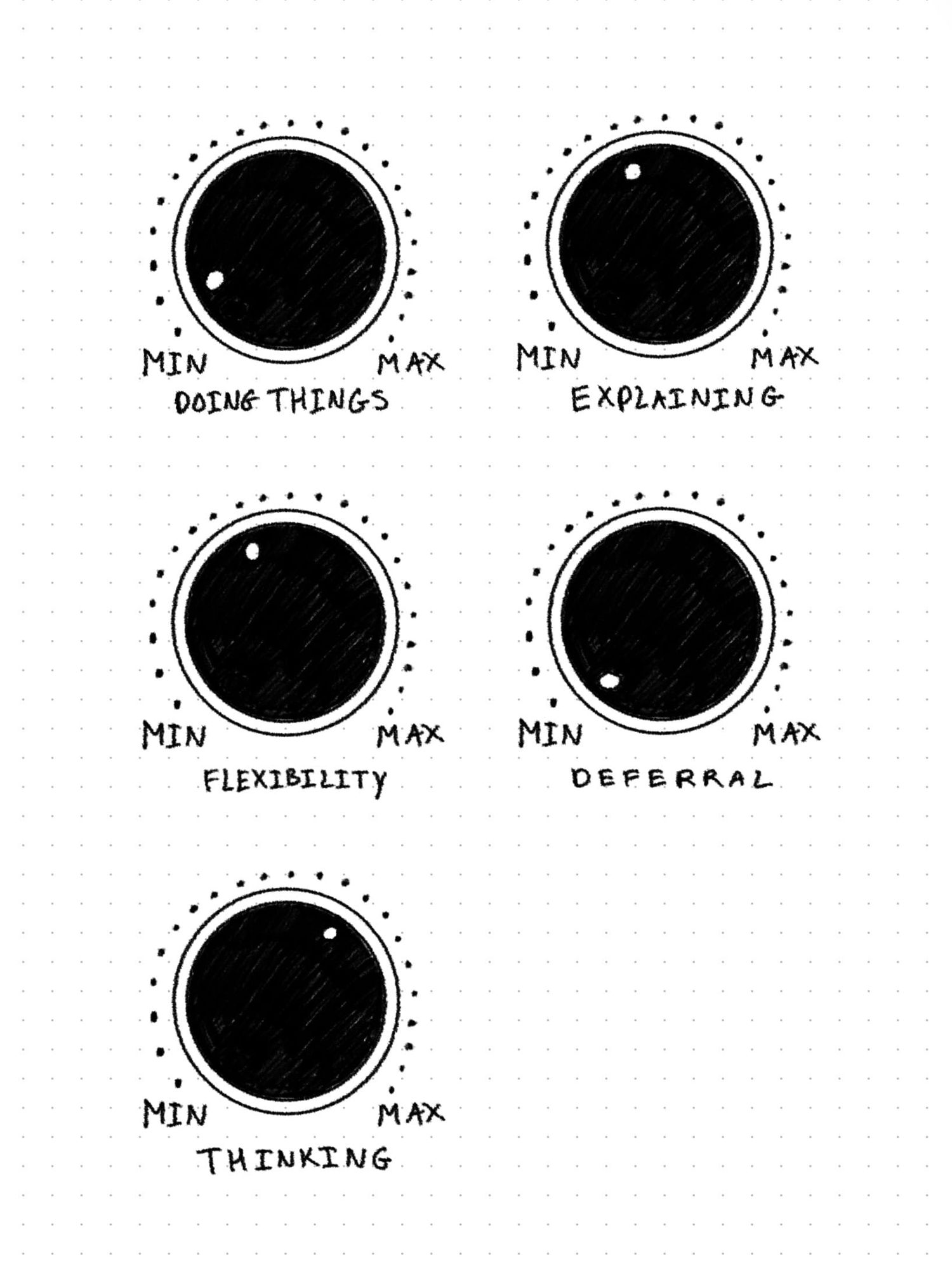
Progress typically doesn't stall because you chose the wrong things to work on. More often, you end up getting stuck because you're doing too many things at once and, sometimes, the way you do those things is counterproductive too. That definitely was the case for me, at least.
I'll be honest, this can be surprisingly hard to see when you're in the middle of things. You can get so lost in the details that you can't see the forrest for the trees. Plus if you like what you're doing then it might seem counterintuitive to quit. It can feel like giving up, and throwing all the effort you put into things away. So you keep going for a little longer, because you're sure you'll 'figure it out eventually, if you push just a little longer.'
I get it, and I'm partly writing this as a reminder for myself as well, let that be perfectly clear. But the problem here, is that success is very hard to find in this state. Results do not come from keeping all these thoughts, processes, projects, loops, you name it, open and ongoing indefinitely. You need to find some resolution. A way to finish things. So, sometimes, you have to admit to yourself that something did not work out the way you hoped.
Without a proper end to things, especially things that no longer serve you, your efforts spread thinner and thinner, until they loses all their ability to build on themselves and help you achieve your goals. Here are some of the things you should probably, most likely, stop doing right now.
Stop doing everything at once
Most people assume stagnation looks like inactivity. But it doesn't. In practice, it looks busy and can be easily disguised as productivity. Stagnation does not happen when you do nothing but when you do too many things at the same time. You have too many projects 'kind of ongoing.' Too many ideas receiving just enough attention to survive, but none of them enough to conclude.
In this state, nothing is obviously going wrong because "you're working on things, ain'tcha?" so nothing gets stopped. But because nothing is allowed to finish either, over time, this creates a peculiar kind of exhaustion. Not necessarily because you are doing too much, though that danger is certainly also there, but from never actually arriving anywhere. Keep a loop open long enough and it turns into an endless spiral. A downwards spiral. Until it fizzles out in a haze of burnout and disappointment, without a clear cause to point at. Now that's a terrible state to be in.
Stopping is uncomfortable because it forces a clear call. Is this done? Or is this not working? As long as you keep going, you can postpone that decision. You can tell yourself it just needs more time, more tweaks, more effort. But once you stop, you have to face the reality of what you actually produced.
Without that moment, nothing settles into place. The direction can theoretically keep shifting. The criteria for success can keep moving. Your effort spreads out instead of accumulating into a clear result. Plus you have to be honest with yourself as well: if something isn’t working, you never give yourself the chance to cut it and redirect your energy. Stopping isn’t just about finishing. It’s about deciding. And without that decision, progress stays blurry.
Stop over-explaining
This one is personal for me. While writing Advance, I realized how often I keep loops open by trying to explain things perfectly. Not because clarity is bad, but because the desire to be correctly understood slowly turns communication into risk management.
And I know I’m not alone in that.
You add context. Then a bit more. Then another clarification, just to be safe. At least, that’s what I tend to do. That impulse isn’t ego in itself, but it's certainly trying to protect it. I don’t want to be misunderstood. I don’t want someone questioning my intent, my thinking, or my values because I failed to add one more sentence.
The desire to be correctly understood slowly turns communication into risk management.
The problem is that this strategy has no natural endpoint. There is always another nuance you could include. The more you try to control how your work will be received, the harder it becomes to declare it finished. If you never define what 'done' looks like, your mind keeps scanning for ways to improve or defend. And scanning doesn’t stop on its own.
At some point, you could publish the article. You could send the proposal. You could share the idea. It’s coherent. It makes sense. But instead of pressing send, you add another paragraph. You soften a claim. You anticipate objections that haven’t even been raised. Completion starts to feel reckless. Sharing feels premature. Not because the work isn’t ready, but because you’re trying to eliminate the possibility of being misread.
For people like me, and maybe for you if this resonates, the solution isn’t less clarity. It’s clearer boundaries. A 'definition of done' for communication. A point where the work is allowed to stand without further defense. Explanations can refine a project of course, but only to a certain point. If you want to actually finish something, there's a time you just have to go for it.
Stop being too flexible
Another destabilizing pattern is constant re-negotiation of direction. Picking a direction feels dangerous because it’s linear. A small shift now can bring you somewhere radically different later, and when you don't exactly know where you are going, that feels irresponsible.
So you solve that by keeping your direction adjustable. Always under review. Always open to revision.
You won't find out if the direction you chose is the correct one by standing still though. That can only be achieved through movement. You don’t discover where a path leads by analyzing it from the starting point. You find out by walking it, then adjusting based on what you encounter.
Keeping the direction open for negotiation feels safe, but it quietly blocks real progress and therefore your learning. While it's true you might hit a wall, no longer able to move forward, if you do commit to a direction, but at least you hit that wall. At least you learned that's not the way to go.
Yes, picking a direction puts you on a broadly linear path but you're completely fine taking little sidesteps along the way, too. And if that didn't work, just walk back, recalibrate, and pick a different one. Endlessly adjust course and you might end up walking in circles, forever hoping there's something just around the corner.
Stop thinking about 'the next thing'
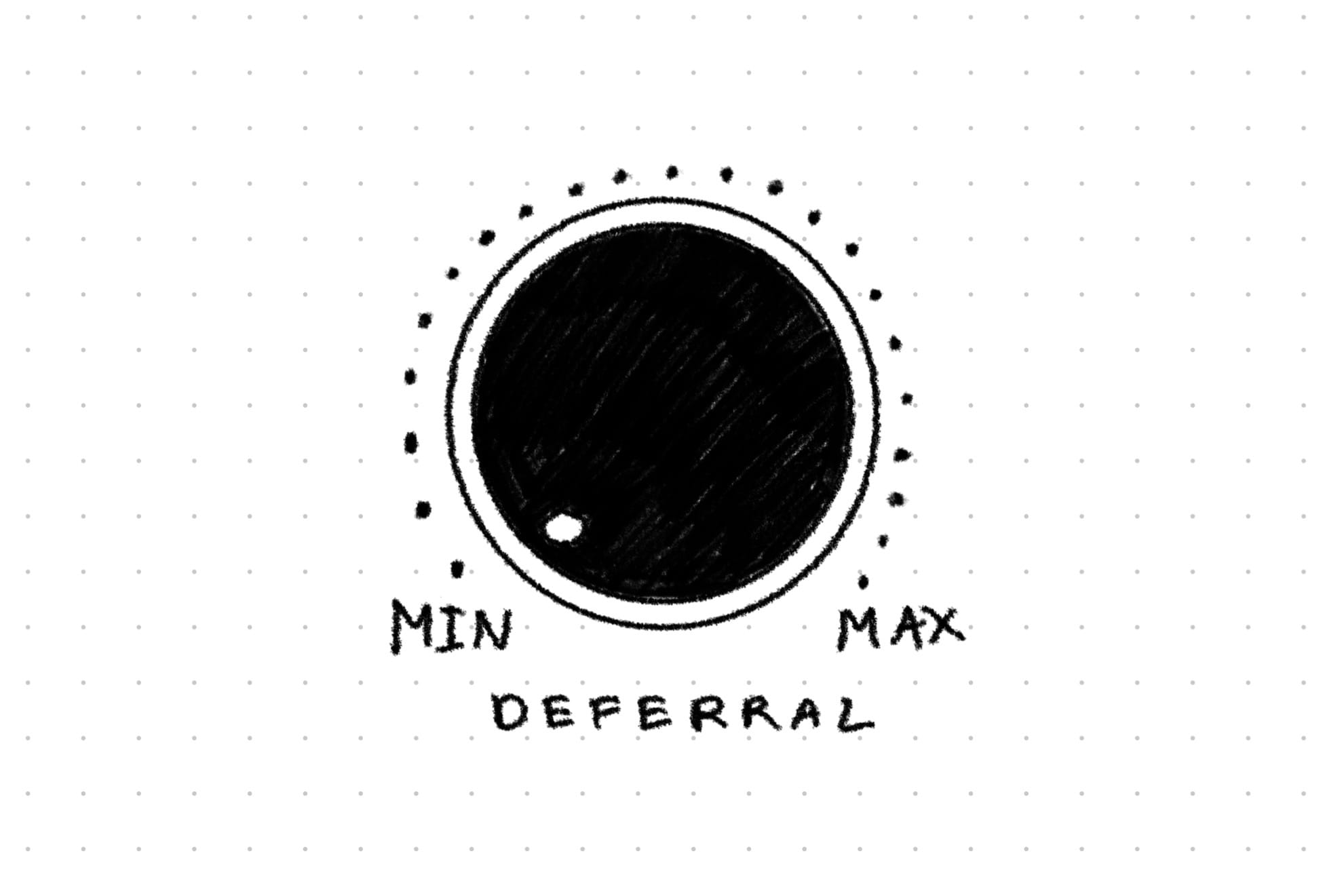
There’s a subtler form of avoidance that often disguises itself as ambition: always preparing for what comes next. "This can’t be it," you tell yourself, "the next thing will be the real one." you declare ahead of time. On the surface, that sounds driven, future-oriented, a little hungry. But underneath, it can function as an escape hatch.
Because if this isn’t 'the real thing,' then it doesn’t 'fully count' as well. And if it doesn’t fully count, then neither does the outcome. Which means that if it fails, you were never all in anyway. And if it succeeds, great, but you were also already on your way somewhere else. It’s a clean way to reduce exposure. To reduce responsibility.
The problem is that feedback requires exposure. When you mentally downgrade your current effort to 'just a stepping stone,' you also downgrade your commitment to it. You move on before reality has had the chance to respond. Before people can react. Before results can come in. You don’t get to see whether you were wrong. But you also don’t get to see whether you were right. And without that signal, there’s nothing to learn from, adjust if necessary, or to celebrate.
Learning depends on closed loops. Action, response, correction. When you declare something a mere 'placeholder' too early, you interrupt that loop. Cut off before it has a chance to prove itself.
Staying with something long enough to receive feedback can feel risky, I get that. It means letting the work stand on its own. Letting people misunderstand it, critique it, maybe even ignore it. But that exposure is the price of calibration with the world around you. So instead of asking, "Is this the real one?" try asking, "Have I stayed with this long enough for reality to tell me what this is?" That’s where growth actually begins.
Stop overthinking
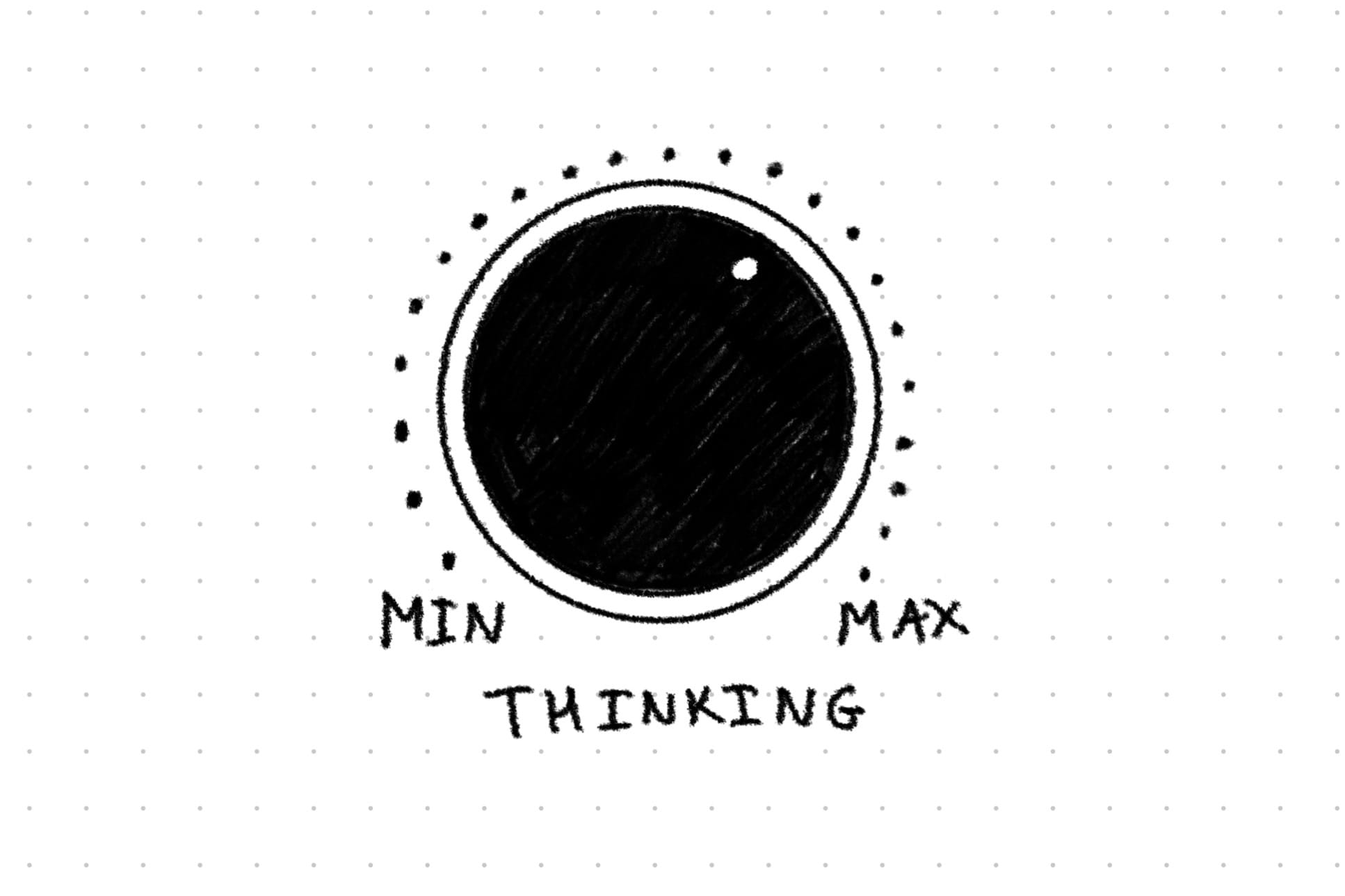
Finally, the one that underlies all of the above, the godfather of things you probably shouldn't be doing: overthinking. It might feel like you're just 'thinking' about things but there's a thin line between careful consideration and overanalyzing each possible variation and outcome to the point that it's easier to do nothing than to keep things moving.
The difficulty here is that it often feels justified. It’s rarely hesitation in the emotional sense but more as if you're following some unwritten rule that says: "I may only proceed once all relevant options have been considered."
But options are infinite, which means thinking has no natural stopping point. The context keeps shifting, new considerations keep appearing, your views keep changing. So when action depends on exhaustive consideration, progress depends on an impossible condition. This isn’t a character flaw. It’s a byproduct of your general competence. You have the capability to see all the options, to predict all the possible outcomes, and to paralyze yourself in the process too.
But seeing many possibilities does not mean you are obligated to honor them all. Thinking without a stop condition is no longer preparation, but simple delays dressed up as responsibility.
When action depends on exhaustive consideration, progress depends on an impossible condition.
Subscribe to continue reading
Advance