
A decade with the Fujifilm XF35mm f2: My most trusted everyday Fuji lens


I've been thinking about writing this story for so long now, I almost didn't do it. It became too much of an undertaking, for the aspirations of this write-up became so large that I could never live up to my own expectations.
But I have to give it a try. Fujifilm's XF35mm f2 has been too important for my photography career. I simply need to shine a light on it and give it the honor it deserves. It's the first lens I ever owned. I bought it for the first 'real' camera I ever owned, the Fujifilm X-T1 (which I still have). And after ten years of shooting with it, it still is my most-used prime lens to this day. So this will not be a technical review, it will be a description of a decade-long relationship with the Fuji 35mm f2.
TL;DR: why I’ve used the Fujifilm XF35mm f2 for 10 years
- The Fujifilm XF35mm f2 is my most-used Fuji prime lens and has been with me for more than 60,000 photographs. Which is nearly 20% of my entire Lightroom catalog.
- This lens is 'perfectly boring' in the best possible way. It doesn't impose heavy character or dramatic rendering onto your images. Instead, it quietly delivers reliable, honest results and leaves room for you to make photographs interesting.
- At only ~170g, with weather sealing rated down to -10°C and autofocus rated at roughly 0.08 seconds, the XF35mm f2 became my ideal everyday carry Fuji lens for street photography, travel photography and documentary work alike.
- The 35mm focal length on APS-C gives an equivalent field of view of roughly 53mm, which feels incredibly natural to me. It's just narrow enough to isolate details in the world without constantly forcing you to step backwards.
- The XF35mm f2 has traveled with me through Italy, Greece, Berlin, Belgium, the Czech Republic and countless Dutch cities. It has survived rain, snow, dust, long walks and years of being thrown into bags without ever letting me down.
- More than 9000 of the images I shot with this lens made it into my final edited archive. That’s nearly 15% of all the photos I’ve taken with it. Which is proof that this lens doesn't just produce volume, it produces keepers too.
- There are technically better Fujifilm lenses available today. There are lenses with more character, more sharpness and wider apertures. But after ten years, the XF35mm f2 remains the lens that disappears most naturally into my life, and that’s exactly why I keep coming back to it.
| Specification | Fujifilm XF35mm f2 R WR |
|---|---|
| Full name | FUJINON XF35mmF2 R WR |
| Focal length | 35mm (53mm full-frame equivalent) |
| Maximum aperture | f2 |
| Minimum aperture | f16 |
| Lens construction | 9 elements in 6 groups |
| Aperture blades | 9 rounded blades |
| Autofocus | Internal focusing stepper motor |
| Autofocus speed | ~0.08 sec |
| Minimum focus distance | 35cm |
| Maximum magnification | 0.135x |
| Weather sealing | Yes (8 seals, rated to -10°C) |
| Filter thread | 43mm |
| Dimensions | 60mm × 45.9mm |
| Weight | 170g |
| Release year | 2015 |
On paper, none of these specifications are particularly exciting. In practice, they add up to one of the most dependable everyday carry lenses Fujifilm has ever made.
My first day with the XF35mm f2
It's 2016 and I am buying a secondhand Fujifilm X-T1 without a lens. I figure that once I get the camera, I can count my pennies and see which lens I can afford still. The camera ends up sitting on my desk for a couple of weeks, while I figure out what lens to purchase for it. I'm mostly considering third-party lenses and adapting cheap vintage glass, looking for a way to make photography affordable for a broke 24-year old. My eye keeps creeping to that native Fuji-glass though.
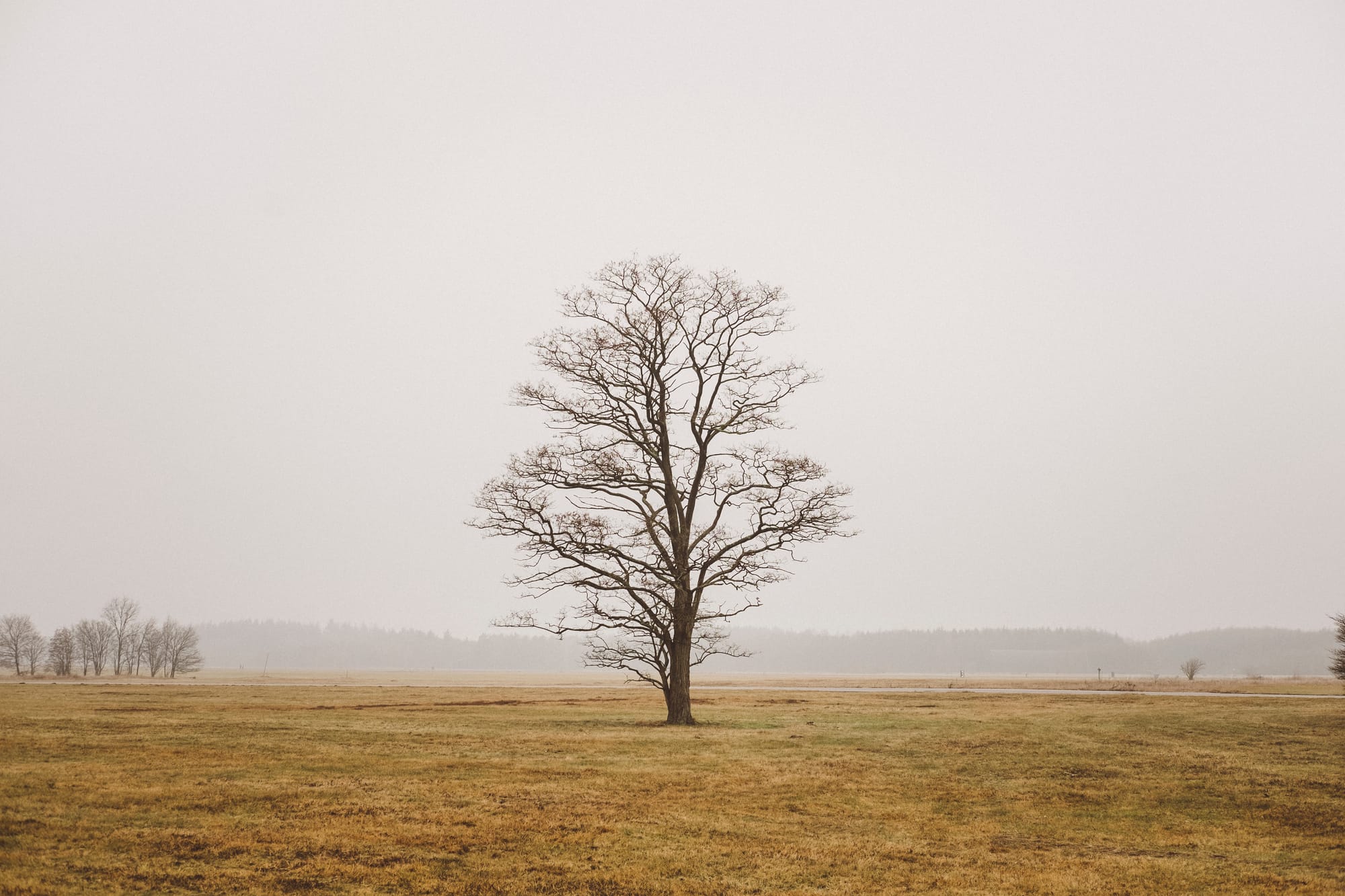
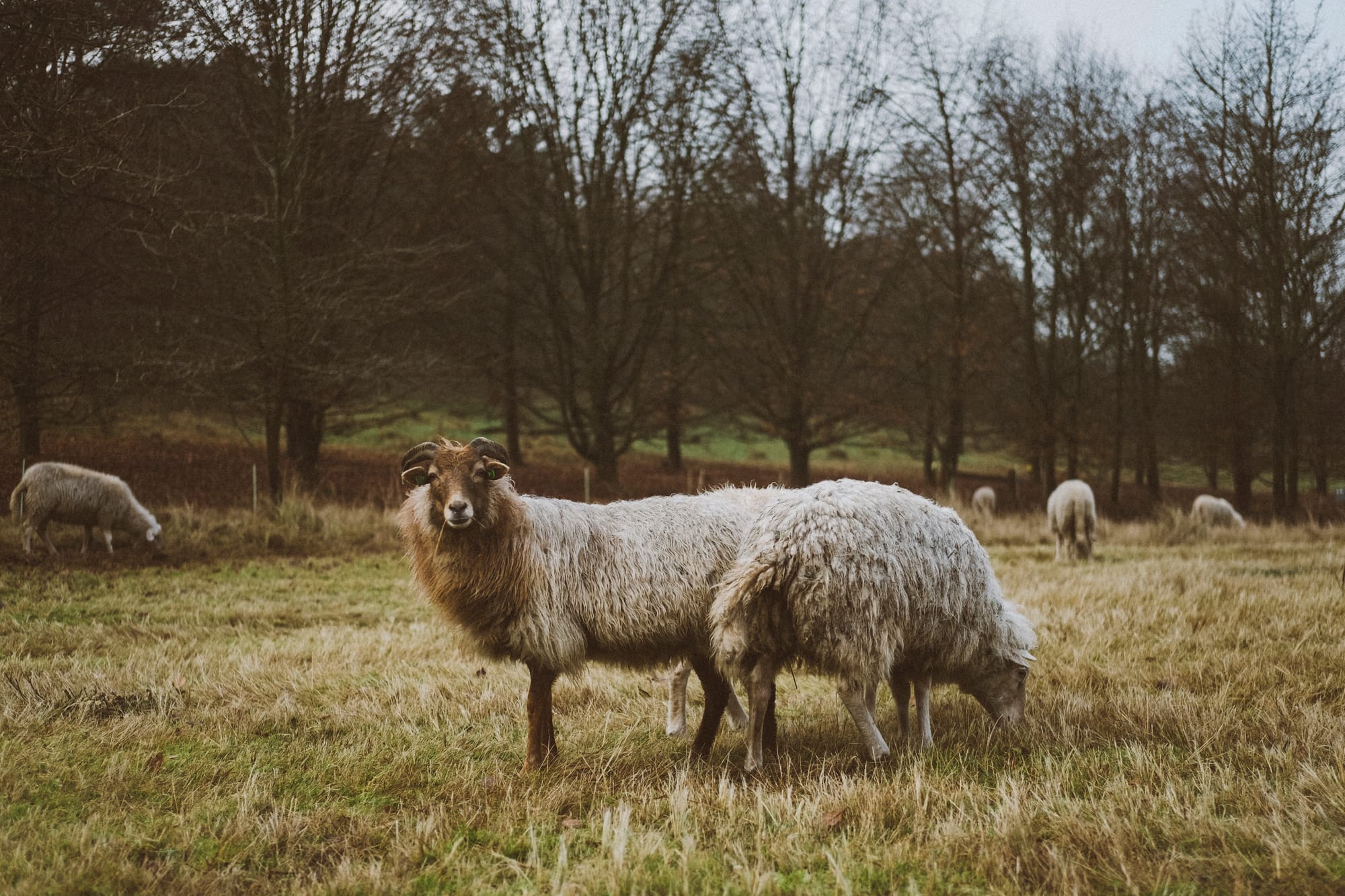
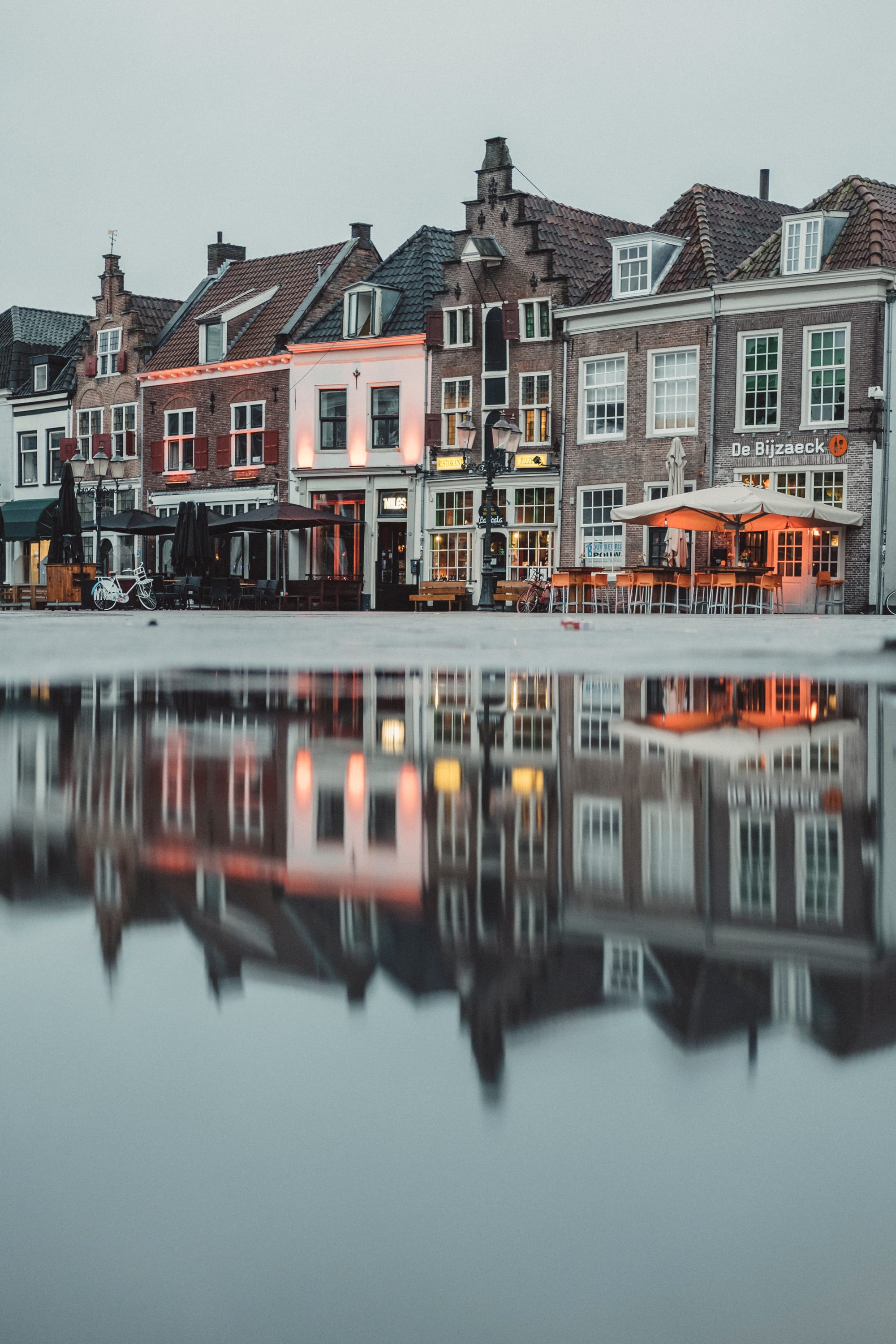
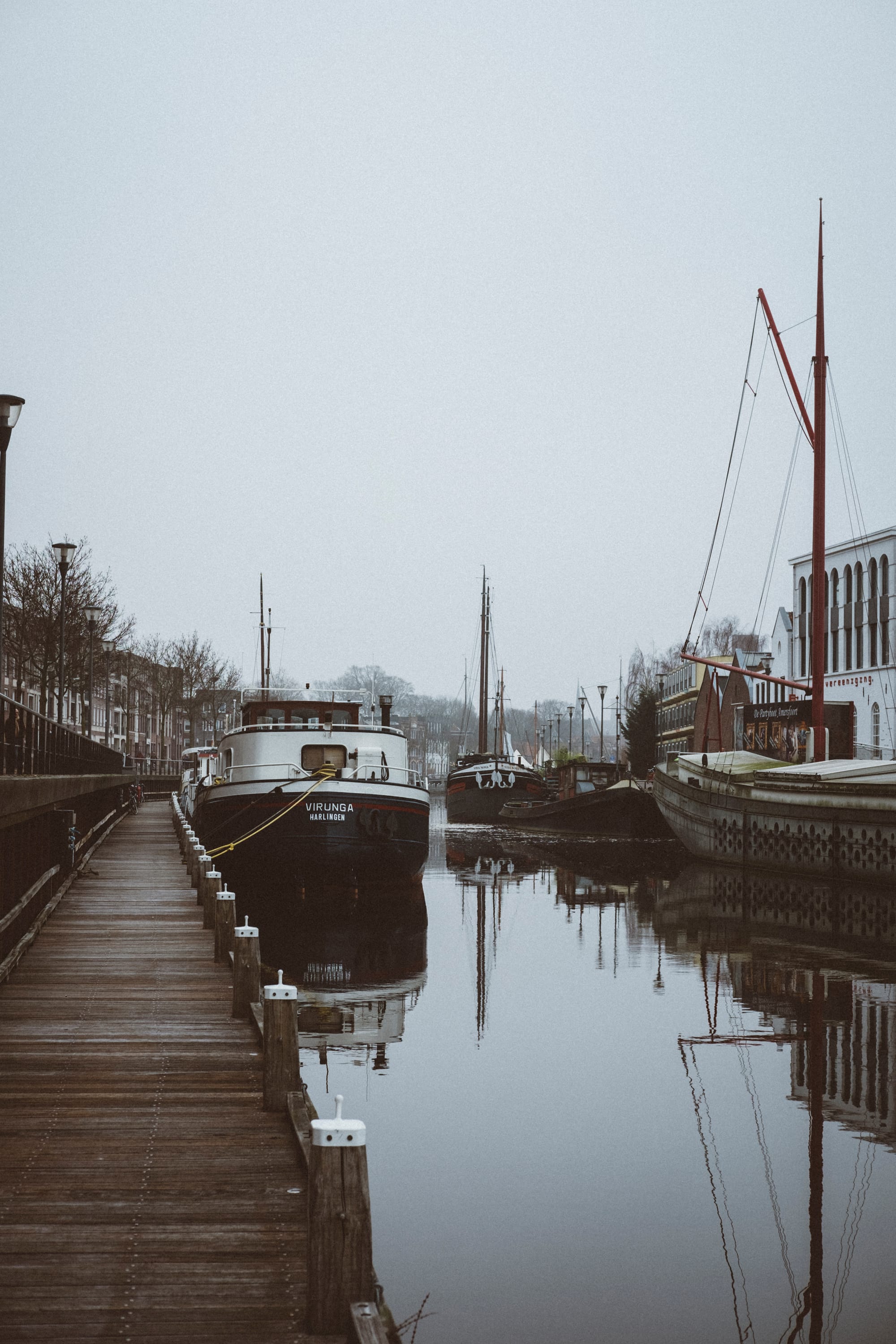
Early photographs with the XF35mm f2, taken while I was still learning what kind of photographer I wanted to become.
A safe choice might be the XF18-55m f2.8-4 kit lens, but I need something a little more opinionated, something a little cheaper, and with more character. I end up purchasing the XF35mm f2 because it's:
- super compact, and therefore looks and feels rightly balanced on the camera body;
- the cheapest native lens for the Fuji-system at the time;
- weather sealed;
- challenging me just enough to make photography interesting, while making it simpler too.
The first time I take the XF35mm f2 out to make my first pictures, I'm completely enamored by the possibilities and the limitations alike. I love the image quality, the shallow depth of field, and the lack of zoom. All things that force me to look at the world differently. The lens doesn't necessarily excite me, but it feels right.
The lens that taught me how to see
Over the course of the first few years photographing with the Fuji X-T1, the 35mm f2 becomes my 'everyday lens.' I walk countless streets and cities with it, photograph birthdays, weddings, babies, friends, animals and myself with it. It stays with me while I switch camera bodies from the X-T1, to the X-E3, to the X-Pro3. I take it to Italy, Greece, Berlin, Belgium, the Czech Republic, and all over the Netherlands. This lens goes with me everywhere and is my only lens on so many of these trips.
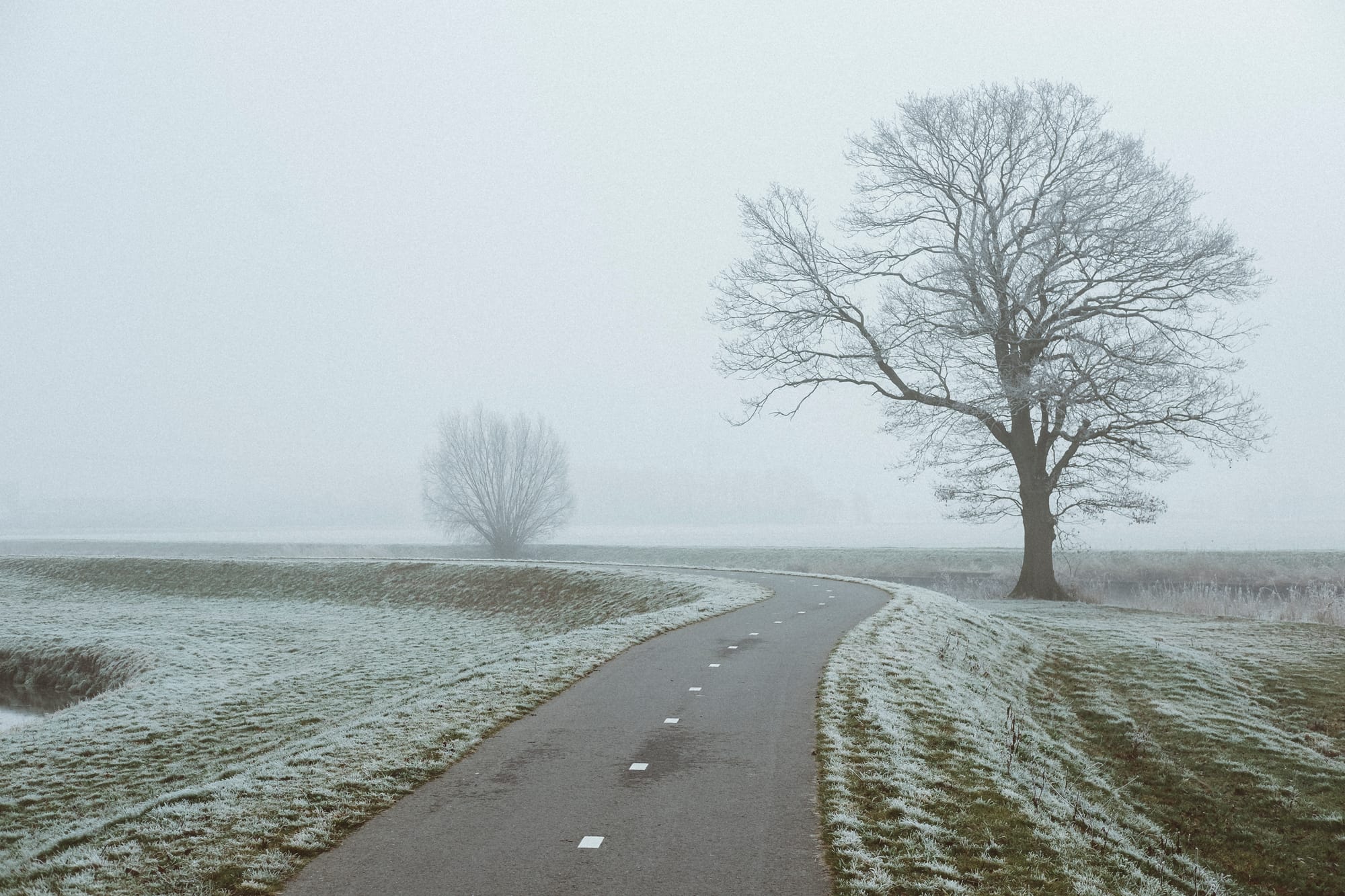
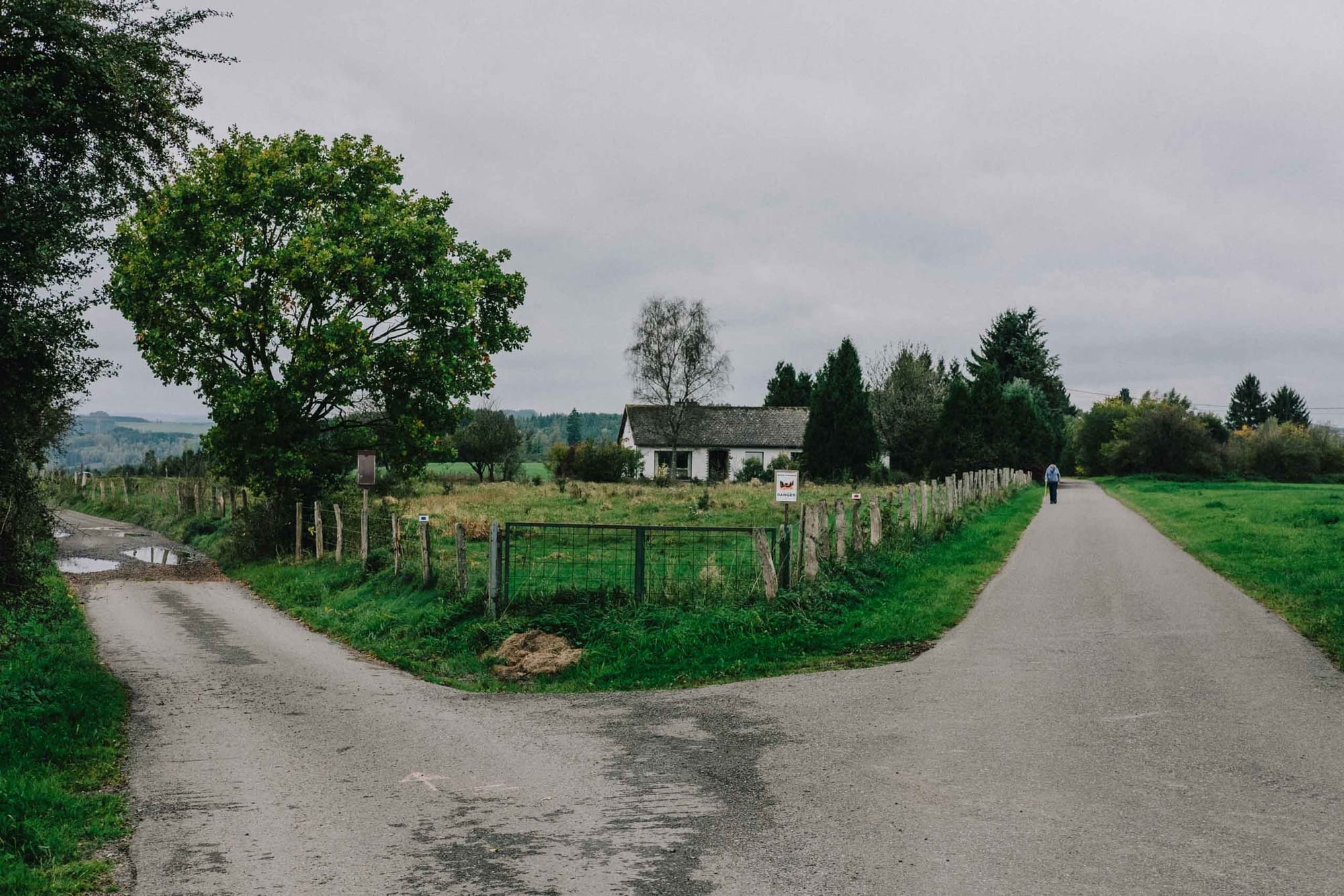
It's 2026 now and only now do I realize how deep this relationship goes: out of the 300,000+ photos in my Lightroom catalog, more than 60,000 are shot with the XF35mm f2. About 20% of my entire photographic life has passed through this one lens. Let's pause there for a minute and think about that.
About 20% of my entire photographic life has passed through this one lens.
Part of the reason this lens earned its spot, and therefore was allowed to accrue these stats, is because it fits so nicely into a small bag, and is easy to carry around my neck on the right body.

But this lens not only shaped my gear bag, it shaped my eye too. This is the lens that taught me how to see the world. The limitations of the 50mm-equivalent and the ability it gives you to point out stuff in the world, is unmatched to me. It's just narrow enough to say "look, there's a thing I find interesting, look at it" without having to take three steps back to get it in frame the moment you notice it (looking at you, XF50mm f2...)
The size of the lens is why I get to bring it with me and enjoy the benefits it gives me. There are bigger and better primes out there, but I don't see the need for them. For the ultimate everyday carry Fuji lens, the perfect lens for documentary photography and street photography alike, this is what I am drawn to most. And as illustrated, that's not just how I feel, that's the numbers talking too.

Autofocus that never lets me down
Fujifilm cameras are not known for their fast and reliable autofocus. Although you gotta admit it has gotten considerably better over time. The XF35mm f2 autofocus has never been bad though. In fact, this is one of Fuji's fastest primes and you can definitely notice that. Fuji rates the autofocus of the XF35mm f2 at 0.08 seconds, but in real life it simply feels instant. I am not here to get too technical about it. The internal focusing design contributes to the speed a little, but to me it's mostly nice because it keeps the lens compact and solid at all times.
Let's just put it like this: the autofocus on this lens has never made me miss a 'decisive moment,' if that's how you want to call it. It's always been ready when I was ready. That's what makes this lens so reliable for me. I like moving at a slower pace, and paying attention to the details of life. I enjoy highlighting what otherwise might be overlooked. But sometimes things move fast, and I need to keep up. And whatever gear I use needs to keep up with me. This lens has done that consistently for the past 10 years. And because of that, I could never dislike it.

Image quality after 10 years
Because I photographed so many different things with the 35mm f2, I got to test it in many different conditions. Out of the 60K+ images I shot with this lens, more than 9K of those are rated three stars or higher in Lightroom, which is how I determine if an image is strong enough to edit and archive. That's a 15% success rate, which proves this lens doesn't just produce volume, it produces keepers too.
This lens doesn't just produce volume, it produces keepers too.
The images it gives you are not automatically striking or impressive. You could say they are boring by default. Perfectly boring, even. But that's exactly what you need when you truly want to become a better photographer the more you shoot. A lens that's reliable and delivers excellent results, but leaves it up to you to make those results interesting to look at. It's an essential lens for those serious about crafting images.
Let's break down what that means for the typical lens-characteristics people talk and care about.
Sharpness & rendering
The XF35mm f2 is sharp wide open at f2. It remains sharp all the way through f16. Perhaps not perfectly so on either end of that spectrum, but always good enough for real-life use, for people that care about story and content, rather than technical perfection.
The lens never gets soft though, and color accuracy is maintained in any aperture or lighting situation. Skin tones are true to life and honest. This lens delivers reliable clarity rather than dramatic character. I own a Voigtländer 35mm f1.4 as well, which I use on my X-Pro3 through an adapter, and the experience on that lens would be the opposite of the XF35mm f2. At least rendering-wise. That Voigtländer lens is made for character. It gives you a certain 'look' that is beautiful, and highly sought after, but also opinionated and very specific. The XF35mm f2 does not have that character, but you can of course easily add your own sauce in post-production. At the very least, you know you are working with a pleasing image that is true to life.
I love the 35mm f2 for this, and it's why I use it so much for my documentary and walking projects. Looking for interesting tidbits in life comes with a lot of unexpected challenges like difficult weather or lighting conditions. I can trust this lens to get the job done in any situation.




Portrait, street and cat photographs demonstrating the sharpness, color rendering and depth of field of the Fujifilm XF35mm f2
Bokeh & depth of field
Let's be real about this, the depth of field and bokeh are not the main selling points of this lens. You are not getting an pronounced rendering that will encapsulate your subject and leave viewers in awe of the dreaminess of the out of focus area. Instead, the XF35mm f2 bokeh is clean and unobtrusive. It's functional and gets out of your way, without becoming distracting. The f2 aperture brings sufficient separation in 99% of situations by balancing depth and context, while staying easy to shoot with.
For some people, f2 might not be enough. And sometimes it isn't in low-light situations. But I believe a small lens is a good lens so I am not willing to trade that for a wider aperture like f1.4, I rarely need it anyway. And if I find myself in a situation where I wish I had a little more light at my disposal, I just accept a slightly higher ISO value. This is not a big deal on modern cameras and post-processing possibilities have gotten so good that the increased noise generated by the higher ISO is no longer an argument for me.
Color & contrast
Have you ever used a lens that produces washed out, underwhelming images unless the light is just right? For a long time, I did not. Only when I bought a cheap Chinese lens from Amazon for fun, is when I first experienced this. Up to that point, I simply never even considered that lenses for dedicated cameras could produce low contrast images with harsh color shifts and distracting vignettes.
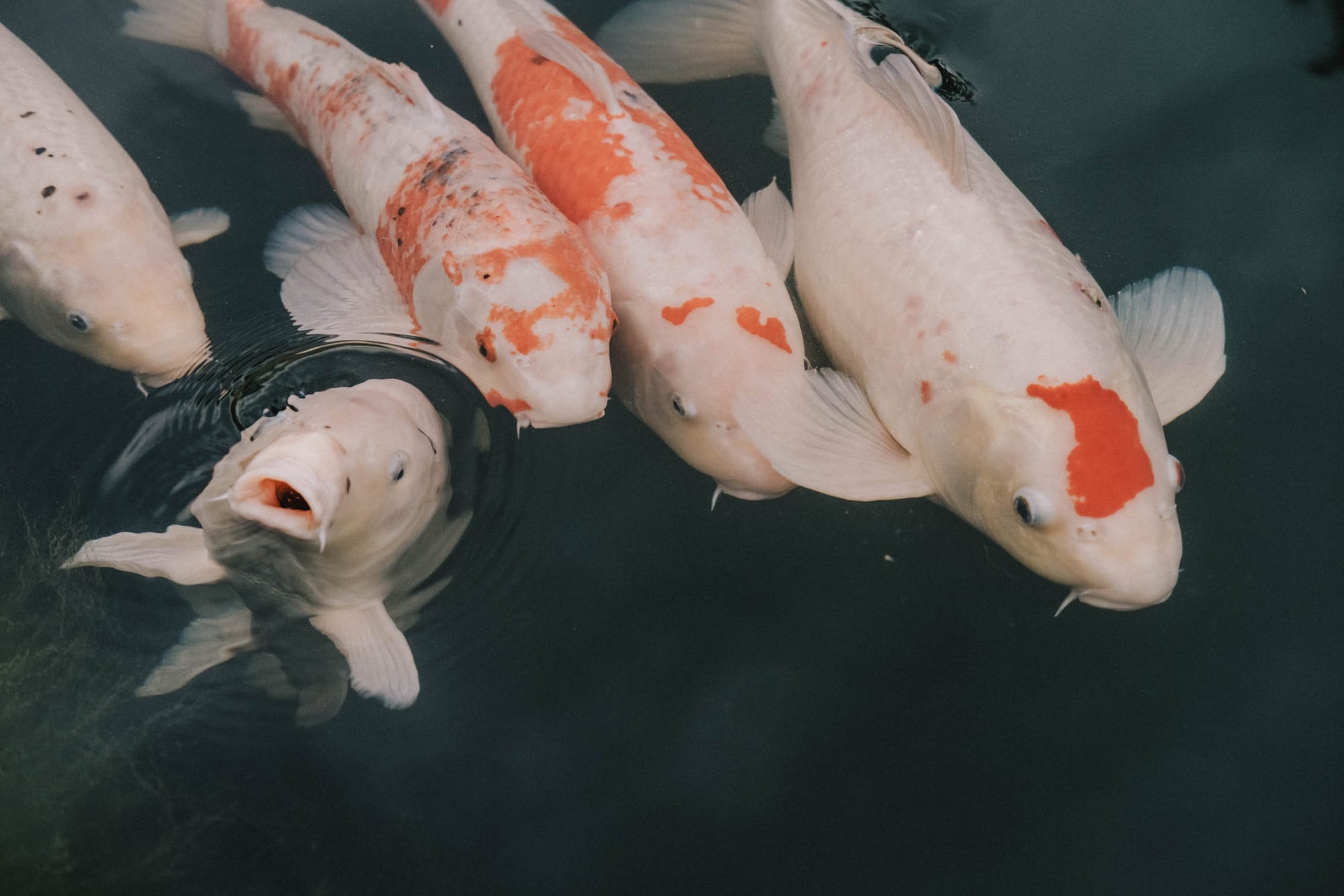
The XF35mm f2 spoiled me with its simple perfection out of the box for a long time. You simply point the camera at anything, in any lighting condition, and it will look beautifully contrasty with true-to-life colors. It doesn't really matter if you shoot portraits, street, or travel photography. It does it all without skipping a beat. And it does it so well that I took this for granted for a long time.
Of course there are lenses out there that are stronger on all these fronts. But I have yet to find one, especially for the Fuji-system, that does it this well in a package that is this small.
Weather resistance & durability
My copy of the lens is thrown into bags, carried across the globe, banged into things and faced rain, wind, snow, sun and dust. You can tell it's had a life, but also that said life is nowhere near completed yet. This lens is tough. Not once has it stopped working, did dust or moisture get a chance to creep in, or did I have to worry about breaking it while using it.
And that makes sense. The lens is weather sealed at 8 points, is made out of solid metal and is weather resistant up to temperatures as low as -10°C. It's probably my most solid lens and each time I hold it I get reassured by its build quality. Maybe I got lucky with my copy, or perhaps I managed to evade disaster by chance rather than skill. But I'll vouch for, and recommend, this lens to anybody looking for a solid shooter that will not let them down in the heat of the moment.
It's been 10 years with this lens, and it looks like it's going to be another 10 (knocks on wood).
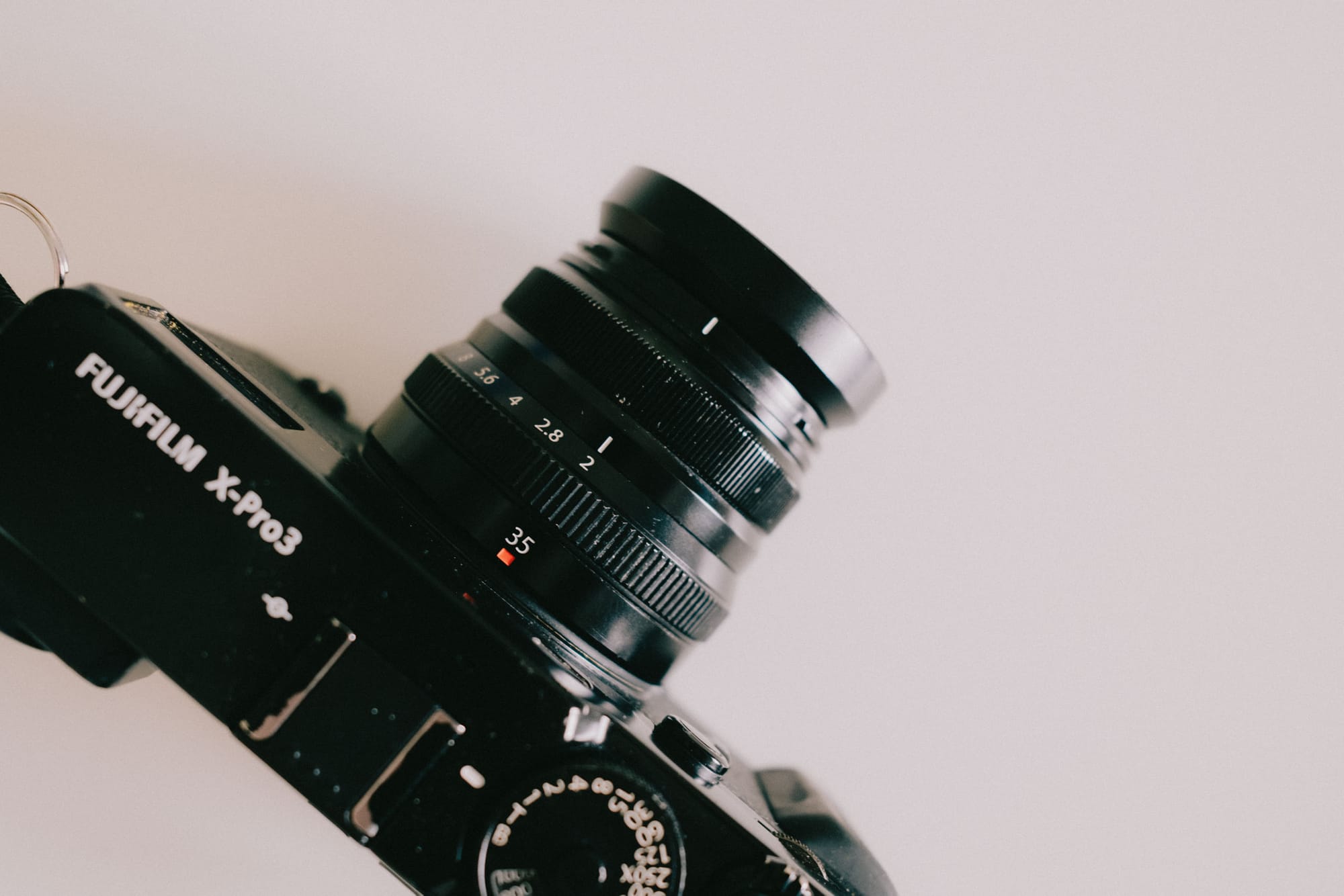
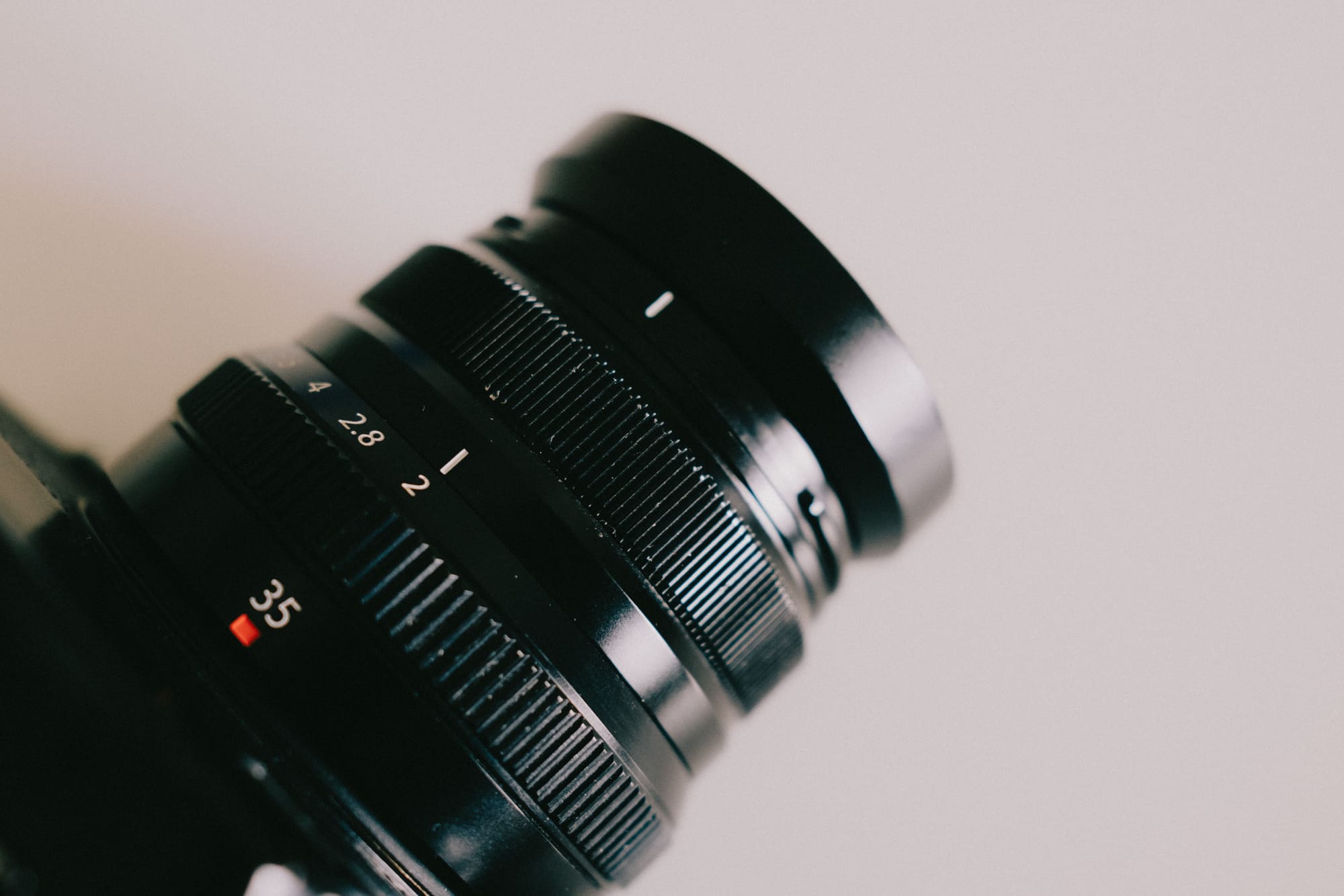
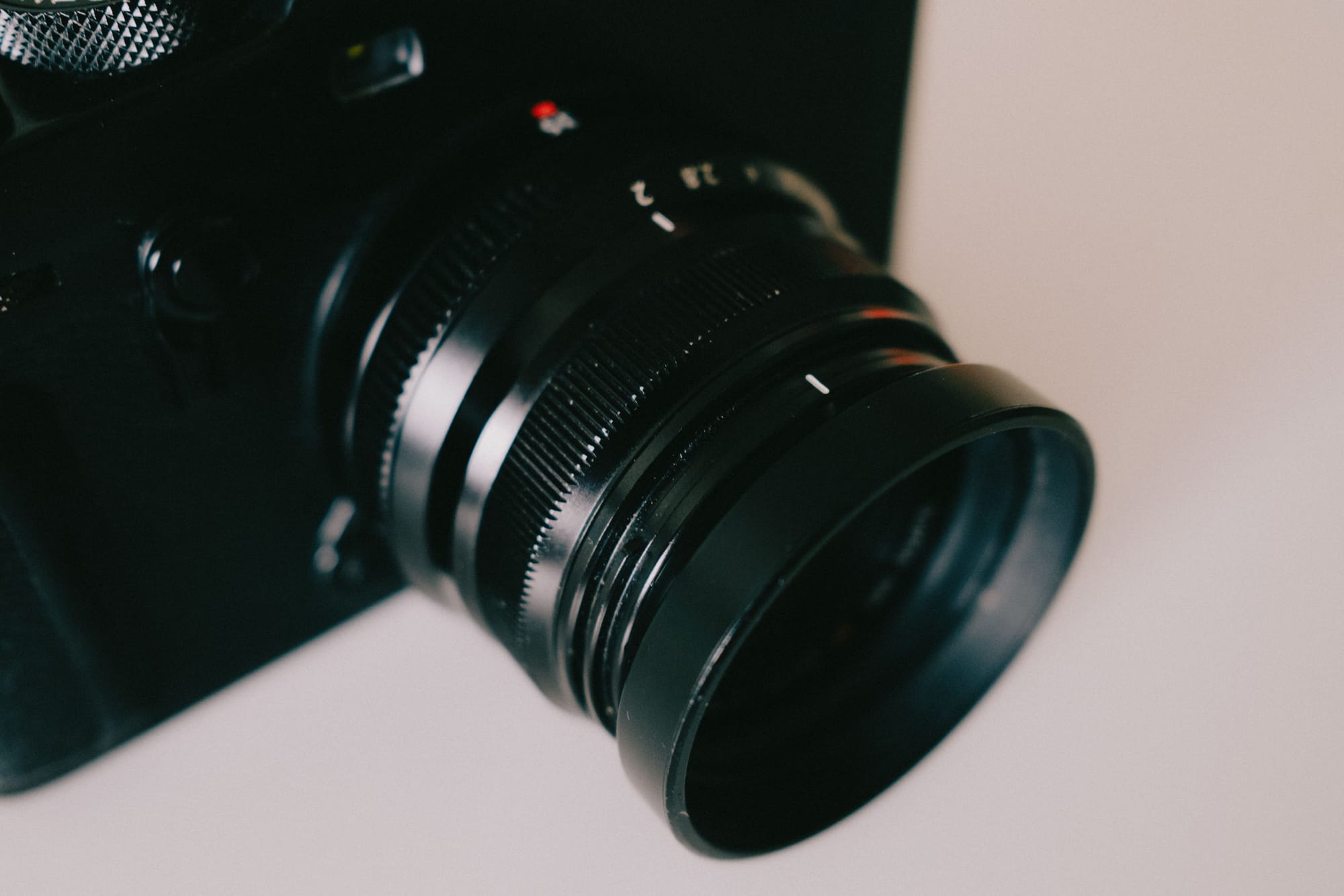
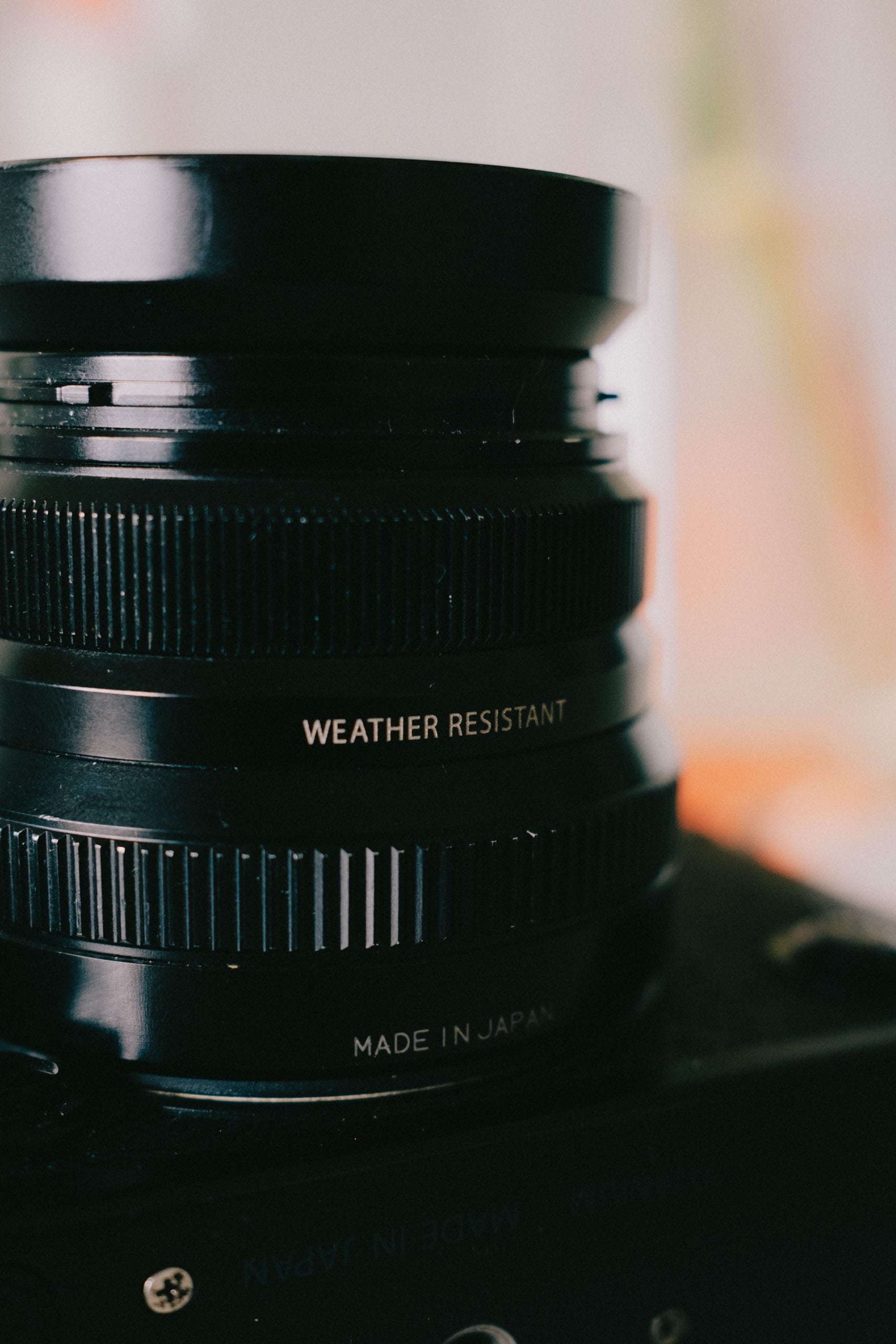
Ten years later, the XF35mm f2 still feels dense, compact and reassuringly solid. The metal construction, weather sealing and understated design are a big part of why this lens became such a dependable everyday companion for me.
Travel photography with the XF35mm f2
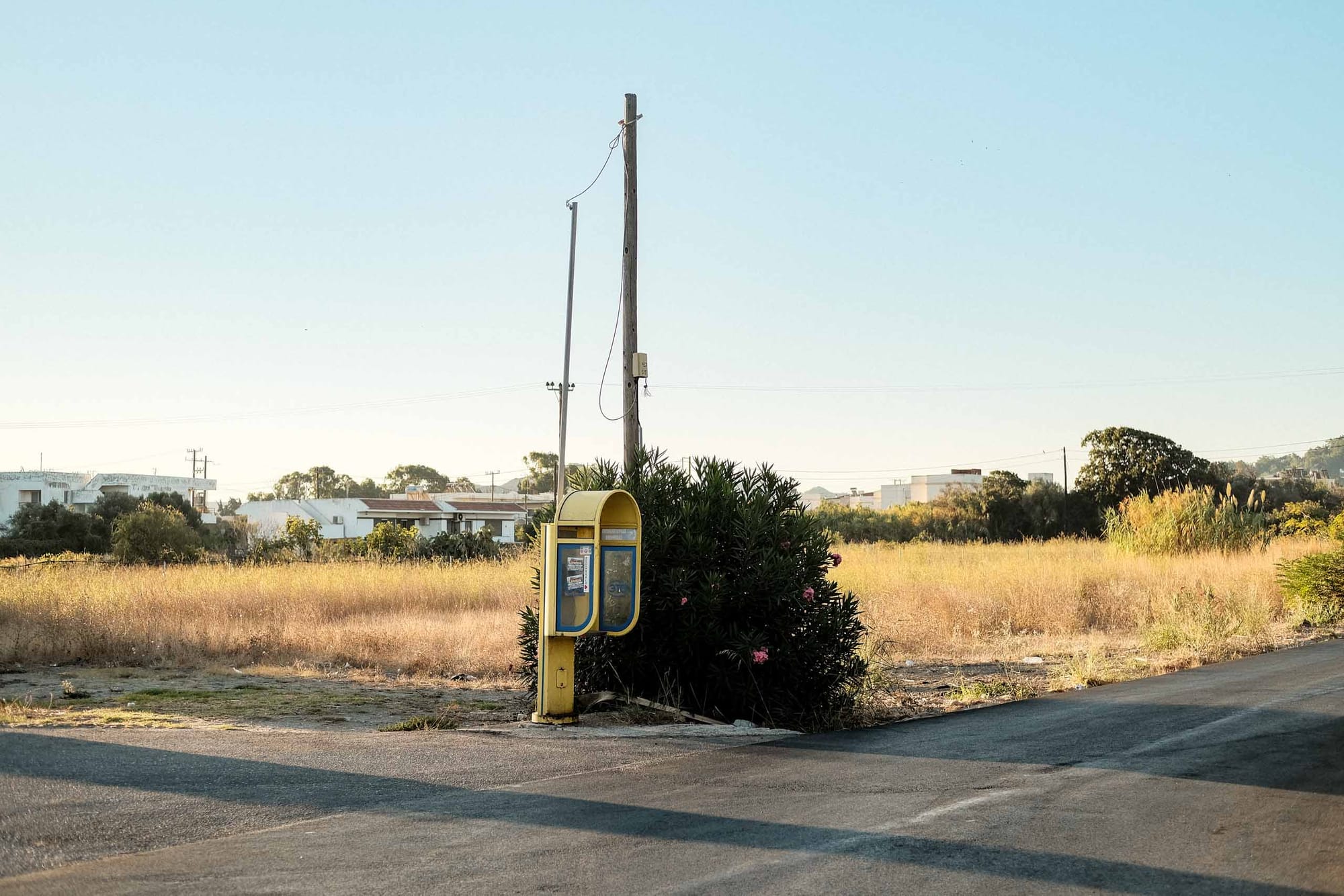
The trip I took with the 35mm f2 that stayed with me the most is one from 2022 to Greece. It was a simple vacation to Rhodes, but it had been a long time since I last left town. I was super excited to photograph a different country for a couple of days. My main idea was to take things relatively slow, pay attention to my surroundings, and actually look at things. For that I needed a lens that would be small enough to slip in my sling bag during travel days, so I could grab it quickly on the go, but otherwise is a perfect travel walk-around lens. The goal of traveling for me is photography, and this lens allows me to do that without having to think about gear and instead just lets me shoot.

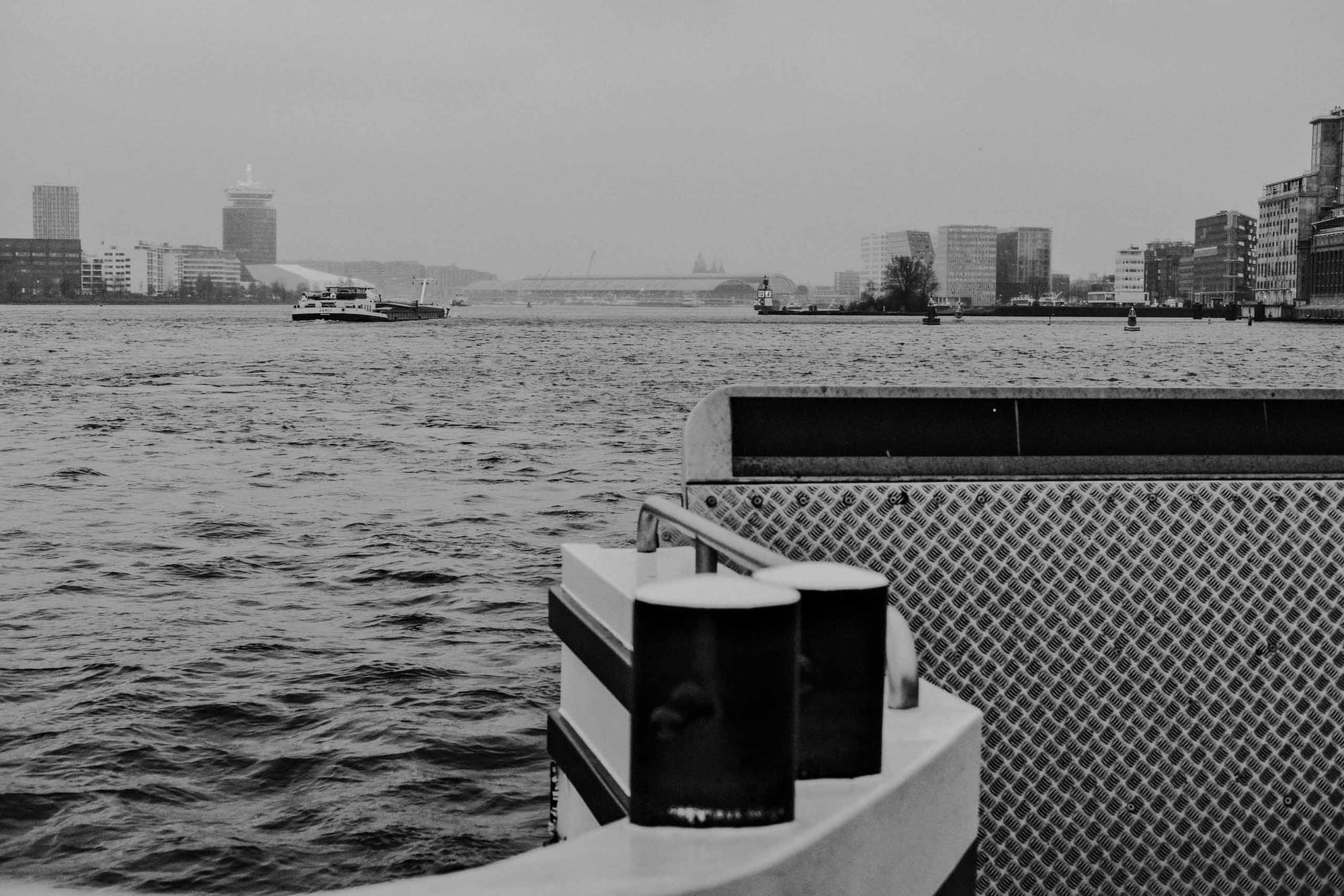
I've taken this lens on day trips to Amsterdam and weekend getaways to Berlin since then, and each time I return with a lot of images I really love. Shooting new places is always a challenge. You don't know where to look, what to photograph, and which things are interesting or not. Directing your attention to a place is the challenge. You want a camera and lens combo that allows you to do that. You need a frame that allows for that focus, while also getting out of your way.
I love traveling and experiencing the world. A new place comes with so many new sensory stimuli, it's enchanting and thrilling each time. What gets me out of that state quickly though, is fiddling with my gear all the time. Shooting images is important for me. And if you're reading this, it's probably important for you too. So what do you want then? A camera and lens that pretends it isn't there. Which means, and Ic repeat, is small, reliable, brings focus to the chaos, and lets you be in the world without asking for attention. That's why the XF35mm f2 is one of my favorite Fuji travel lenses.

The moment I realized this lens was “The One”
This might come as a surprise, after reading through this lofty story so far, but this lens never really stood out to me all that much. Obviously so, because it's good in all the ways described, but unremarkable in all the same ways too. The moment I recognized its value only came when I viewed the stats in my Lightroom Classic library.
Good gear disappears, and this lens certainly has. This lens is not exciting. It does not scream for attention. Instead, this lens becomes invisible in a quiet, reliable, intuitive way. Only when I realized I never had to fight with this lens, not even once, is when I started to truly appreciate it for what it is. Perfectly boring, sure, but perfectly reliable is a much better description.
For the past 10 years, I never thought to champion this lens the way I do now. I appreciated it, but I mostly just used it without thinking about it. Even writing this now, the realization is slowly growing: this lens brought me more than I imagined it would and it became an essential part of my kit in the process.
Sample images
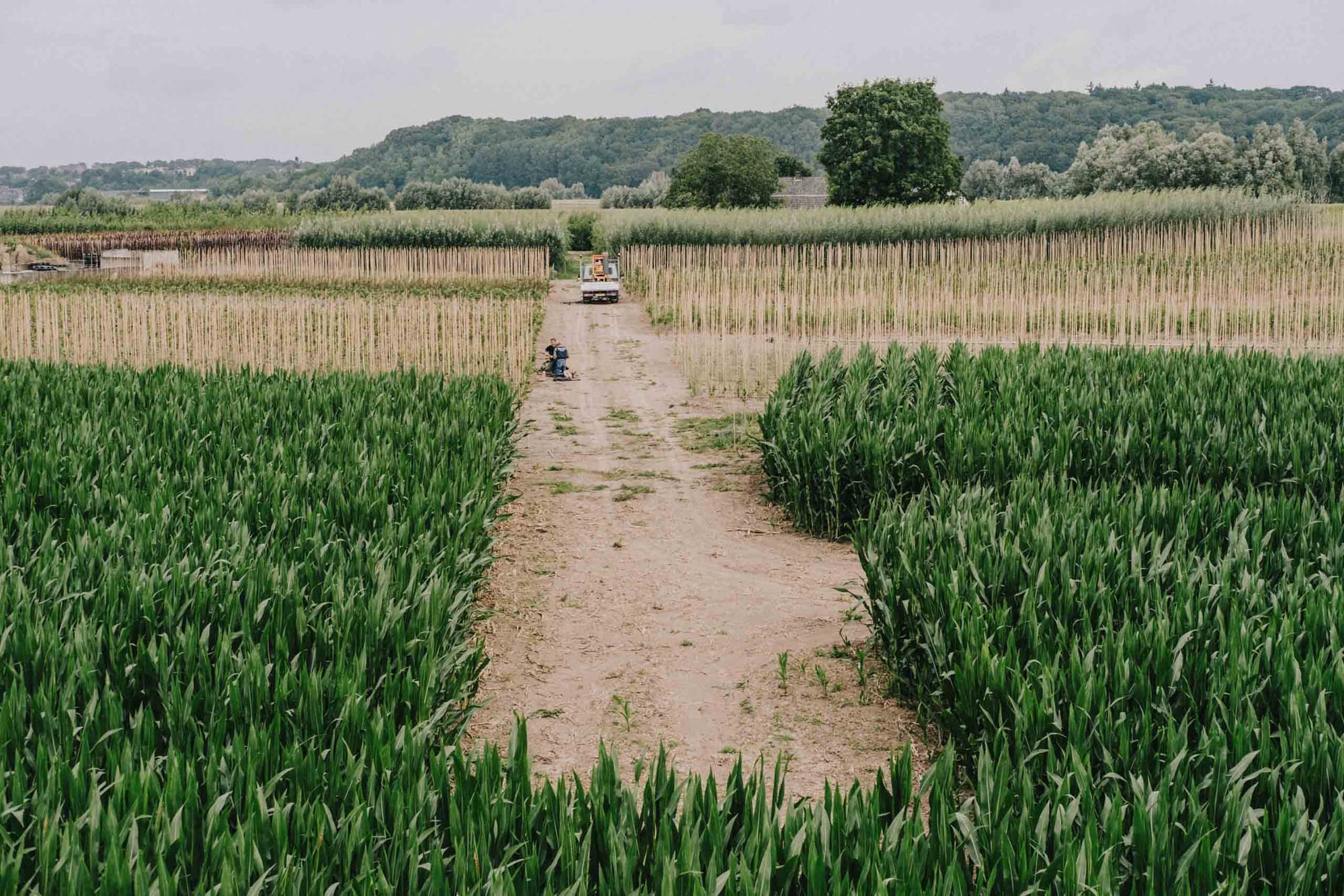
According to Lightroom, at the time of writing 60,152 of my 313,684 cataloged images were made with the XF35mm f2. Which is about 19.18%, or roughly one in every five photographs I’ve ever taken.







XF35mm f2 vs other Fuji primes
If it's not obvious by now, I don't own any of the other 35mm prime lenses that Fujifilm makes. Why would I, when the one that fits my needs best is already in my possession? I do, however, have a relatively good idea on how the other options compare to the one I own. And I'll try my best to highlight the differences and similarities. You already know I have made my choice, but perhaps for you that choice is different. Or maybe you just need a little reassurance that the other options are also not what you're looking for. In which case, welcome to the club.
| Lens | Aperture | Weight | Weather Sealed | Autofocus | Rendering | Best For | My Take |
|---|---|---|---|---|---|---|---|
| FUJINON XF35mmF2 R WR | f2 | 170g | Yes | Fast, quiet, reliable | Neutral, clean, honest | Street, travel, documentary, EDC | The perfect all-rounder. Quietly dependable and small enough to truly live with. |
| FUJINON XF35mmF1.4 R | f1.4 | 187g | No | Slower, noisier, more hesitant | Soft, filmic, characterful | Artistic work, portraits, atmosphere | The romantic choice. Less reliable, more emotional. |
| FUJINON XF33mmF1.4 R LM WR | f1.4 | 360g | Yes | Extremely fast and modern | Clinical, sharp, highly corrected | Professional work, weddings, hybrid shooters | Technically the best lens here, but too large for my everyday workflow. |
| FUJINON XC35mmF2 | f2 | 130g | No | Fast and surprisingly good | Very similar to XF35mm f2 | Budget setups, beginners, lightweight kits | Incredible value, but missing the tactile experience that makes the XF special. |
vs XF35mm f1.4 R
Believe me, I seriously considered the XF35mm f1.4. Even now I sometimes look at it thinking: should I...? This lens is a cult classic for its rendering and being a pleasure to shoot with. It's a much more famous lens than its little f2 brother, because of it. The XF35mm f1.4 is also one of the original three lenses that Fujifilm released alongside their first mirrorless X-system camera, the X-Pro1. It has gotten the time to build some notoriety but it has also started to show its age.
The XF35mm f1.4 is not weather sealed. Features like that weren't really a thing when Fuji designed this lens. It's a small lens, but still larger than the f2 version. And the autofocus is noisy and relatively slow. The latter is less of an issue on modern bodies, but it because of the focusing mechanism (the older DC motor design) that it doesn't really compare to the dramatically faster, smoother, internal focusing system of the f2.
The XF35mm f1.4 is a nice lens, with a lot of good things going for it and the fact that it's still able to keep up after more than a decade is admirable. But if you can do without the 1.4 aperture, the XF35mm f2 is a better choice if you like doing street, travel and documentary photography the way I like to. The XF35mm f1.4 has character. The XF35mm f2 can be trusted.
vs XF33mm f1.4 R WR
The Fujinon XF33mm f1.4 is, at the time of writing, the most recent prime in this focal length range for the X-mount. It's what happens when Fujifilm aims to make a lens for both videographers and photographers alike that is optically perfect, with clinical sharpness, high contrast and modern rendering. It's the fully modern, uncompromised standard prime. It's good, but it's not for me.
While I can appreciate the optical beast for what it is, I still prefer my classic compact. My goal is not to have 100% optical perfection, but that shouldn't be a surprise by now. I want something that is so small it becomes frictionless. I need something that I can trust to be there and doesn't ask for attention. The XF33mm f1.4 is trustworthy for sure, but it's not an understated lens. It's huge, compared to either the XF35mm f2 or the XF35mm f1.4 and, while the images it produces are exciting, it doesn't fit my workflow at all.
Fashion and wedding photographers might find a lot of value in this lens. For the ones that like to be out in the world a smaller package makes more sense.
vs XC35mm f2
Finally, the baby brother of the pack: the budget-friendly, plastic fantastic, XC35mm f2. Don't be fooled, that one letter difference in the name with the XF35mm f2 is not something to ignore. Though, at the same time, the differences are not as big as you might think they are.
The XC35mm f2 is basically what you get when Fujifilm asks themselves “What if we took the optics and autofocus performance of the XF35mm f2… and removed everything non-essential?” What you lose is the metal body, weather sealing, the aperture ring and the premium tactile feel. What you're left with is an image that is lighter, easier on the wallet, and produces more or less the same image quality as the XF version.
To be frank, if the XC was an option when I was in the market, I might have had a tougher choice to make. But ultimately, the XF still wins for me because I refuse to use a lens without an aperture ring and I really (and I mean really) enjoy the solid feel of the metal body.
Pros & cons after 10 years
| Pros | Cons |
|---|---|
| Tiny and lightweight enough to genuinely bring everywhere | The rendering can feel too neutral or 'safe' for photographers chasing character |
| The perfect balance between image quality and portability | f2 is sometimes limiting in very low-light situations |
| Fast, reliable autofocus that never gets in the way | Bokeh is functional rather than magical or dreamy |
| Weather sealing adds real confidence during travel and documentary work | Doesn't produce the cinematic look people often associate with faster primes |
| Produces honest, true-to-life images in almost any condition | Lacks the cult-like personality of the XF35mm f1.4 |
| Excellent sharpness without feeling clinical or sterile | Some people may find the 50mm-equivalent field of view slightly too tight for travel |
| A 'boring' rendering that leaves room for your vision instead of imposing its own | Close focusing performance is good, but not exceptional by modern standards |
| The 50mm-equivalent field of view feels incredibly natural for everyday photography | Sharpness, while excellent, is no longer class-leading compared to newer Fuji primes |
| Makes you move and think intentionally because there is no zoom | The lens hood is fairly uninspiring and easy to leave at home |
| Beautifully balanced on smaller Fuji bodies like the X-T1/2/3/4/5, X-E3/4/5 and X-Pro1/2/3 | Aperture ring can feel a little stiff on some copies |
| Compact enough for long walks, sling bags and everyday carry setups | Doesn't have the 'wow-factor' images that more specialized lenses can produce |
| Quietly dependable over thousands of hours of real-world use | Because it's so reliable, it almost disappears emotionally — you may take it for granted |
| Durable enough to survive years of travel, weather and abuse | The XF33mm f1.4 outperforms it technically in almost every measurable way |
| One of the best Fujifilm lenses for street photography and documentary photography | No image stabilization (though rarely an issue in practice) |
| Never made me miss a decisive moment due to autofocus or technical limitations | If you want character baked directly into the image, this lens may feel too honest |
| Delivers consistent results over time rather than occasional spectacular ones | Its biggest strength — being perfectly boring — may also be its biggest weakness for some photographers |
| Easy to trust, which matters more than people realize | |
| Still feels modern and relevant after 10 years of use | |
| The aperture ring and metal build make it deeply satisfying to use | |
| Nearly 9000 of my final archived photographs were made with this lens alone |
FAQ
Is the Fujifilm XF35mm f2 still worth it in 2026?
Absolutely. Even after more than a decade on the market, the Fujifilm XF35mm f2 remains one of the best Fuji prime lenses for everyday photography. It's compact, weather sealed, has fast autofocus and still produces excellent image quality. More importantly, it disappears into daily life in a way many newer and larger lenses simply don't.
Is the XF35mm f2 good for street photography?
Yes. In fact, I think the XF35mm f2 is one of the best Fujifilm lenses for street photography and documentary work. The compact size, reliable autofocus and natural 50mm-equivalent field of view make it easy to react quickly while staying unobtrusive. It highlights details in the world without feeling overly tight or restrictive.
Is the XF35mm f2 weather sealed?
Yes. The Fujifilm XF35mm f2 WR is weather sealed at multiple points and rated for use down to -10°C. Over the past ten years I've used it in rain, snow, dust and harsh sunlight without problems. Combined with a weather resistant Fuji body, it becomes an incredibly dependable everyday carry and travel lens.
How is the Fuji 35mm f2 in low light?
The XF35mm f2 performs surprisingly well in low light, especially because of its fast autofocus and reliable rendering. You will sometimes need to raise your ISO or slow down your shutter speed, but modern Fuji bodies handle higher ISO values extremely well. And slower shutter speeds can become part of your creative process once you learn to work with them.
Is the XF35mm f2 good for travel?
Definitely. The XF35mm f2 is one of my favorite Fuji travel lenses because it's small, lightweight and extremely reliable. It fits easily into compact bags and never becomes a burden during long days of walking. More importantly, it helps me focus on experiencing a place instead of constantly thinking about my gear.
Fuji 35mm f2 vs 35mm f1.4 — which is better?
That depends entirely on what you value in a lens. Technically speaking, the XF35mm f2 is the more modern and reliable option with faster autofocus, weather sealing and better overall consistency. The XF35mm f1.4, however, remains beloved for its softer, more film-like rendering and smoother out-of-focus areas. One is dependable, the other is romantic.
Is f2 enough for portraits?
Yes, especially for portraits from the waist up where the XF35mm f2 can still create excellent subject separation. For full-body portraits with extremely blurred backgrounds, you may want a faster lens or longer focal length. But for natural, documentary-style portraits, f2 is more than enough in most real-world situations.
Should this be your everyday carry lens?
For many people, yes. The XF35mm f2 is compact, dependable and versatile enough to live on your camera every day. That said, your mileage may vary depending on your style and preferences. Personally, having this as my first and only lens for a long time taught me how to see and simplified photography in the best possible way.
Conclusion
So here's my thesis: the Fujifilm XF35mm f2 is not a lens for everybody, although it certainly can be. It's the all-rounder. The quiet do-it-all. A lens that deliberately avoids standing out, and because of that, keeps delivering in almost any situation you throw at it.
It doesn't pretend to be something it isn't. It doesn't overwhelm your images with character or hide weak photography behind technical spectacle. Instead, it asks you to bring your own perspective, your own taste and your own skill. In return, it reflects back exactly what you give it. In that sense, the XF35mm f2 became less of a tool for me, and more of a mirror. And I think that's why it stayed with me for so long.
Documenting your life requires reliability more than excitement. You need gear that disappears into the background and allows you to stay present in the world around you. Gear that is small enough to bring everywhere, dependable enough to trust instinctively, and honest enough to grow alongside you over time.
Nearly 9000 of my finished photographs were made with this lens. That’s 2.9% of my entire photographic life. All from one small, perfectly ordinary 35mm f2 prime.
At some point, this lens stopped being 'gear.' It became a life documenter, a time capsule, and a decade-long collaborator. And that's why, ten years later, I’m still shooting the XF35mm f2. A lens that's perfectly boring and quietly perfect.
Just you, me, and some occasional notes from the field. No spam.
Join the conversation