
Field trips for the greater good

Howdy my dear readers,
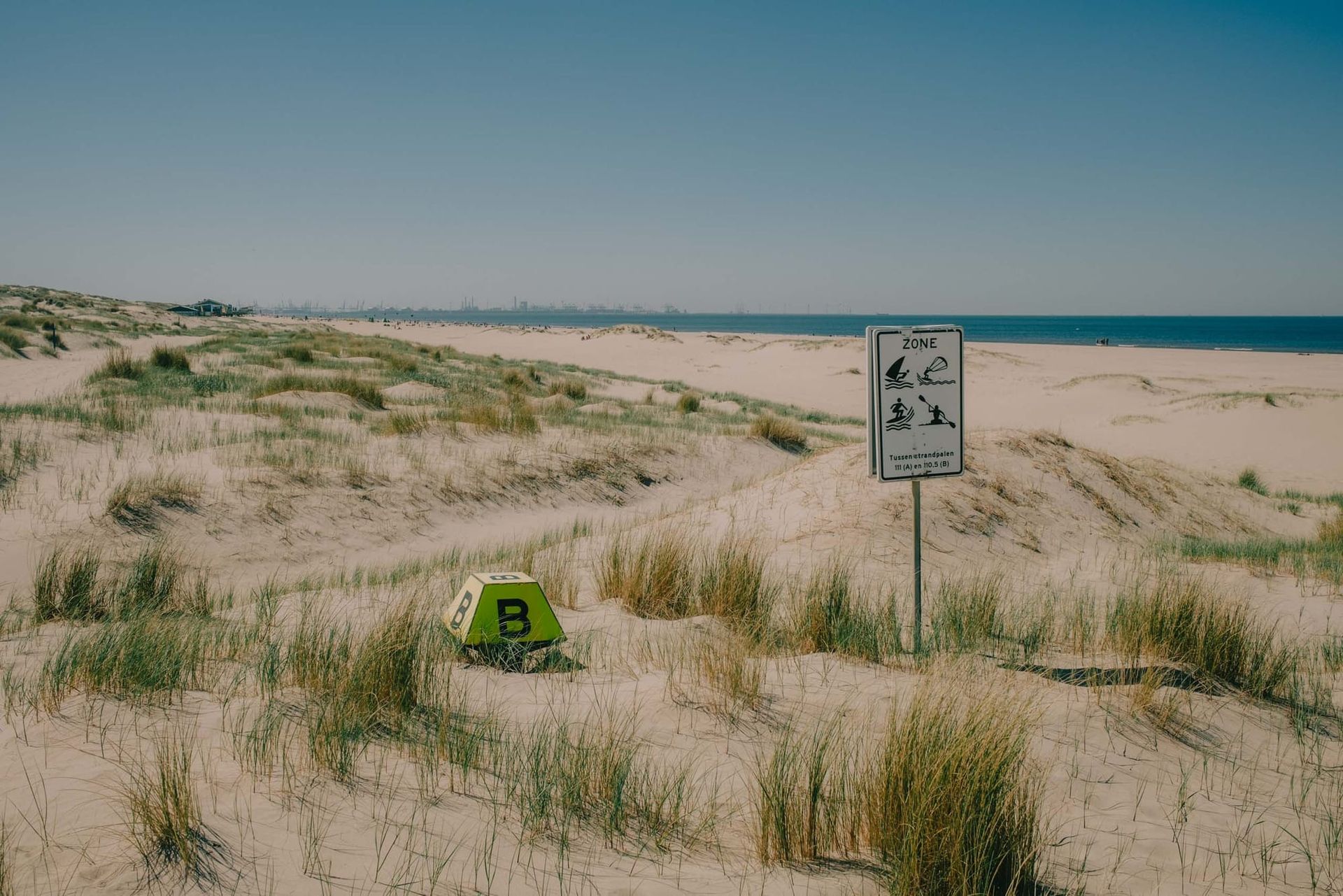
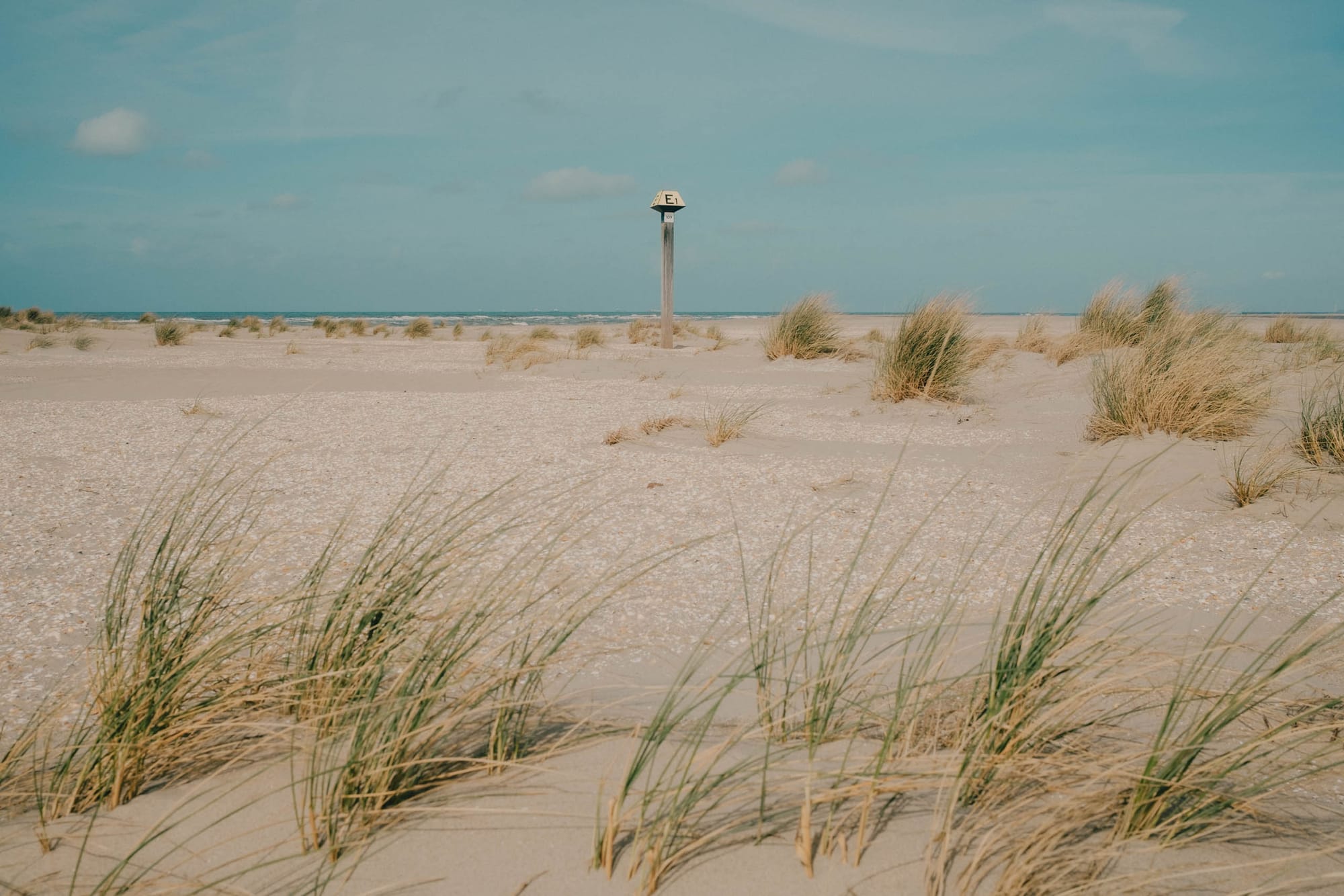
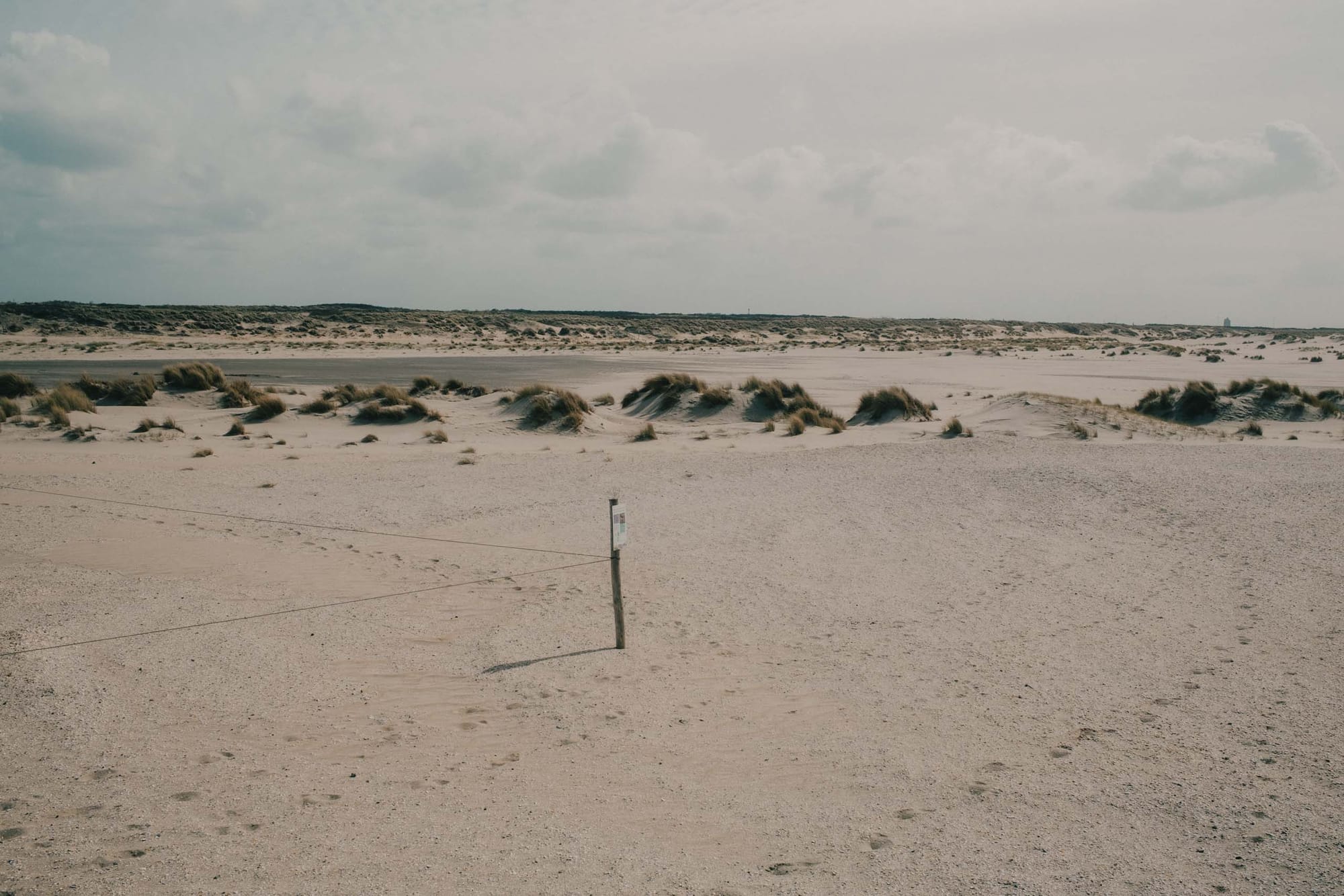
Huge smoke stacks are rising up from the horizon. Crowds are growing near the beach access paths. We are in between everything, surrounded by sand, wind, and peace. I am happy. This is exactly what I was hoping for when I started dreaming about this type of coastwork. After being stuck behind a desk for seven years, I needed to feel the air on my face again. Preferably while using my body in a way that produces that satisfying tiredness at the end of the day. Even better if I get to make photos and build towards something in the process.
Field work is fun work
It's a nice spring day in early April when our feet hit the sand. Me and Ben, a Canadian friend I met online who's come over to the Netherlands to explore, are both enjoying the scale of the place we're in. Ben tells me it's been a few years since he's been to the coast and he almost forgot how nice and refreshing it is to be close to the ocean. Although I can't say the same, for my trip to Texel was only a few weeks ago, I do agree with him and I feel the same.
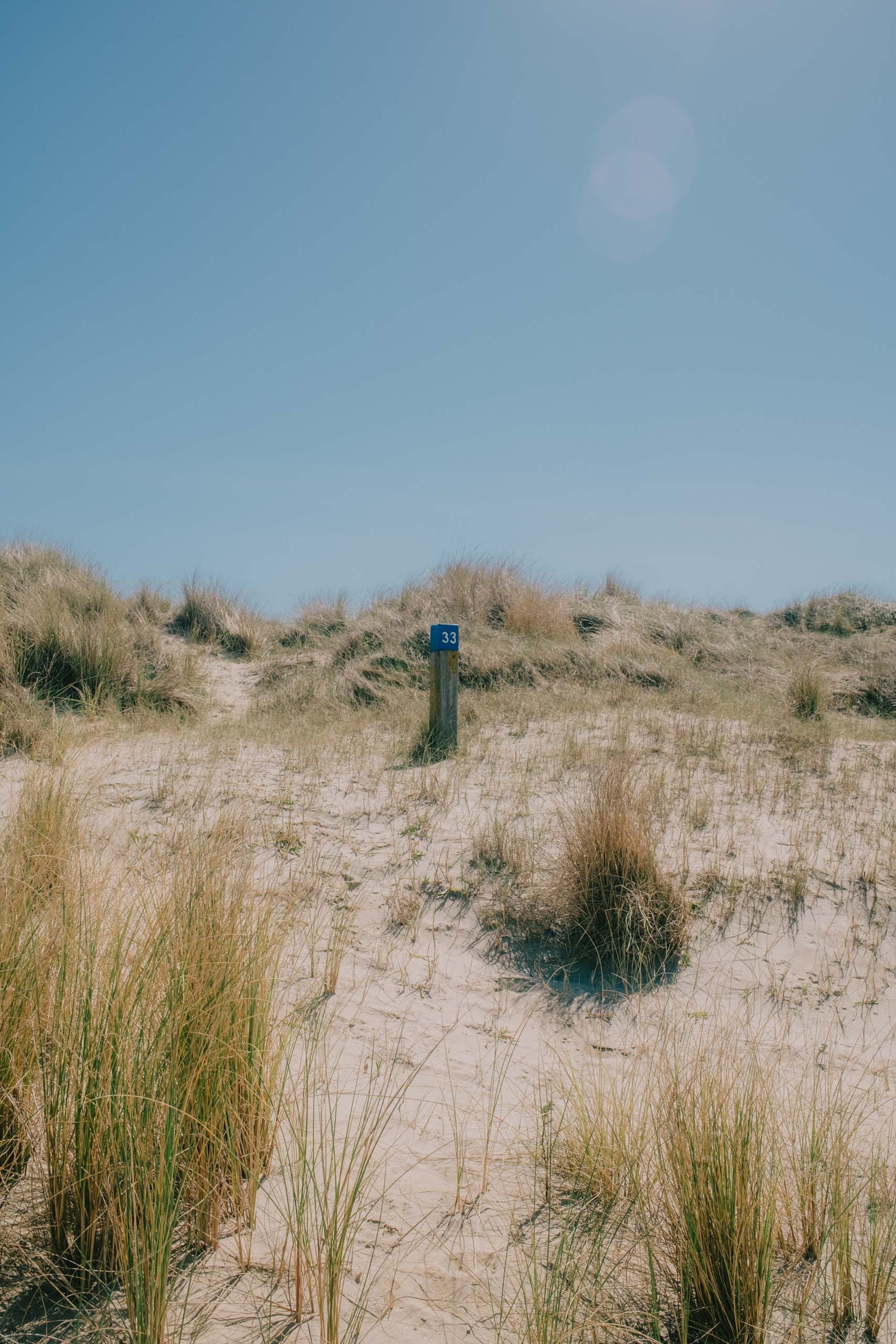
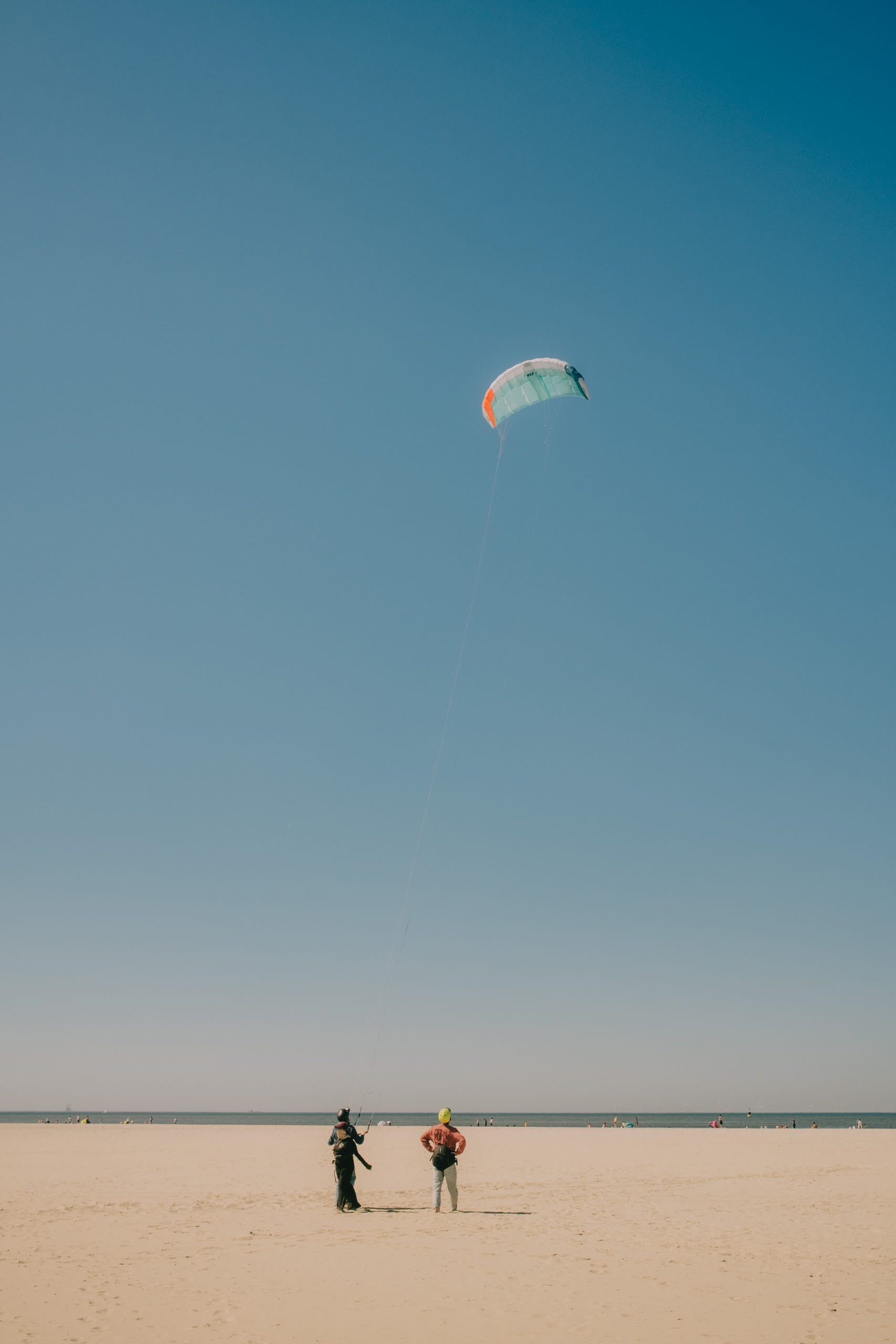
It's been years since I came up with the plan to walk the entire Dutch coastline. I have never found the time to do it. A lie I continue telling myself to this day. But things are changing though. I have a lot more time available that I can decide what to do with, an asset I fiercely protect, and I'm starting to find a rhythm I'm happy with. With the coastline as my subject, these day trips are both fun and productive at the same time.
Looking for relevance
The Dutch coastline is interesting because it is not really a natural edge. It is a negotiated edge: part beach, part infrastructure, part experiment, part cultural identity. A constant conversation between humans and nature. It's common knowledge that a large part of the Netherlands lies below sea level, so the beaches and dunes are not only there to look nice but also as an essential protection agains the raw power of the water. It's a coastline that needs to be maintained constantly, because otherwise the wind, currents, and rising sea levels keep eroding it. That's means it's heavily engineered, but also never fully controlled.
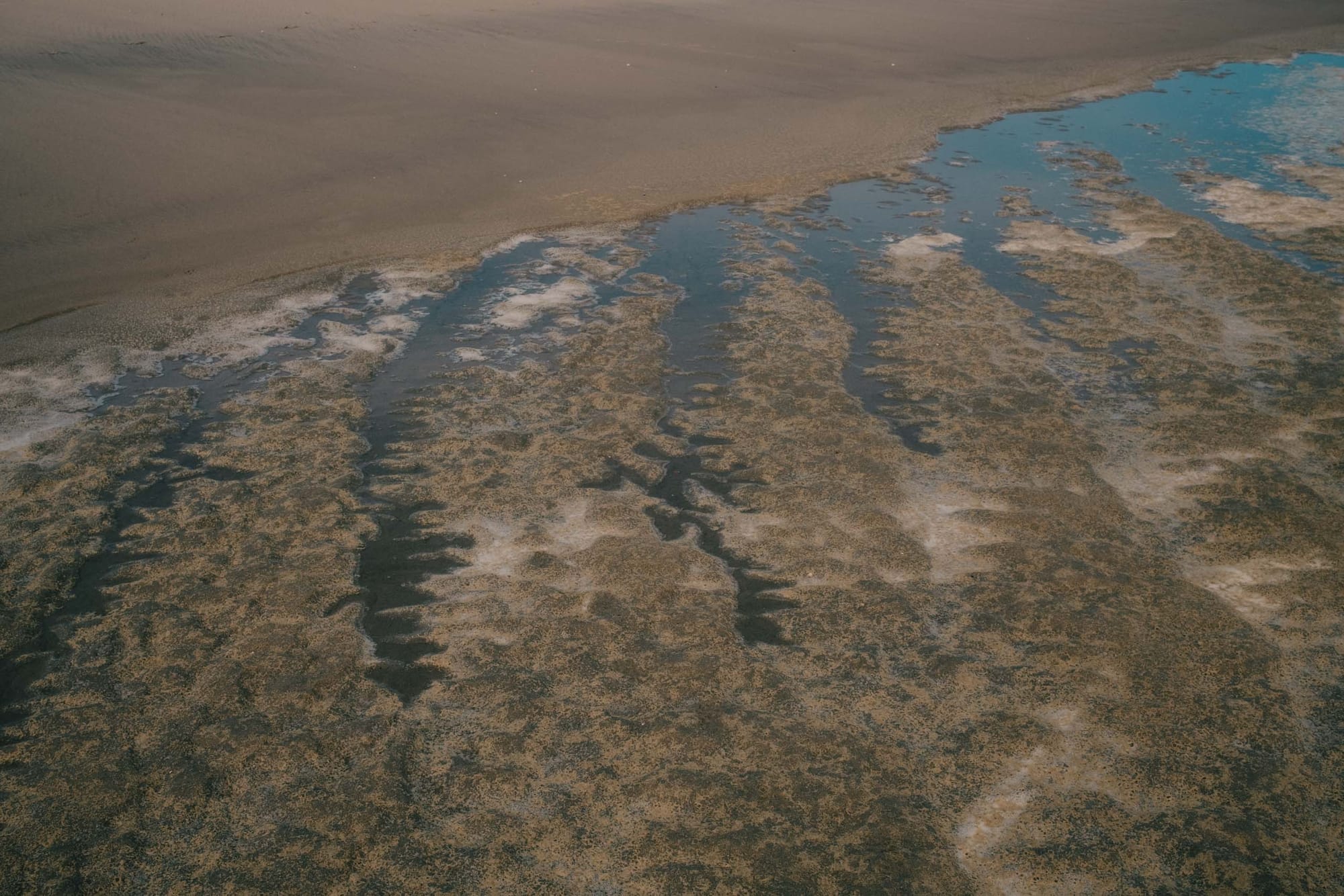
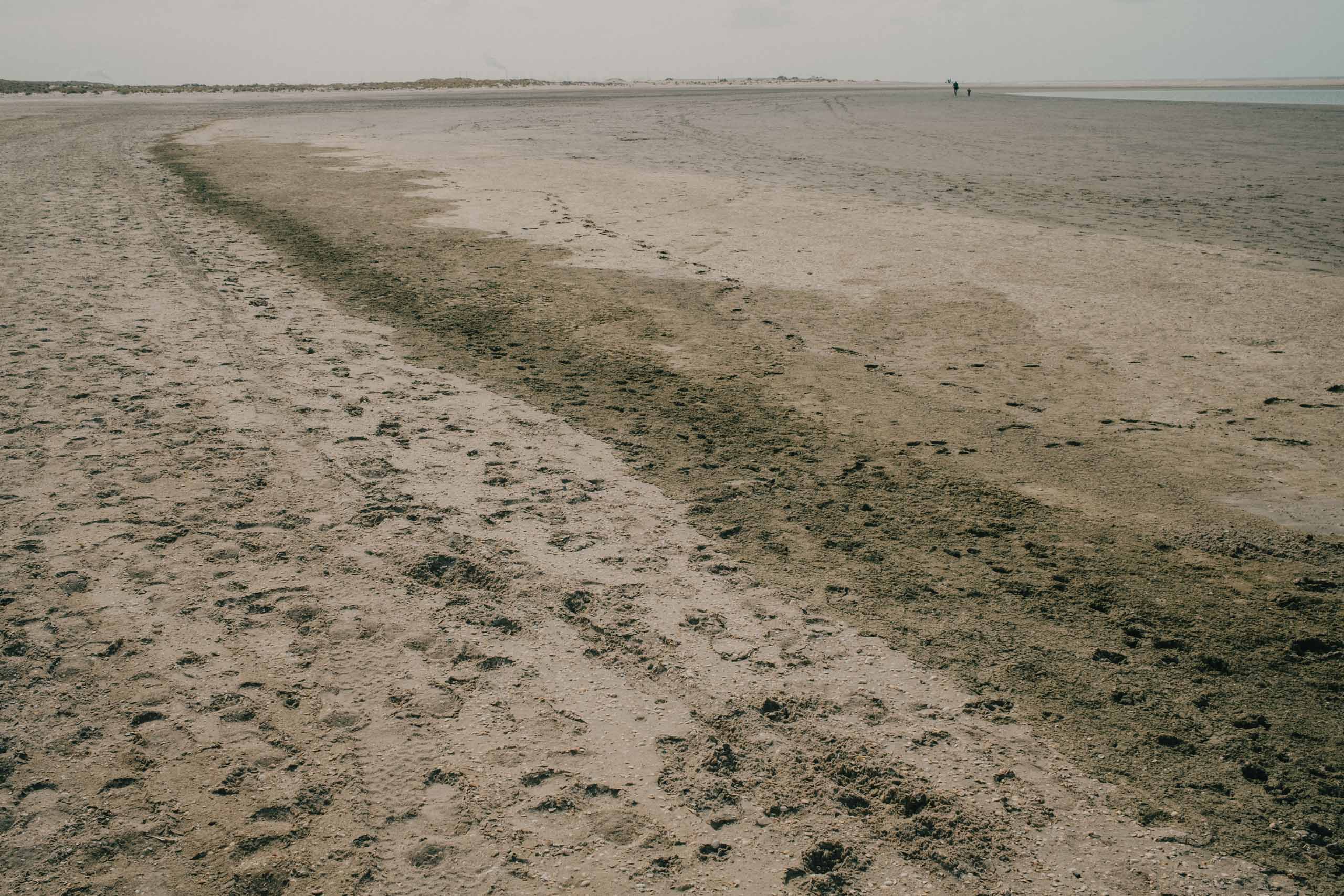
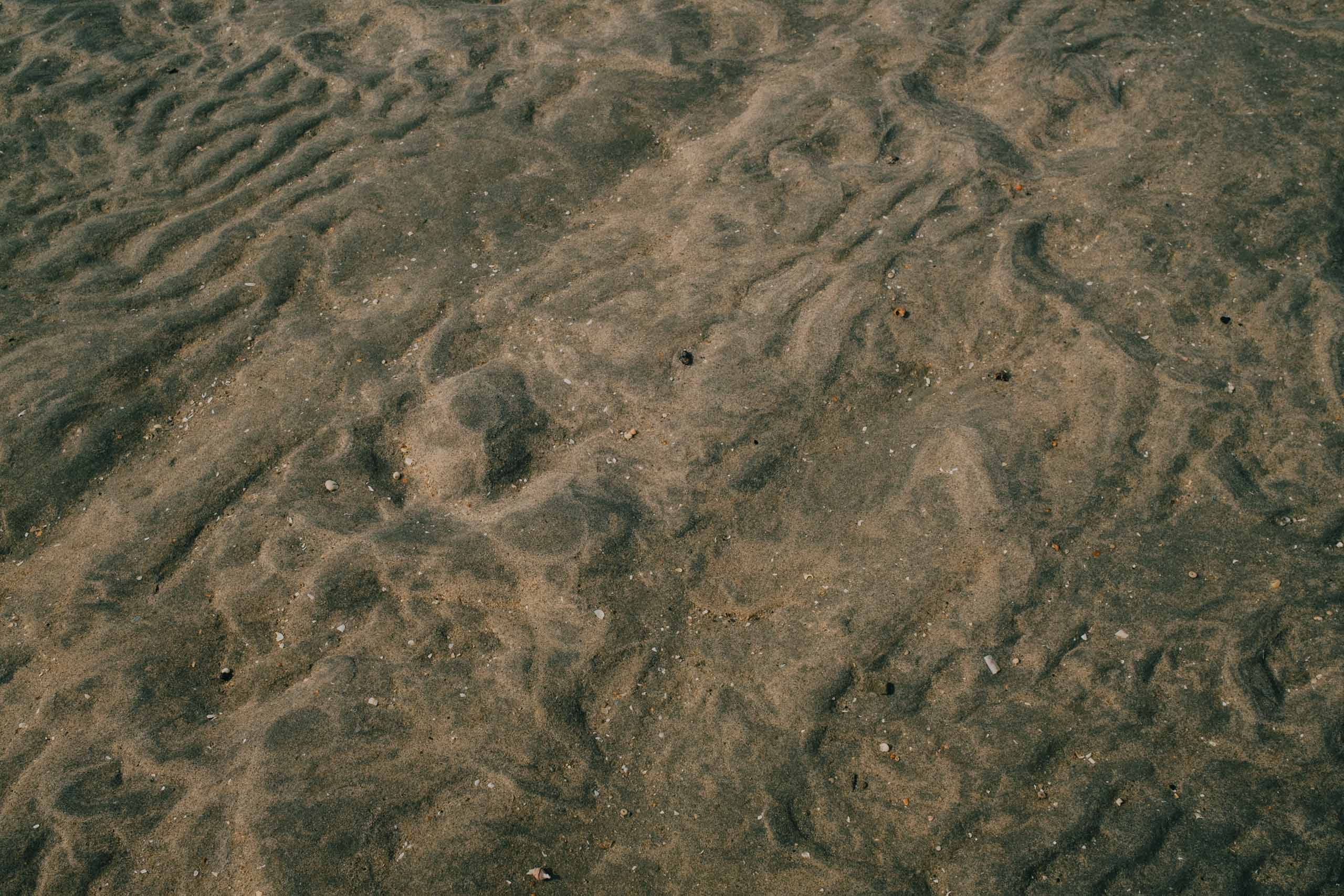
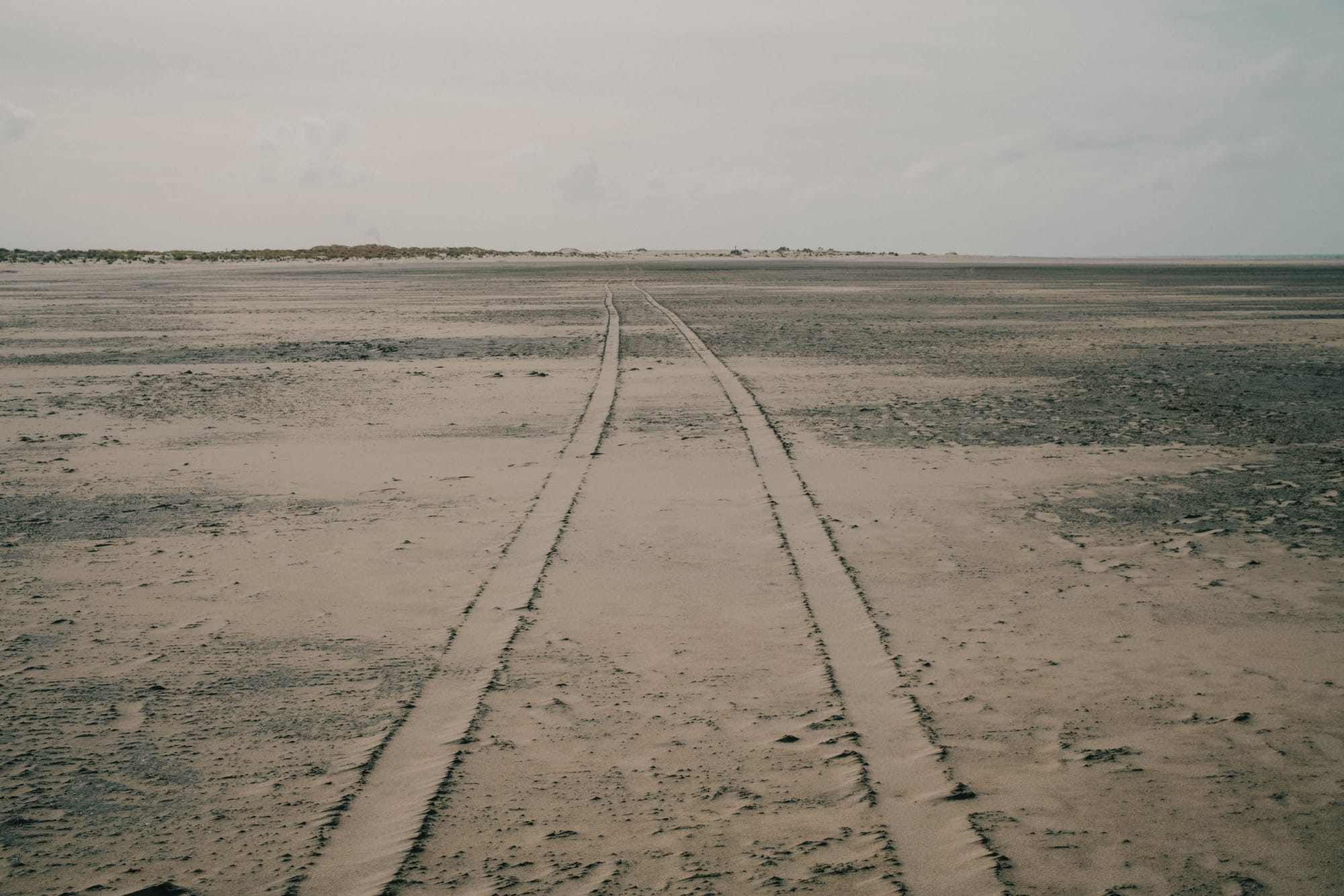
I'm interested because it shows all humans, not just Dutch people, that there's a way to maintain a natural coastline by building with nature instead of fighting the water. Most other countries in the world either build rigid seawalls or simply accept erosion. If they do maintain natural coastlines, it's mostly smaller experiments and never the entire waterfront. The Netherlands does not have the luxury to do nothing, for most of it would flood if we let things erode. But it speaks to a certain level of morality that we decided against building giant concrete walls along the entire west of the country and opted for a more sensible, albeit more labor-intense solution.
There's so much to uncover there, but my perception is that there's a way for humans to exist and thrive, withoutdestroying the planet we live on. The expansion of our species should not come at the cost of another. And although the smoke stacks of the commercial area in the distance tell me there's a conflict of interest within the Netherlands just as much as any other place, at least we're trying to do the right thing in so many other ways.
Constantly posting
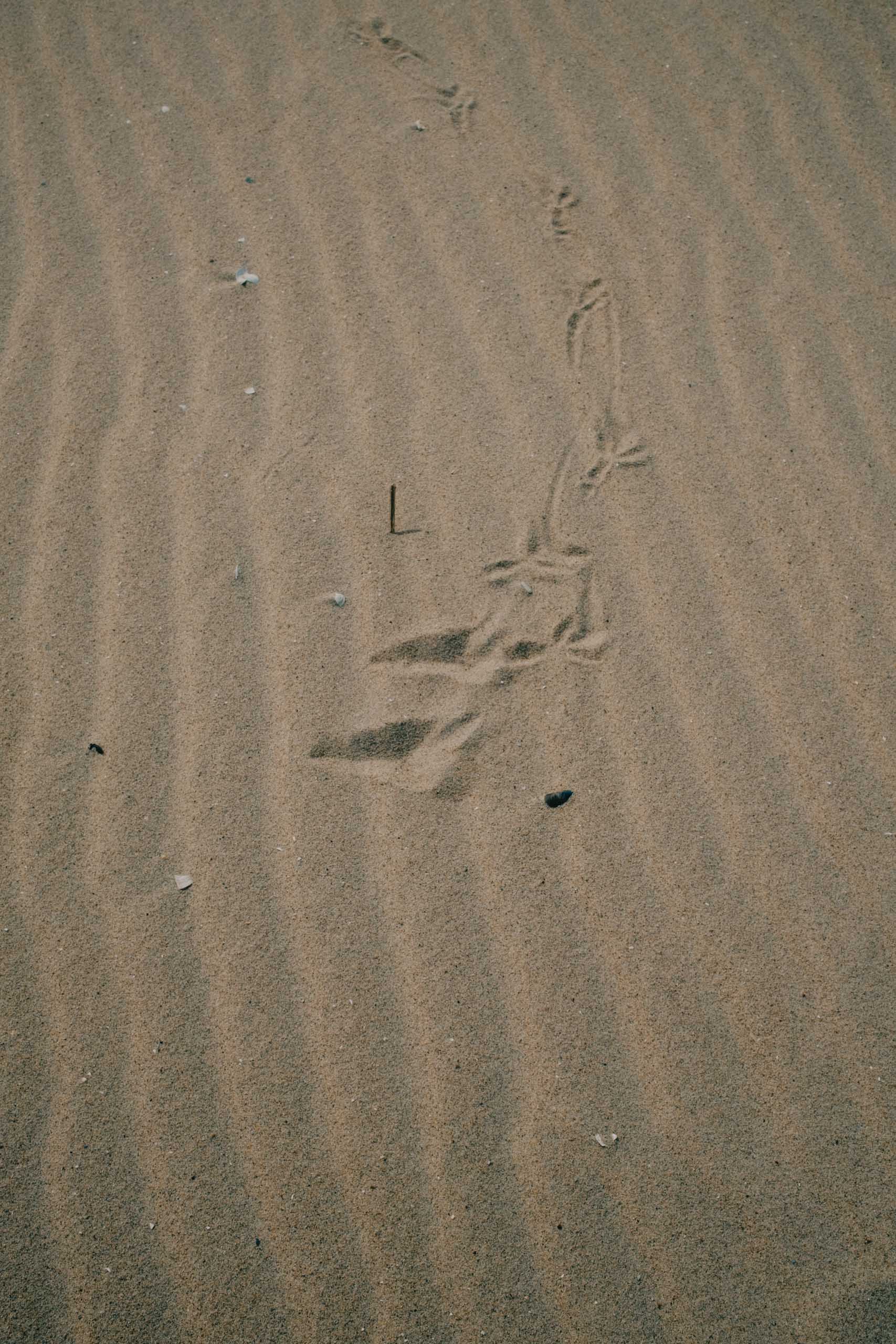
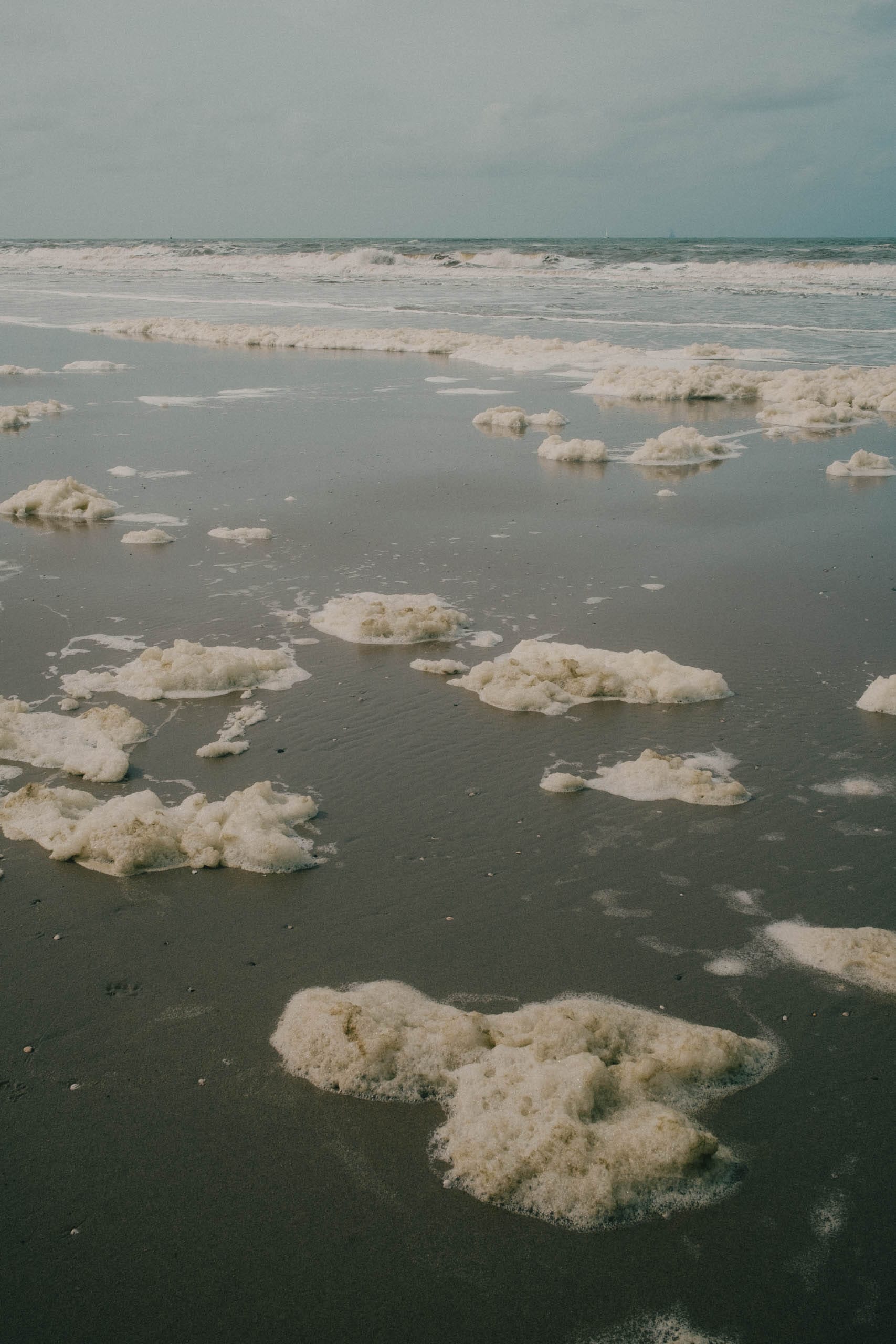
Other than these monthly musings, I've started writing about the places I visit. It's a way for me to record what catches my eye, and sparks my curiosity right now. But also a way to shine a light on the things most of us otherwise take for granted and never give a second thought. The Slufter on Texel was my first entry, the Sand Engine near The Hague my recent second. I also don't hold back with sharing my images of those places, because I remain a photographer at heart. I imagine returning to these places over time, perhaps during that coastal walk I'll eventually do, and then having material to compare against.


All my posts from the coast will end up in this collection. Bookmark it and check back every now and then, if you're interested.
Somewhere in the upcoming weeks, I'll find another feature of our coastlines to investigate. Not because the thing itself is interesting, although that'll definitely also be the case, but for what that thing represents: a way for us humans to live in harmony without the looming danger of self-destruction. A thing that's coming for us all if we keep our collective course but typically avoid thinking about for there's not much we can do as individuals.
The greater good
If that's just me that feels this way, then feel free to write and tell me I'm an idiot. But I hope that's not the case and instead find the opposite. It's so easy to sit back and focus on our own lives, and in many cases I do the same, but I feel strongly that nothing really matters if we don't find a way to be good to the planet we live on. And while I don't pretend the Dutch coastline is the solution to that problem, I do have a hunch it might be exemplary of ways we can do that. And perhaps my work about it can serve as the inspiration we need to take responsibility for the systems we’re shaping, and to start building ones that can actually sustain themselves over time.
And if none of that ever becomes true, I still need a reason to come out of the house and a subject to point my lens at.
Until next month,
Mitch
P.S. If you want to see more images you should look at my dedicated Sand Engine post.
Just you, me, and some occasional notes from the field. No spam.
Join the conversation