
Closer #008

This weekly experiment is on an indefinite hold, until significant AI-advancements have been made.
Curious about the conclusions? Read Photography in the Age of AI (2025): Lessons From 25 Weeks of Experimentation
Welcome to Closer,
a weekly newsletter where I take one of my photos, ask AI to describe it, then see what kind of image it can generate from its own description—an ongoing experiment in the capabilities of AI, and what that means for humans. This is edition #008.
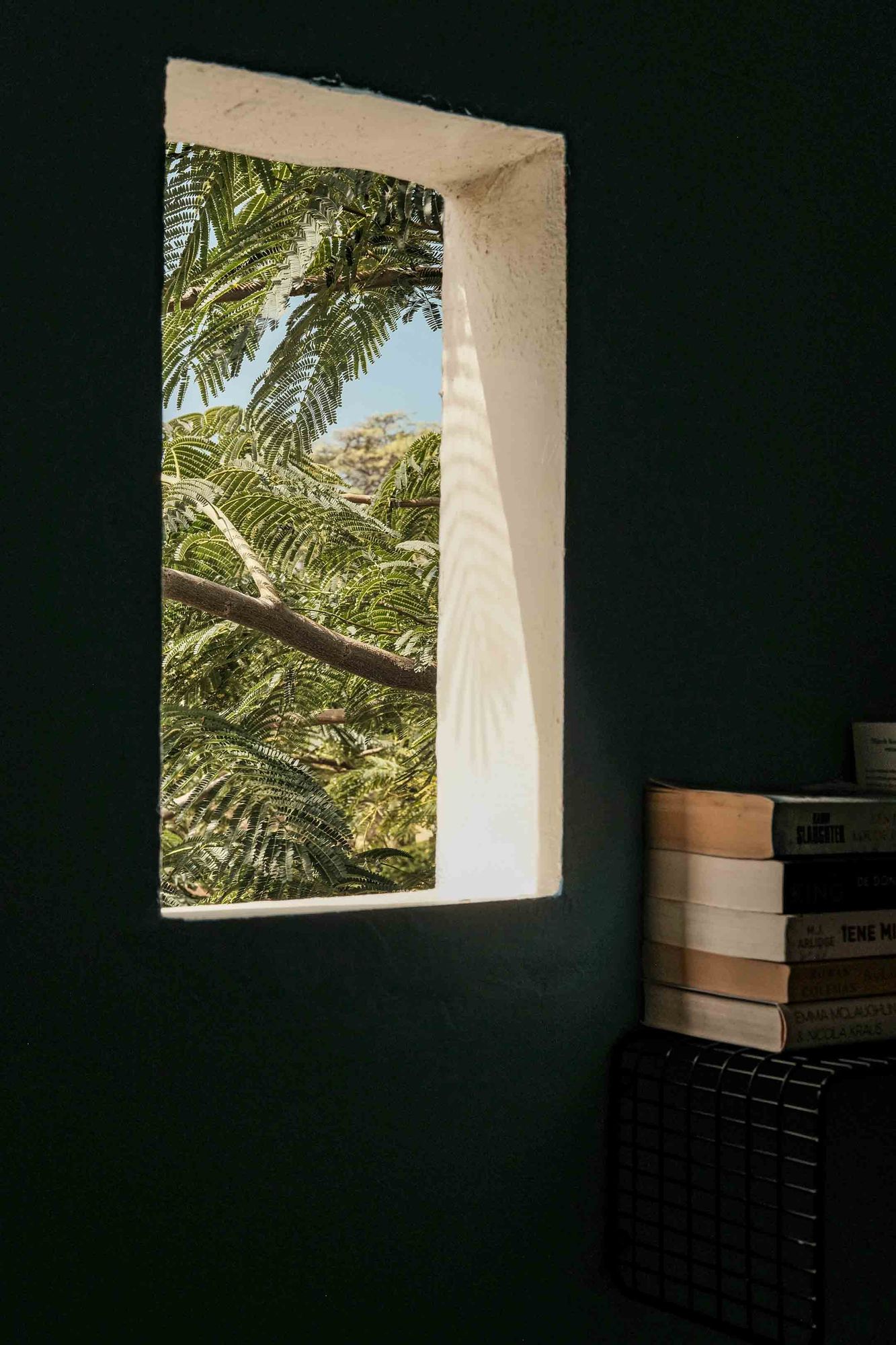
I point my camera at the bedroom window of our Airbnb in Willemstad's neighborhood Otrobanda on Curaçao. It's January 2020. What seems like a fun memory for my personal yearbook then, will in five years time become part of an ongoing battle against a possibly new dominant world power.
The order in which we operate: human experience → photograph → AI description → synthetic image. Prompts are in the grey callout boxes, the AI description is cursive.
LLM models used
GPT-4o for image interpretation and image generation.
The input
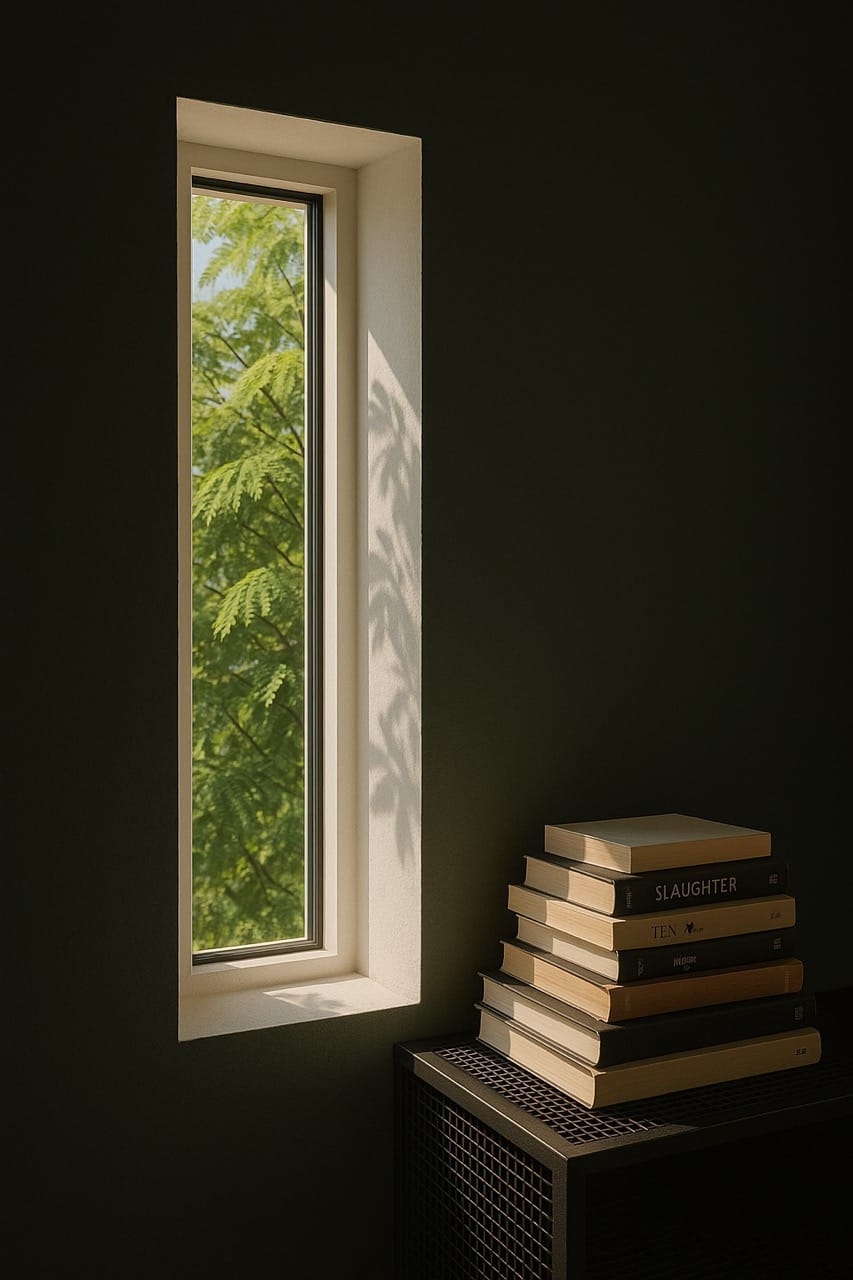
The output
The image shows a minimalistic and serene indoor scene, centered around a small rectangular window that opens out to a lush, green view. Here's a detailed breakdown of everything in the image:
Window and View Outside
- Shape and Structure: The window is a narrow vertical rectangle with sharp edges and a white interior frame. Its walls appear thick, suggesting a solid structure.
- Lighting: Daylight pours in through the window, casting soft shadows and a partial leaf-pattern silhouette onto the white window reveal, creating a warm, natural ambiance.
- View: Outside the window, you see vibrant green foliage, most likely from a tropical or subtropical tree. The leaves are feathery and fern-like, possibly from a mimosa or acacia tree. The sunlight filtering through the leaves creates a natural pattern of light and shadow.
- Sky: There's a hint of a clear blue sky visible through the top part of the window, reinforcing the sense of a sunny, pleasant day.
Interior Elements
- Wall Color: The interior wall around the window is a deep, matte forest green or charcoal color, giving a cozy and moody feel to the room.
- Books: To the right of the window, there's a stack of books placed on top of what appears to be a black metal mesh shelf or grid. The books are stacked horizontally, with the spines facing outward.
- Some visible titles and authors include:
- “SLAUGHTER” by an indistinct author.
- “TENE M…” (possibly an abbreviation or cut-off title by author M.J. Arlidge).
- Others are not fully legible but seem to be novels or literary works.
- The books vary in color and thickness, with spines in shades of black, white, tan, and brown, contributing to a relaxed, intellectual atmosphere.
- Some visible titles and authors include:
General Vibe and Aesthetic
- The overall mood is calm and contemplative—ideal for reading, writing, or simply daydreaming.
- The mix of natural elements (foliage, sunlight) and thoughtful interior design (dark walls, books) evokes a sense of quiet retreat or creative solitude.
This is an image that feels like it could belong in a well-curated travel magazine, interior design blog, or an art book focused on peaceful living spaces.
Impressions
I've made some changes this week. Here's an overview:
- I used a temporary chat to test if that has an impact on description length. The assumption is that my personal account's ChatGPT memory is causing the descriptions to become longer and longer, the more I use it. It appears it doesn't make an impact. The description is still a similar length as previous entries.
- I had to use the paid ChatGPT account of my day job because my personal account was unable to generate an image in time. I saw this message a lot: "Processing image Lots of people are creating images right now, so this might take a bit. We'll notify you when your image is ready."
- There's no real impact as both free and paid accounts use ChatGPT 4o. The difference is that the free plan has a usage limit but that hasn't been an issue for us yet in previous weeks.
Some things to try next:
- I will instate a word limit next week to keep these newsletters more concise. Unless that significantly impacts the image quality, which would be an interesting take away in itself, because then we'll have to go back to these longer descriptions.
- I will see if I can reconfigure the prompt to see if we can make a more direct connection between the source image and the output image, possibly by omitting the entire description part. Though this would be an effort more focused towards experimentation within this project's parameters and less one to adopt structurally.
- I will try more basic prompts too, to see what happens.
With that out of the way, are there any major take aways from this weeks description and/or output image? Well, now being eight weeks into the project, I think both the description as well as the image generated are within our expectations. I think some key take aways from not just this week's image but the project overall are:
- Descriptions are usually highly accurate. Especially when you keep the source image in mind.
- Descriptions also allow enough room for interpretation, causing the resulting images to be very similar to the source image but also slightly different in ways that don't eliminate the core idea of the image. This exact outcome highlights where the parameters in the descriptions stop.
- We've created a good baseline of different kinds of inputs and results in the past few weeks. We've also stuck mostly to the same workflow though. This is still an experiment, so let's experiment a little more.
Anything else that caught your eye? Feel free to send a reply. Please also let me know if you have questions, suggestions or remarks about my approach. This is just as much a journey for me as it is for you.
See you next week.
Mitch
Just you, me, and some occasional notes from the field. No spam.
Join the conversation