
Closer #020

This weekly experiment is on an indefinite hold, until significant AI-advancements have been made.
Curious about the conclusions? Read Photography in the Age of AI (2025): Lessons From 25 Weeks of Experimentation
Welcome to Closer,
A weekly experiment in AI interpretation: I share a photo, ask AI to describe it, then generate an image from that description. This is edition #020. Prompts are in grey boxes. Descriptions are in italics.
Now that our unfruitful mini-experiment has come to an end, we can conclude we shouldn't ask ChatGPT to write prompts for us, that are then used to describe input images. Unless you want underwhelming results.
Also, yes, you read it correctly, I've now definitively decided to hit pause on this newsletter in five weeks. We've gathered sufficient sample data on the state of AI image-generation in 2025. Significant advancements have to be made in the field before we pick this back up.
Please stay subscribed if you want, I won't message you in the meantime. The moment something interesting happens with the technology that has impact for photographers, writers, artists in general, you'll hear from me again.
Everything I make is self-funded — driven by curiosity, shared to add a little good to the world. Want to support that?
You can:
- purchase a print
- buy a book
- become a member
Thanks so much in advance.
LLM models used
GPT-5 for image interpretation, and image generation.
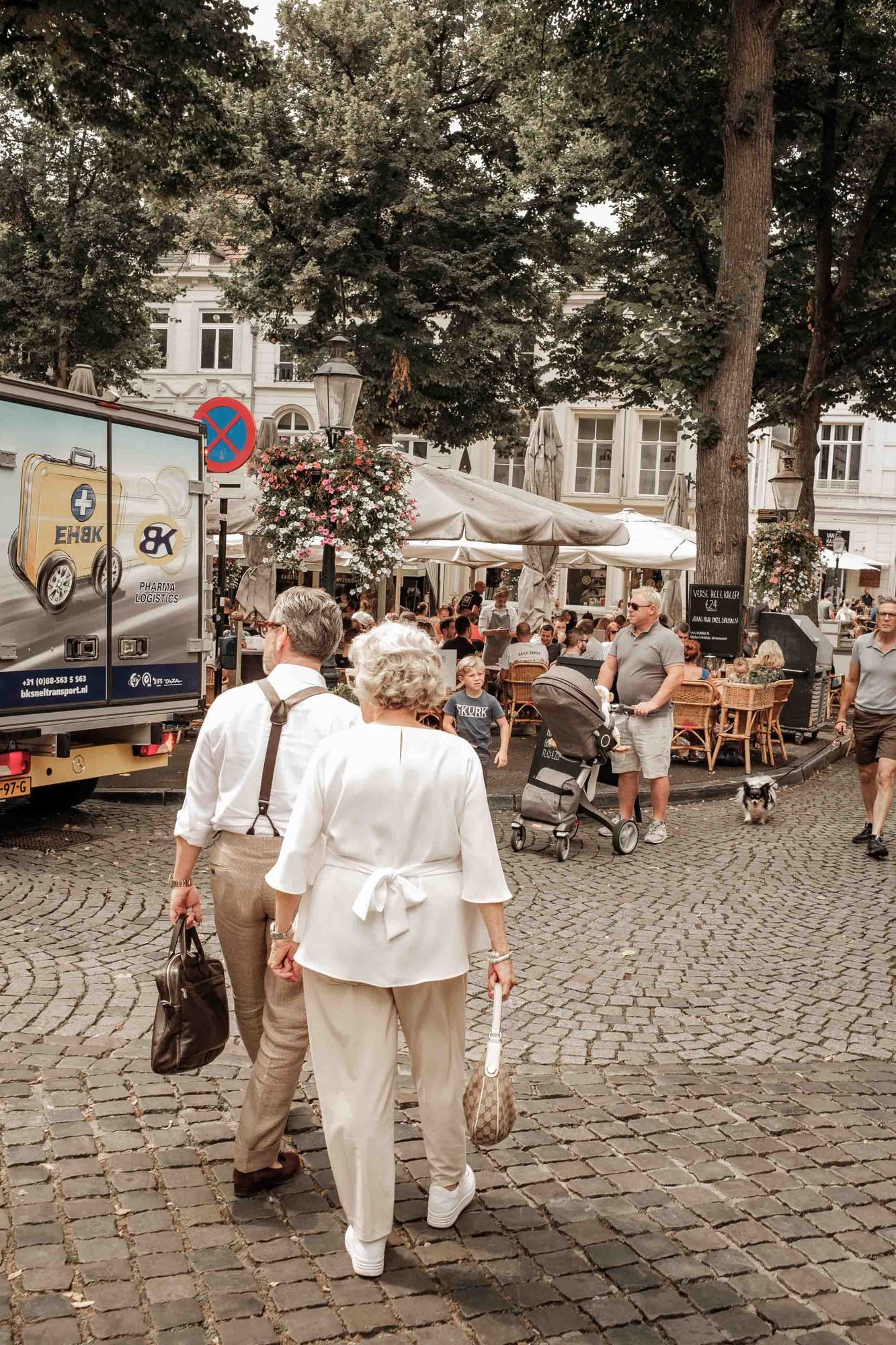
The input
Ivar Blaauw, who previously contributed to this newsletter already, has shared an interesting image-generation approach he came across on social media with me. If you haven't unsubscribed these past six weeks for the lack of 'hot-take tech' or general interesting results, perhaps this hyper-technical edition will do it! 😅 (plz don't though)
I recommend you watch the video linked above to get a quick understanding of the concept. If you don't wanna (which I understand), let's first just 'do the thing,' and then I'll explain what is happening here.
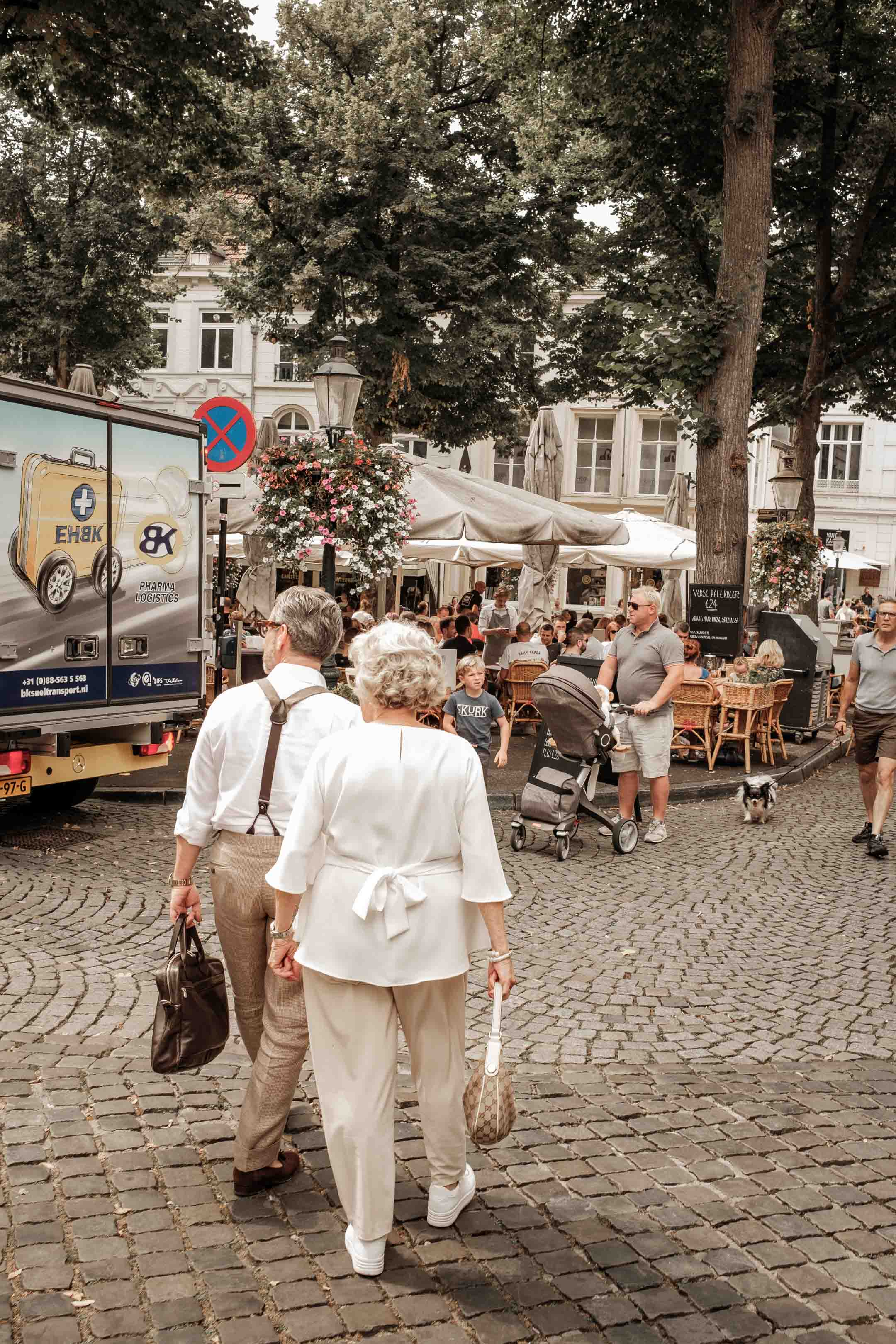
The output
{
  "scene": {
    "location_type": "European town square",
    "environment": {
      "setting": "outdoor",
      "ground": "cobblestone street",
      "vegetation": ["large trees with green foliage", "hanging flower baskets"],
      "lighting": "soft daylight, overcast"
    },
    "architecture": {
      "buildings": "historic European style, white facades",
      "outdoor_seating": true,
      "cafes_restaurants": true
    }
  },
  "subjects": {
    "foreground": {
      "main_couple": {
        "approximate_age": "elderly",
        "clothing_style": "elegant, classic",
        "man": {
          "outfit": "white shirt, brown suspenders, beige trousers",
          "accessory": "dark leather briefcase"
        },
        "woman": {
          "outfit": "white blouse with tie-back, beige trousers, white sneakers",
          "accessory": "small handbag"
        },
        "gesture": "walking together, holding hands"
      }
    },
    "midground": [
      {
        "group": "families, children, stroller",
        "activity": "casual walking, socializing"
      },
      {
        "dog": {
          "breed_type": "small companion dog",
          "action": "walking alongside owner"
        }
      }
    ],
    "background": {
      "people": "seated at outdoor café tables",
      "activity": "dining, talking, socializing"
    }
  },
  "objects": {
    "vehicle": {
      "type": "delivery truck",
      "branding": "pharma logistics",
      "license_plate_visible": true
    },
    "street_elements": [
      "lamp posts with hanging flowers",
      "no parking sign",
      "restaurant signage"
    ],
    "furniture": ["tables", "chairs", "strollers"]
  },
  "atmosphere": {
    "mood": "leisurely, social, relaxed",
    "tone": "warm, nostalgic, communal"
  },
  "possible_metadata": {
    "image_type": "documentary / street photography",
    "time_period": "contemporary",
    "season": "summer (based on light clothing)",
    "location_guess": "Western Europe (likely Netherlands or Belgium)"
  }
}
A piece of JSON code that's generated based on the input image.
What we did here is break the photo down into simple building blocks, almost like a recipe card for the scene. Instead of a flowing story, it lists:
- the where (a town square),
- the who (an elderly couple, families, a dog),
- the what (a truck, flowers, café tables),
- and the vibe (relaxed, social, summery).
This format is called JSON in the tech world, but you can think of it as a neat way to organize messy reality into clear categories. It’s a way of describing a moment so that both people and computers can make sense of it.
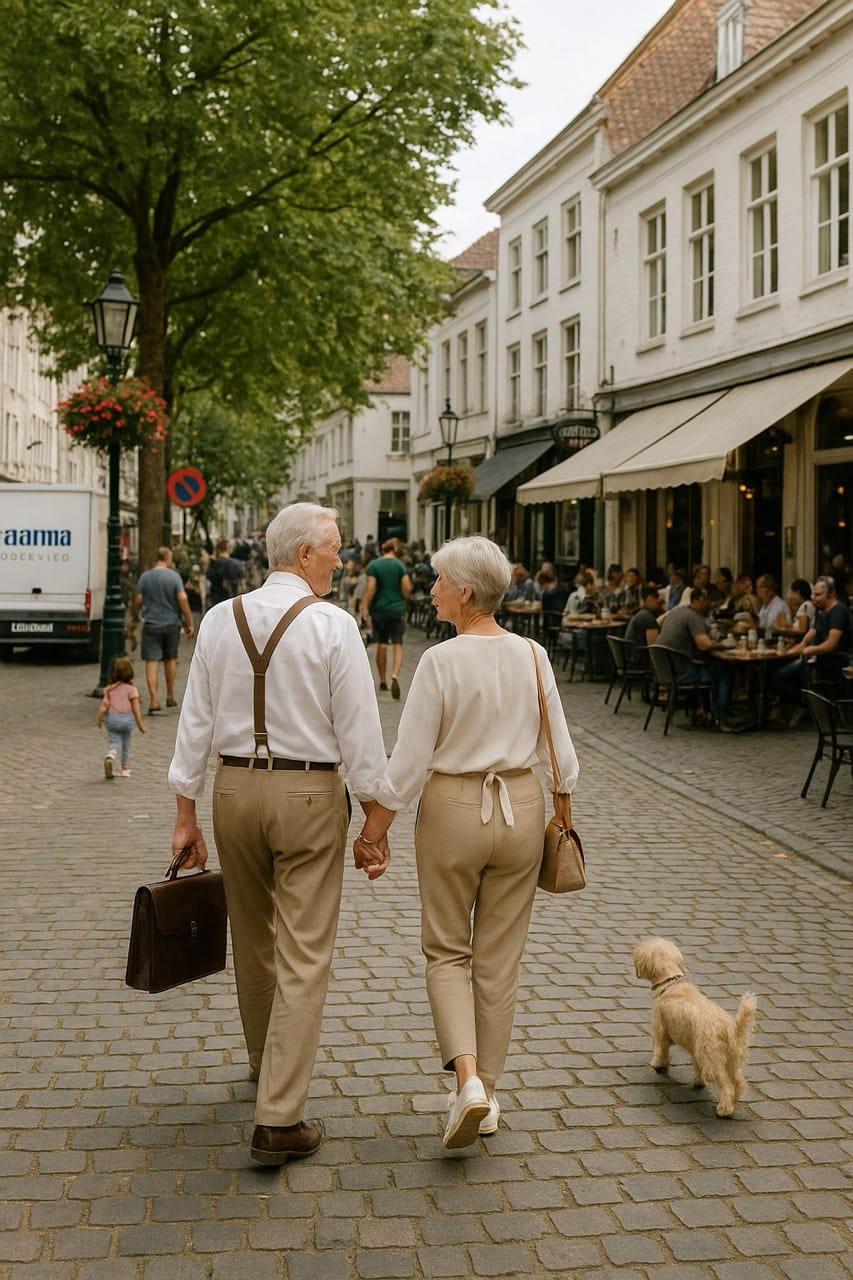
Impressions
I have a pretty technical role at my day job these days, so playing around with this stuff makes some sense to me. I know JSON a little, not in depth, but enough to see it’s built to be readable by both humans and computers. At first, the output we’re looking at looks overly technical. But if you pause for a second, you’ll notice it’s actually understandable to anyone who can read.
AI is, at the end of the day, still a computer. And computers like structure. For years that was non-negotiable: one wrong character and the whole thing could break. AI is more forgiving now. It can handle messy data and still give decent results. But the idea behind what we did this week is simple. If you keep things structured, you make life easier for the AI. You’re letting it be what it is, a computer.
I don’t think this approach is really meant for “normal” people using AI image generation. The beauty of these tools is that they hide all the technical complexity and let you interact in plain human language. Sure, the output we generated makes sense if you look closely. But needing technical skill to prompt this way feels beside the point.
And honestly, the images it produces aren’t necessarily better than what we’ve been getting with the regular methods over the past few months.
So my conclusion is simple: why bother?
Anything I missed and you want to point out? My inbox is still open for feedback and input. You can also fill out the survey at the bottom if you want to share your feedback anonymously.
Anything I missed and you want to point out? My inbox remains open for feedback and input. You can also fill out the survey at the bottom if you want to share your feedback anonymously.
Thanks again for following along, see you next week.
Mitch
Got a minute? I’d love your quick thoughts — 3 multiple choice questions, that’s it.
Just you, me, and some occasional notes from the field. No spam.
Join the conversation