
Closer #022


This weekly experiment is on an indefinite hold, until significant AI-advancements have been made.
Curious about the conclusions? Read Photography in the Age of AI (2025): Lessons From 25 Weeks of Experimentation
Welcome to Closer,
A weekly experiment in AI interpretation: I share a photo, ask AI to describe it, then generate an image from that description. This is edition #022. Prompts are in grey boxes. Descriptions are in italics.
We have four more weeks left. I needed a ChatGPT Plus subscription, so that's a change from previous weeks. Let's see if it's any better at image-generation. We're reusing the prompt from last week, by the way. Perhaps Plus is better at interpreting the description, maybe it won't. At least things will be faster, so that's nice.
LLM models used
GPT-5 Auto for image interpretation, and image generation.
The input
Provide a detailed and thorough description of the attached image. Include all notable features, objects, colors, and any contextual information present.
Ensure your description is comprehensive enough that someone reading it could form a vivid mental image of the scene without having seen the original image.
After completing the description, briefly validate that all major visual elements and contextual cues have been addressed; if any are missing, revise accordingly.
The output
Checklist of description steps
- Overall scan: Identify the main framing and perspective of the image.
- Foreground elements: Note the immediate objects dominating the view.
- Background elements: Identify what is visible beyond the foreground.
- Colors and textures: Describe the tones, materials, and surfaces.
- Human presence: Observe and describe people, their positions, and actions.
- Context clues: Look for signs, objects, or environmental hints about the location.
- Atmosphere: Convey the overall mood or feeling of the image.
Detailed Description
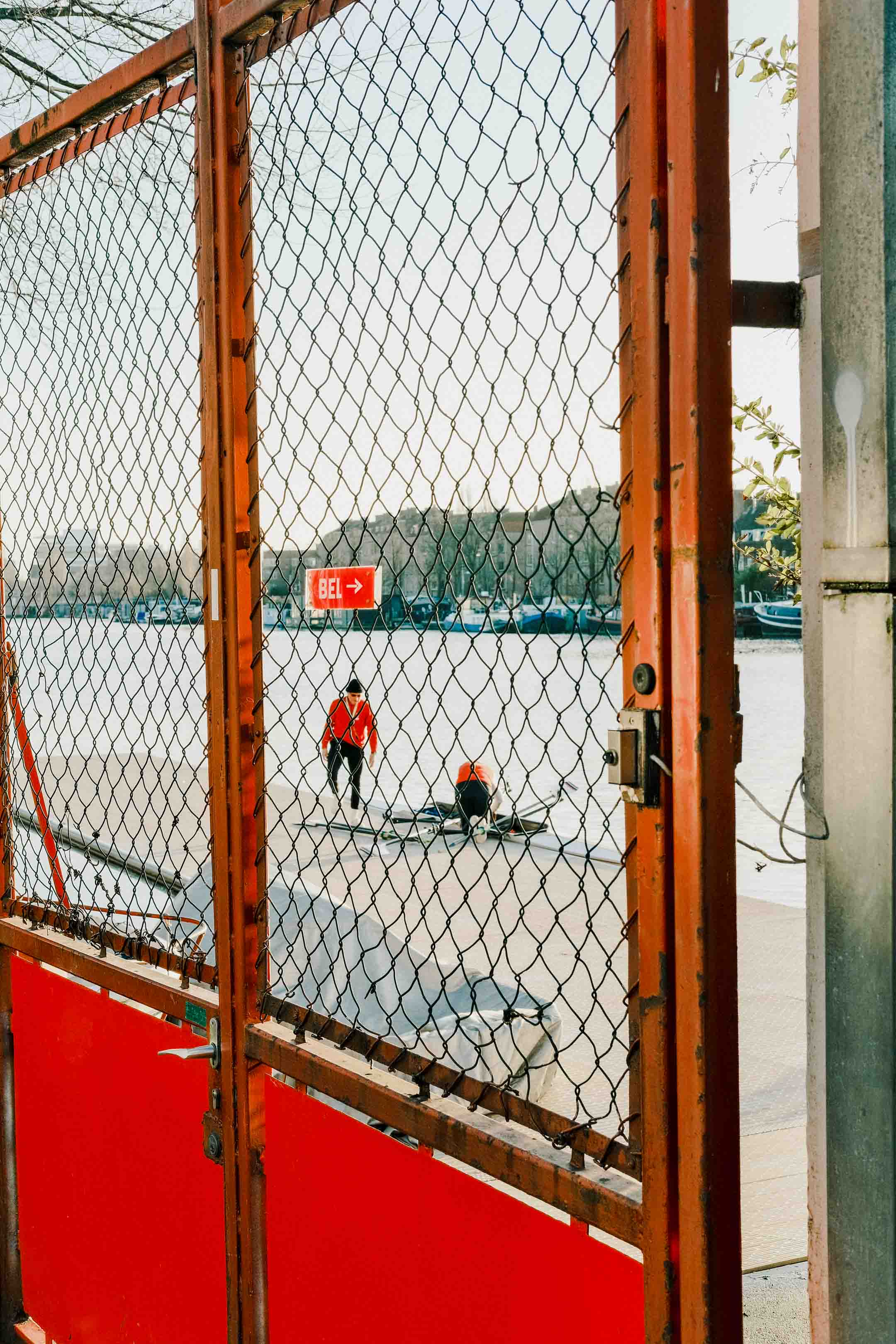
The image is taken from behind a metal gate with chain-link fencing, painted in a reddish-brown color with solid red panels at the bottom. The gate dominates the foreground and frames the rest of the scene through its grid of chain links, giving a slightly obstructed but deliberate view. A silver handle and lock mechanism are visible on the left side of the gate, while the hinges and framing beams appear sturdy and industrial.
Through the gate, the eye is drawn toward the waterfront setting. The surface beyond the gate is a wide, paved platform or dock, leading directly to a body of water. The water stretches horizontally across the image, calm and bright, reflecting the pale daylight. On the far shore, muted outlines of buildings and a row of docked boats are visible, softened by distance and atmospheric haze. Leafless trees suggest that it is either winter or early spring.
In the middle distance, two people in orange-red jackets are the focal point. They are positioned on the dock close to the water. One person stands upright, facing slightly left, wearing dark pants and a hat, while the other crouches closer to the ground, apparently handling equipment. Between them lies a long, narrow rowing shell (sculling boat) with oars resting across its frame, suggesting they are preparing for rowing on the water.
To the left of the people, affixed to the gate or nearby structure, there is a red rectangular sign with the white letters “BEL →” (with the arrow pointing right). This element adds both color and context, hinting at instructions for ringing a bell or indicating a location.
The atmosphere of the image is quiet and utilitarian, a behind-the-scenes glimpse of an ordinary but purposeful moment. The chain-link fence creates a sense of distance or separation, as though the viewer is observing from a restricted area, while the red tones of both the gate and jackets provide strong visual accents against the pale water and sky.
Validation
- Foreground (gate, fence, lock, red panels) — described.
- Background (water, distant boats, buildings, trees) — described.
- People and activity (two figures, rowing boat preparation) — included.
- Colors (red, pale water/sky, muted buildings, dark clothing) — covered.
- Signage/context (“BEL →” sign) — included.
- Atmosphere/mood (quiet, utilitarian, slightly separated viewpoint) — addressed.
✅ All major visual elements and contextual cues have been covered.
After the image is generated, validate in 1-2 lines that the aspect ratio is correct and that the description has been accurately interpreted; if validation fails, adjust or seek clarification.
Generate an image with a 3:2 aspect ratio using this description: {the description previously generated}
Impressions
Interesting?
- All the elements in my original image are clearly described
- If you read the story with the original image in mind, you can envision the image very easily. The description is that good.
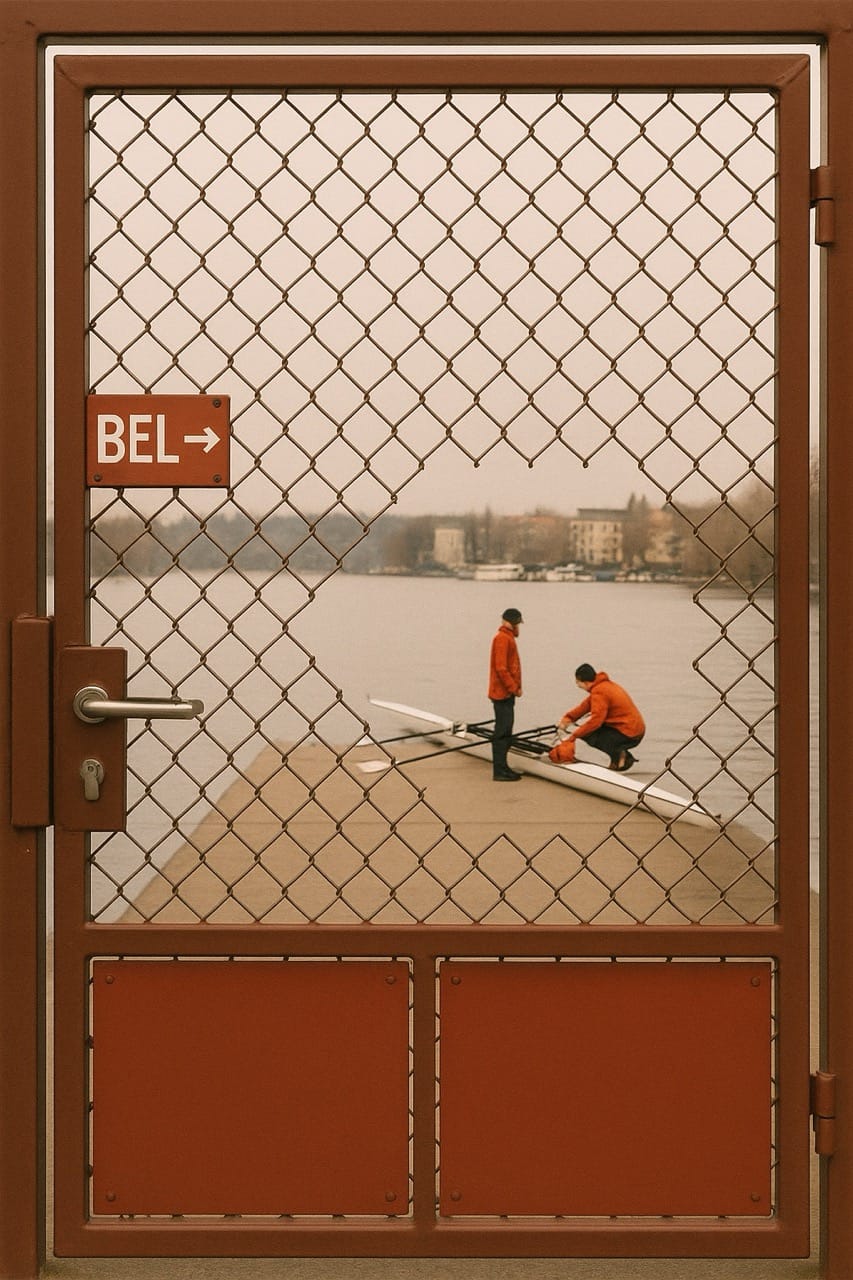
- The AI-generated image displays a gap in the chainlink fence that's not in the description. Perhaps the mention of "a slightly obstructed but deliberate view" is what caused this.
Noteworthy?
- The AI-generated image is simply too perfect. If this is an image I would've taken in real life, it would've been a portfolio shot. But the AI probably knows this. It's trained on all our portfolios. It knows what perfect looks like.
- AI images have always felt a bit too clean. Too polished. A bit painterly. Yes, even the most photo-realistic ones. This AI-generated image highlights that effect quite well. Especially when you compare it to the rawness of my input.
A glimpse at my preliminary conclusion, from this soon-to-be 25-week long experiment?
- AI is not going to replace artists.
- As long as an image is strictly utilitarian AI can already fulfill that role.
- Entities that require imagery but don't care about artists are already able to make great use of AI.
- This doesn't matter for artists and creatives. No, it doesn't matter for good artists and creatives.
- A subset of creative jobs will be handed over to AI. Artists and creatives working in these spaces are generally not good artists or creatives, or at least selling themselves short for operating in them.
Anything I missed and you want to point out? My inbox is still open for feedback and input. You can also fill out the survey at the bottom if you want to share your feedback anonymously.
Thanks again for following along, see you next week (oh and plz leave your feedback!)
Mitch
Got a minute? I’d love your quick thoughts — 3 multiple choice questions, that’s it.
Just you, me, and some occasional notes from the field. No spam.
Join the conversation